Showing posts sorted by relevance for query duck soup. Sort by date Show all posts

2023-05-06

Old Hollywood & Olden Times

.

This go-round, I check off another LDS writer I've never read, spend some more time in the black-and-white era, travel below ground, to midcentury suburbia, the depths of the music industry, the distant future, and a folkloric past.

It'll be a fun trip. Thisaway, friends!

.

044) Straight Lady: The Life and Times of Margaret Dumont, "The Fifth Marx Brother" by Chris Enss and Howard Kazanjian, finished April 25

So I really loved this book. I loved learning about Margaret Dumont's early years and behind the scenes with her and the Marx Brothers. Tons to enjoy here. That said, this is a really weird book.
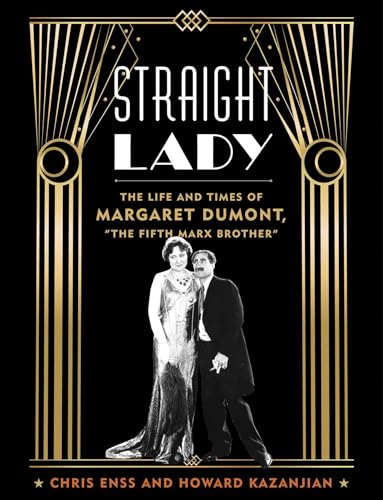
 

The authors have done tons of research and it's not unusual to have pages of long quotations (a page or more) strung together, often redundantly, from period newspapers and the like. That's kind of weird. Fun and I liked it, but peculiar.

Once she starts working with the Marx Brothers, it's really more of a Marx Brother's biography with constant glancing over to see what Miss Dumont's doing. Literally, there are chapters that are about all the movies the brothers are making without her, then a page listing the titles of the movies she'd been in. I mean—I get it's probably the Marx Brothers that are gonna get people to pick up the book, but this is still supposed to be a book about Margaret Dumont. So that was weird.

The last chapter and a half was suddenly riddled with errors. Misspelling chaise longue is one thing (who among us has not?) but misidentifying an image as being from one movie when it's from another is a problem. Though, now that I think about it, perhaps not as big a problem as earlier in the book where in two pages they swapped whether "Duck Soup was the highest grossing film of 1933. It didn't do as well as Horse Feathers, but it performed well at the box office." (76) or "Duck Soup...was no as big a hit as Paramount hoped it would be. Horse Feathers had been the highest grossing film for Paramount in 1932. Duck Soup was sixtieth on the list of top income-earning motion pictures in 1933. Audiences weren't enthusiastic about the movie." So that was weird. And worrying.

In short, for all I dug about the book (which was plenty), it has some of the same variety of problems I complained about after reading Unmask Alice. Publishers aren't doing their job.

That said, I now know lots about Margaret Dumont (first Daisy Dumont) and I'm glad I do. She started in theater young; she was beautiful and had an astonishing singing voice and comedic chops. She was so skilled she made it into higher theater even given her low roots. She was happily married a rich guy for eight years until her father-in-law and his new young wife cut them off and her own husband died, sending her back to the boards.

Obviously, there are more details, but Margaretwise, her early decades were my favorite part of the book. Perhaps I enjoyed reading most about she and the Marxes traveling the country refining jokes and pratfalls, and perhaps I was most frustrated with the MGM years (the same MGM years that frustrated me while reading about Buster), but I signed up to learn about Margaret Dumont and that I did and I am glad.

a week or maybe more


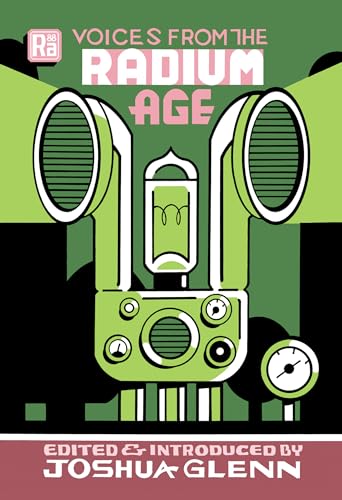
045) Voices from the Radium Age edited by Joshua Glenn, finished April 26

Voices from the Radium Age is the first volume of a series being published by MIT. Editor Glenn has named the late 19th- / early 20th-century, pre-"Golden Age" range of science fiction the Radium Age and it's a solid name. And nothing works like naming something to bring it to life.

The stories here are uniformly terrific but engaged in very different tasks. Me, I found the book because someone on Twitter was asking for short-book recommendations and some one mentioned the story by E.M. Forster. A good friend of mine wrote his dissertation on Forster's fantasy, so I'm overdue to read some. Or, failing that, his one piece of science fiction. This collection was the only option at my library, so I picked it up. I doubted I would read anything else (I was uncertain I would ever read Forster) but I started with Glenn's introductory matter in a slow moment and he sold me. I was gonna read the entire thing. And so I have.

(Worth mentioning that the first thing that made me certain I would take the book seriously was its Seth cover. Covers do matter.)

Sultana's Dream
(1905) — Rokeya Sakhawat Hossain : A decade before Herland, Ladyland. Ladyland is an Indian feminine utopia and more sciencefictiony than Gilman's. But it also takes place within a dream. I do love the idea of pipes carrying the heat of the sun, though.

The Voice in the Night (1907) — William Hope Hodgson : This feels like an episode of Suspense or something (surely it was adapted for radio?). Two men on a schooner approached by one man on a rowboat, unwilling to come into the light. One of the first fungus/human stories, so if you've been digging The Last of Us, you owe yourself this trip.

The Machine Stops (1909) — E. M. Forster : This is what I came for and it is startlingly current. People living homogeneous lives, engaged in meaningless media consumption. It's got a world-running A.I. Agoraphobia. Pride in ignorance, comfort in lacking courage. The story features a woman whose son is dissatisfied and this is barely comprehensible to her. Sure, it's a bit dated here and there, but with just a couple edits, you could easily believe this story is from this decade.

The Horror of the Heights (1913) — Arthur Conan Doyle : What if there are jungles of the air, far up above us, and we've been able to live in ignorance of them simply because we as a species have never flown above 30,000 feet? And the what happens when we finally do?

The Red One (1918) — Jack London : Glenn discusses this story as being racist beyond just having a racist protagonist, and no question that there are descriptions unpleasant to the modern ear, but London sticks with third-person-limited throughout. So it's hard to say for sure. My suspicion is that, like a lot of liberals, his feelings on race were corrupted by his embrace of eugenics. Anyway, racist guy is stranded on one of the Solomon Islands where the great god is a giant sphere of uncertain (but red) metal perhaps from space. It's lovecraftian stuff.

The Comet (1920) — W. E. B. Du Bois : This is the only story in the collection I'd read before, circa the summer of 2020, and my opinion holds. First, that it's a great mood piece and succeeds on both halves of its reckoning with both apocalypse and race in America. Second, that the ending makes no sense. Where did that woman come from?? And even if the text does provide an explanation I haven't found, it's still an absurd coincidence and DuBois shoulda looked harder for another ending. In my opinion. I just hate being thrown out of excellence at the last moment, even if the thing doing the throwing is thematically necessary to the author's moral.

The Jameson Satellite (1931) — Neil R. Jones :  (Jones was born the year Forster wrote "The Machine Stops," which may give you a sense of the amount of time the Radium Age fills.) The first in a long series of stories, in which Professor Jameson dies in the last century yet whose body outlives the earth, letting his brain be resurrected by passing aliens to a metal body. I enjoyed it but I'll be the later stories have more adventure to them. I will say there's something about his space coffin and resurrection that reminded me of the mode of travel in Burroughs's Mars stories.

under a week
 

046) The Ballad of YFB by Aaron Brassea, finished April 28

This is a comic from 2010. The art is  . . . simple. The writing is plain. It's an aesthetic.
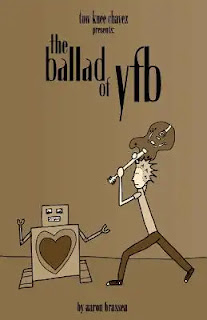
It's about a crappy band that becomes a famous band which gets into a competition with a song-writing robot. The the lead singer gets back with his pre-fame girlfriend and . . . I think the robot kills him out of jealousy? I'm not sure.

two nights
 

047) Reynaud's Tale by Ben Hatke, finished May 3

Hatke's been hit or miss in my experience, but we can safely call this one a hit.

Each spread is a page of text and a page illustration. The illustrations are great, both now and folk, and the adventure has the calm forward momentum of myth.

The books seems to marketed as for kids but my library catalogued it as adult, and I think that's right. Nothing too scandalous, but some breasts and casual sexual relationship exist in fairy-tale matter-of-fact-ness.

An excellent book to sit down with and take a moment's pleasure.

one night
 

048) Superman: Up in the Sky by Tom King and Andy Kubert, finished May 5

I saw someone online call this the premier or greatest or best or finest or something Superman story so I thought I'd check it out. I get why people might thinks so. It has serious literary ambition. Although it holds together coherently as a standalone story, it's loaded with allusions to other takes on the DC mythos that will add resonance to those in the know. Some of those left me feeling a bit left out and also left me wondering if things I did not think were allusive might, in fact, have been. So although I appreciated the craft, the book left me feeling a bit cold, especially when other characters' appearances seemed purely gratuitous.

Until the final portion when this celebration about all that's great about Superman truly came together into evidence that what is great about Superman is truly great.

It's hard to let Superman actually embody all the things he's supposed to stand for and yet still tell a great story. How can someone both unbeatable and always good be made into an identifieable character? Haw can we be made to care about his quests?

And this story left out most of the plot, just showing us individual moments in great details. (Like I said, literarily ambitious.)

Yet somehow it all came together at the end into something genuinely moving and pure.

So kudos. Well done.

two days


049) Ramona and Her Father by Beverly Cleary, finished May 5

The 6yrold says she likes how she turned happy at the end and that her father finds a job.

While Mr Quimby does play a larger-than-usual role in this book, he's more the mise-en-scene than player. Not to say he doesn't matter as a character—her certainly does—but the book is driven by him losing his job in the first chapter and not finding a new one till the last chapter (which he does not begin before the book run out of pages). His stress is also increased by the girls pressuring him to give up smoking. In fact, the whole emotional fabric of the book takes its cue from Mr Quimby, which is something Ramona feels and sees but cannot thoroughly understand.

Plus, this is another world, economically and culturally. And the 6yrold was so surprised that Ramona prays and goes to church, which got me thinking: secularism is the assumed reality for kids in American children's literature. Especially generically white children's literature.

That seems narrow.

several weeks


  050) Resurrection Row by Anne Perry, finished May 6

Anne Perry wrote a lot of books and they sold lots and lots of copies. I've never read one. But then she died and I came across this in a Little Free Library when I was without a book and so I figured the time had come.

This is the fourth in the Inspector Pitt series (1981) and, like them all, named after an actual London neighborhood. It's an apropos neighborhood to appear in the story as the mystery begins with disinterred bodies appearing and demanding an explanation.

The adventure takes us to high-end homes and to the most poverty-stricken corners of London. The story moves at a good pace and the era and location come to life.

I get why people like them!

I am curious how the good inspector and his wife came to be a match, but not enough to seek the book out. If I get lucky and an earlier volume falls into my lap, then we'll get our answer.

As it is, I have no read Anne Perry.

two or three weeks


Previously . . . . :


final posts in this series from
  2007 = 2008 = 2009 = 2010 = 2011 = 2012 = 2013
2014 = 2015 = 2016 = 2017 = 2018 = 2019 = 2020 = 2021 = 2022


Earlier in 2023

001) The Dark Room by Gerry Duggan & Scott Buoncristiano, finished January four
002) The Only Harmless Great Thing by Brooke Bolander, finished January 6
003) Rose by Jeff Smith and Charles Vess, finished January 10
004) Acting Class by Nick Drnaso, finished January 10
005) Red Scare by Liam Francis Walsh, finished January 11

006) The Short Reign of Pippin IV by John Steinbeck, finished January 18
007) Filmish by Edward Ross, finished circa January 20

HOW many times?

008) Maddy Kettle Book: The Adventure of the Thimblewitch by Eric Orchard, finished January 24 
009) Fantastic Frights: A Beginner's Guide to Scary Stories, finished January 24
010) Ramona the Pest by Beverly Cleary, finished February 2
011) Eleanor Oliphant Is Completely Fine by Gail Honeyman, finished February 3
012) The Postman Always Rings Twice by James M. Cain, finished February 4

013) Is that all there is? by Joost Swarte, finished February 6
014) Edge Case by YZ Chin, finished February 7

If it weren't for a friendly sex talk, everything here would be miserable

015) Double Indemnity by James M. Cain, finished February 10
016) Sex Educated: Letters from a Latter-day Saint therapist to her younger self by Bonnie Young, LMFT, finished February 13
017) Unmask Alice: LDS, Satanic Panic, and the Imposter Behind the World's Most Notorious Diaries by Rick Emerson, finished February 20 

A Bookful Bounty for thee and thine 

018) I'm Glad My Mom Died by Jeannette McCurdy, finished February 27
019–21) The Abominable Charles Christopher by Karl Kershl, finished March 6
022) Displacement by Kiku Hughes, finished March 6
023) The Many Deaths of Laila Starr by Ram V and Filipe Andrade, finished March 6
024) The Homeland Directive by Robert Venditti and Mike Huddleston, finished March 7
025) Titus Andronicus by William Shakespeare, finished March 14
026) Last West: Roadsongs for Dorothea Lange by Tess Taylor, finished March 15
027) 22 Young Mormon Writers edited by Neal E. Lambert and Richard H. Cracroft, finished March 19
028 & 029) Titus Andronicus by William Shakespeare, finished March 23 & March 27

Literarily solving for X

030) X by Sue Grafton, finished March 28
031) Ramona the Brave by Beverly Cleary, finished April 5
032) Camera Man: Buster Keaton, the Dawn of Cinema, and the Invention of the Twentieth Century by Dana Stevens, finished April 5
033) Abe Lincoln in Illinois by Robert E. Sherwood, finished April 8
034) Theology of Play by Jürgen Moltmann, finished April 12
035) The Male Animal by James Thurber and Elliott Nugent, finished April 12
036) Bluffton by Matt Phelan, finished April 16
037) Number One Walking: My Life in the Movies and Other Diversions by Steve Martin and Harry Bliss, finished April 15

From Lolly to Elias

038) Lolly Willowes by Sylvia Townsend Warner, finished April 17
039) The Emperor's Soul by Brandon Sanderson, finished April 19
040) Beware the Eye of Odin by Wager/Odland/Madsen/Dukeshire, finished April 19
041) The Complete Peanuts: 1965–1966 by Charles M. Schulz, finished April 20
042) A Wealth of Pigeons by Steve Martin and Harry Bliss, finished April 22
043) Elias: An Epic of the Ages by Orson Ferguson Whitney, finished April 23

2019-06-30

Feature Film: June2019

.

HOME
HOME
The Big Store (1942) & Room Service (1938)

I didn't fully consume either of these. Saturday morning at the Thteed household and the Marx Bros. are playing in two different rooms. I caught the first third of Big Store and the middle half of Room Service. Although both have solid moments, they are not good movies.

I suppose when your brother has gambling debts and that's the only reason you're making movies where you have very little creative control, what's the motivation to continue reinventing comedy? Imagine if someone had been willing to pay for their Dali collaboration! But instead, these. Their peak was Duck Soup. By Night at the Races the downhill is notable if not precipitous. We're now at full speed.

It's also easy to see how the studio uses the films to promote pretty voices and faces. In Big Store you see a marquee in the background promoting a movie starring J. Garland and M. Rooney. In Room Service you have Garland and Rooney lookalikes in the romantic leads.

The most impressive things about these movies is that that Marxian genius does yet find ways to shine through. And those moments make even those films worth an occasional revisit.

Besides. They cure cancer.


HOME
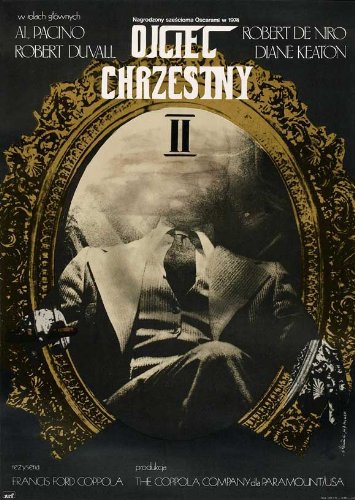
The Godfather: Part II (1974)

I really liked this movie. Maybe more than Part I. Although it's hard to tell. We split it over three sittings (maybe five days?) and I'm not sure it all stayed centered in my head. It's a lot to hold onto. I feel a great need to watch it again but, in all honesty, that second viewing is likely years off.

I don't think the orchestrated multiple deaths worked as well as in Part I, but that has to be one of the greatest scenes of all time.

It really is a wonderfully constructed film. Just, you know, freaking enormous.


ELSEWHERE
To Be or Not to Be (1942)

The mid-WWII frisson of seriousness and comedy with Nazis is always curious from our standpoint now. Like The Great Dictator or Duck Soup, this film doesn't shy away from shades of horror, although it never loses sight of its identity as a comedy.

I didn't quite love it as much as I anticipated, but that could be a first-viewing thing. That's not unusual with movies that are older and don't quite match my expectations (I wonder if the Mel Brooks version would fare differently), but I did enjoy it more and more as it went along. It's nice to imagine normal screwball hijinks working against the crush of history, isn't it?

If only, if only.


ELSEWHERE
Spirited Away (2001)

I wasn't enthused to watch this simply because I have seen it SO MANY TIMES.

But I can't regret watching it again.

The train scene alone is worth any length of movie.


ELSEWHERE
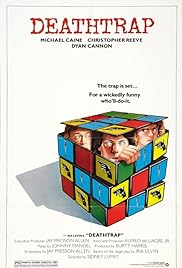
Deathtrap (1982)

I'd seen that poster image a time or seven, but I never gave this film a penny's thought until the 80s All Over guys gave it a ringing endorsement. Even then, I didn't have immediate plans to see it until I bumped into the dvd for a dollar at Goodwill.

Well, well, well!

And now I've seen it! And wow but is it a great ride. I genuinely had NO IDEA what would happen next. I don't want to get into the surprises or why they work or how they connect to other films BECAUSE I DO NOT WANT TO RUIN IT FOR YOU, but, hoo, do I want to. (I also wonder how the meta elements worked in the original stageplay.)

It's such a new experience to be thrown off guard and then to never again know what will happen next.

The film's rated R, but I honestly think it could be given a PG today. Which is kind of the opposite of what I often say about older films and ratings.

The cast is great (Michael Caine, Christopher Reeve, and, new to me and my favorite, Dyan Cannon). I'll even forgive using a psychic because, as Siskel pointed out, its old-fashioned theatricality.

Check it out!


ELSEWHERE
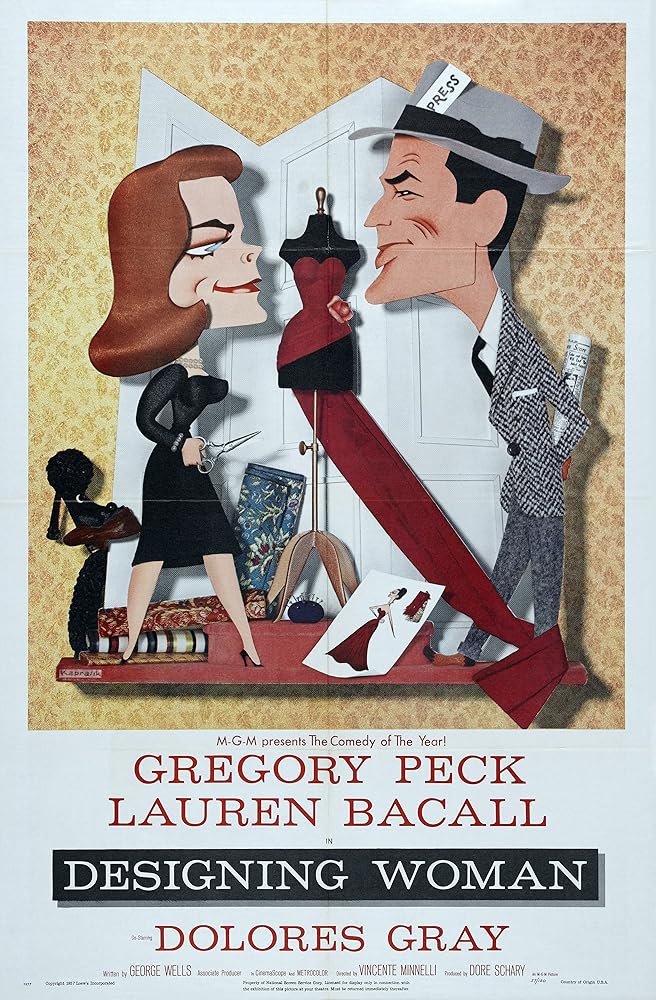
Designing Woman (1957)

This romcom is So Great. It did some amazing stuff with the camera---I love seeing the camera being part of the joke---like in Arrested Development or Edgar Wright.

And it starts off like a protomockumentary and continues with some of the best use of voiceover I can think of. And the casting is great. The punchy former fighter is one of the finest dopes I've ever seen and Lauren Bacall and Gregory Peck look like fortysomethings in love (and surprisingly sexy considering---or perhaps, in part, because of---their fullyclothedness). Refreshing today, don't know how people felt then.

Anyway. It holds up. That's all I'm saying.

Man meets woman in LA, they whirlwind, marry, go back to New York where they're both from, they begin to get to know each other. Wind up and let it roll. Includes cameos from actors I know from The Dick Van Dyke Show, Green Acres, and Get Smart. What's not to like?


ELSEWHERE
Louise en hiver (2016)

Here's the gist:

Elderly French woman, vacationing at a beachtown in Normandy, misses the last train back to civilization and is forced to live alone through the next July.

It's a very adult movie. By which I mean it's sole character is an old woman, grappling with aging, exploring her memories. It's a quiet film. Until near the end, all the vocals are in her mind, nothing is aloud.

It's quiet and thoughtful. And the watercolor backgrounds are marvelous.


HOME
Men in Black (1997)

It holds up pretty well! I liked it, Lady Steed liked it, the kids liked it. Most interesting to me, though, at this point, was how much it predicts the future. It's based on a comic book, and it has the wit and genuineness that picks up with Sam Raimi's Spider-Man films and then finds full measure in the Marvel movies. Plus it has style and strong effects (and even themes) that will get even more striking and serious two years later when The Matrix comes out.

I hear little good out of the new film, but this film breeds good will. (Which is why I watched the previous lackluster sequels.)


HOME
Toy Story (1995)

File under Hold up, Movies that.

I do think that millennials have the best luck here---they were old enough to still remember first viewing and young enough to not only be able to appreciate it as a good movie now, but to have the full brunt of childhood nostalgia attached. I imagine being the age of Andy would be ideal.

Me, I was spending my first weekend in the MTC when Toy Story came out and I was a bit, as the kids say today, salty about it. (And another movie, but I no longer remember what that other movie was....)

It's still funny and it's still moving---and they only get more moving from here. (Excepting, I have to believe, the new one. But I haven't seen it yet and I didn't think 3 could outemote 2, so I've been wrong before.)


HOME
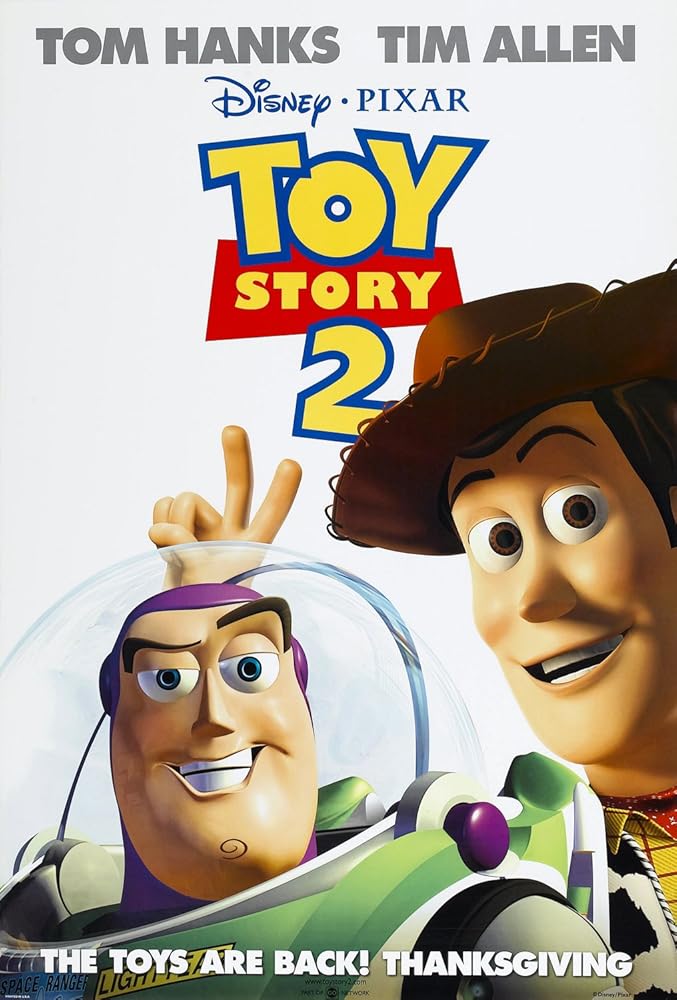
Toy Story 2 (2009)

I'm not sure I've ever really noticed this before, but Toy Story 2 directly references the first movie a lot. A LOT. Like, the amount a no-creativity sequel that's just the same movie in different locations might. The reason I never noticed, of course, is because Toy Story 2 is NOT a no-creativity sequel; it's one of the great sequels that prove sequels are worth having around. And so sequences like Running Under Items or Chasing Trucks at the Climax stand as their own highlights and not just as borrowed light.

Sure is a good movie, isn't it?


HOME
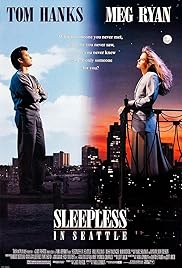
Sleepless in Seattle (1993)

I remember this film well enough I suspect I've seen it multiple times although I have no actual memory of watching it even once. Just having had watched it. I remember liking it. And I liked it tonight as well.

Somehow the movie has been popping into my head off and on for months now so when the library had the dvd out on display, I checked it out. Then, watching two Toy Story movies in a row, I just needed some Tom Hanks and what would be easy to grab but the library's Sleepless in Seattle dvd? What luck!

It's a pretty great cast---I didn't remember Bill Pullman and Rob Reiner and David Hyde Pierce were in it. I like all three of them. I'm glad that Bill Pullman's character wasn't turned into schmuck, cuckold, nor villain. I wish Rob Reiner was in more movies. I suppose being Nora Ephron helps....

I am embarrassed twenty-five years have passed and I still have not watched An Affair to Remember, The Dirty Dozen, or Fatal Attraction, though.

UPDATE: Thinking about Sleepless the next day I realized the characters never kiss and maybe never even share the screen until the final scene. That's remarkable. But the way they look at each other is so great it doesn't even matter. Bold move, Nora.


HOME
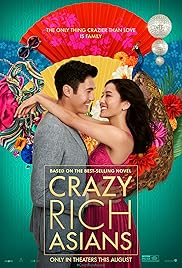
Crazy Rich Asians (2018)

I am so mad at this movie. I'm the kind of mad I only get at movies I expected to be really good and just aren't. And because of that I can't tell if the movie was just sort of mediocre or if it was genuinely bad. My tone may suggest the latter, but recognize that may be more anger than reality.

The things that upsets me most is how the female lead is written. She is supposed to be the empowered master of game theory, but after that detail is pointed out her first win is because of a lucky coincidence and then she's immediately crushed and the only time her game-theory chops might be coming into play, the movie wants it both ways because then she's utterly surprised by Proposal #2*. So which is it? Is she a genius at people? a manipulating bitch? or a lovely little do-gooder whose guileless self-sacrifice leads to her reward? She can't be all these things but the movie can't make up its mind.

Which is emblematic of pretty much all my issues with the movie. And it's upsetting because I love a good romcom and the world has been depressingly shy of them of late.

* I should mention that the second proposal scene did get me right in the weepies even though it was utterly undeserved. All that reliance on cliche and shortcut managed one payout. Lucky movie.

Awkwafina was put to better use here than in the also upsetting Ocean's 8, but I'm still waiting to discover just how funny she can be. I suspect a lot, but we don't know yet---not from these two data points, anyway.

Also in acting, the female lead couldn't deliver all her lines naturally (an illness she shared with some of the minor characters), Michelle Yeoh was her normal great self (lucky for the filmmakers since she's barely used at all), and the male lead was good. Some other minor characters were solid as well (for instance the groom, the gay cousin) and some were confusingly presented (one was introduced to us as The Character Who Wears Glasses, then she never wore glasses again).

It's good this movie made money and shows signs of being a cultural milestone. Let's just hope the next cultural milestone is good.

(One last note: it dealt with the issue of internet communication brilliantly.)


HOME
Room 237 (2012)

I probably would never have seen this move, though intriguing, had I not been pressured multiple times by a friend. Because I did not like The Shining. I still don't like it and a lot of the stuff in this film is nonsense, but it points out enough curiosities which must be intentional to make me at least consider rewatching The Shining (something I was unwilling to do as recently as last month).

In the end, I'm not sure any of it "means" anything in terms of authorial intentionality. But I am willing to accept that Kubrick intentionally created a space where others could create meaning. And that this space could be more Kafka than Joyce.

It was a fun watch, regardless. And I would like to run down some of the films quoted herein, like Murnau's Faust and whatever that film in the theater.


HOME
Toy Story 3 (2010)

It's still great. I'll never be able to see it again for the first time, but it had been long enough that it held a couple surprises.

Perhaps viewing conditions were not ideal (they were not) but this affected me less than I anticipated. I have a high-schooler now. But maybe I don't yet believe in college. Or maybe it's because he wasn't home watching it with it. Maybe it's because I spent the entire movie interacting with someone younger than Bonnie.

Regardless. I'm now prepped to hit theaters for 4.


LATEST POST

Previous films watched

2019
jan feb mar apr may jun jul aug sep oct nov dec

2018

2017

2016

2015

2014

2013

2014-07-03

Single paragraphs on flicks flicked during the second quarter of 2014

.

In theaters:


The Grand Budapest Hotel (2014): As visually arresting as anything Wes Anderson has done, though I found the story less riveting. In part, I think, because the the nature of its violence threw me out of the story. It was sudden and horrible, and vague and distant. Which may be like real life, but I never had a sense of what was what. No doubt I will like it better should I watch it again with adjusted expectations.

Muppets Most Wanted (2014): Not to the level of excellence at the reboot, but still a top-half Muppet movie. I laughed quite often and quite loudly even if ultimately it wasn't quite as satisfying as I would have liked. Nice that Sam finally got a starring role. Far overdue. Nice to see old 70s Muppet acts come back, even if some of my favorite minor characters barely made appearances. Bummer to learn about Jerry Nelson's passing from closing credits, though. . . .

How to Train Your Dragon 2 (2014): I love the first movie and I hoped for the best here. I was not disappointed. I don't know much about this Dean DeBlois guy, but I'll be trying to remember his name going forward. One thing I love about this movie is it didn't just pick up where the last left off. The kids are twenty now and the town has changed and they have changed---their relationships have changed---nothing's the same as we left it. Take the development between hero Hiccup and father Stoick---it's not as we last saw it, but the script doesn't pander to us or explain every new nuance. It doesn't need to because the nuances are there to be seen. (Though maybe they were covered in the tv show?) I hope in 3 we see more change. I would love to see Hiccup and Astrid married and so forth. I'll bet I would end up crying even more than I did in this one. By the way, fun fact, Cate Blanchett didn't do her own singing.


At home:


Babe: Pig in the City (1998): I haven't seen this movie since the first time I saw it. That time, I thought it was better than Babe. I may have been right. This is a beautiful movie both as written and as executed. Visually, it reminds me much of the late lamented Pushing Daisies. (and Nazi horror films). As for the writing, the use of the Greek (mouse) chorus is not as impressive as the first movie, but otherwise, this is in no way inferior to Babe. Astonishing, really, that out of such piling horrors so much joy and humanity can be found. Catharsis is a marvelous thing. In other words, though the visuals are clearly aging, they will remain timeless. (We miss you, Rhythm and Hues.) This must be one of the greatest duologies of all time.

Heathers (1988): I love how artificial this movie is. And while it could never be made today, I'm glad it exists. I laughed a lot and was appropriately horrified by the real life that followed.

Damsels in Distress (2011): Can't remember the last time I laughed so much during a movie. I loved it. This is the kind of movie I want to write: intricate dialogue delivered without affect, and bad tap dancing. Heaven.

Super 8 (2011): First, since most of what I know about JJ Abrams can be summed up in the phrase "lens flare" let me say that even so, at time I felt like I was watching a JJ Abrams parody. So many lens flare. It was absurd. Story? Adequate. Monster? Eh. But what makes this movie worth watching anyway is the actors, especially Elle Fanning. Those Fanning girls can really act. Her sister seems to have reached adulthood relatively mentally healthy and I hope the same fate awaits Elle because I want to keep watching her emote on screen. She's the real thing. And the other young actors are pretty good as well. The plot and adult characters are a half-baked macguffin. The kids are what matter. And they come through.

Moneyball (2011): This stupid bootleg copy is all screwed up. I probably spent thirty minutes trying to skip twenty minutes. Upsetting. Every moment in this movie's worth watching. It's great stuff. Guess I just need to get my own copy. In other news, could this be the year Billy wins the last game of the season? It's looking like a strong maybe.

The SpongeBob SquarePants Movie (2004): Little Lord Steed was anxious to share this movie with his parents, having seen it at his grandparents'. I haven't seen this since it first hit dvd so I had forgotten most of the gags, and was thus able to enjoy it as he hoped I would. It's not one of the All Time Greats or anything, but it's fun and manages to find a movie-length story which so many cartoons never pull off.

The Last Unicorn (1982): I haven't seen this movie for about 27 years. Certain images from it have stuck in my mind after all this time, but little else. I can see why now. There's little else to recommend it. With the exception of Alan Arkin, the rest of the cast never gets it together. Most of the jokes probably weren't good in 1982 and are bad now. The animation is both static and herkyjerky at the same time. The songs kill forward momentum (and the one sung by the unicorn is bad in a Miss Piggy way without Miss Piggy's ironic intentionality). Almost every scene takes unjustifiably long to fruit. Even the moments I remembered (the red bull pressing forward, the unicorns disappearing into the sea) have less weight than they seemed to have when I was a child. I'm utterly mystified how it's still finding new audience.

Eraserhead (1977): This is one of the finest works of surrealism I've ever seen. It's all about the taboo fears connected to love, marriage, and parenthood, but it only deals with them in images. It never says outright what it means. So all the spermatozoa and vaginas (which things traveling both in and out, sex and birth) are there to be missed if you're so inclined. Really, I can't think of a horror film that deals as well with the hidden terrors of parenthood. I'm still a bit mystified about the title and I'm still surprised the film ended in redemption, but now that I've finally seen it, I'm off to the internet to see what else has been said about the movie. For me, I noticed distinct connections to silent comedy (the early shots felt like humorous yet funniless takes on the Little Tramp), early Corman films---and a bunch of other stuff. I should have been taking notes. If I had intended to write more than one paragraph, I would have paused it about ninety seconds in and grabbed a pen and pad. Lots of stuff here. Lots of stuff.

Frankenweenie (2012): Even though I'd heard good things about this movie, it was Tim Burton. Disappointment is par. So I'm delighted to say this movie is crazy enjoyable and fun and even a bit scary. Scary enough it's good my older two weren't home. My only real complaint is there's some thematic confusion---is it pro-science or anti-science? The film is utterly confused on this point. But ultimately it's all about heart or something anyway so whatever.


Elsewhere:


Star Wars Episode IV: A New Hope (1977, 1997): Due to DVD difficulties, they switched from the new to the old halfway through (not to my complaint though I did have to see Greedo shoot first before teh switch was made). This time my thoughts were filled with how nearly the movie came to being a B-movie disaster. It's success is more than slightly amazing in that light. Still. I know I love it.

V for Vendetta (2005): Refreshing to watch a blockbuster-intended superhero film that is really only interested in playing games with symbolism. Sure, it can be a bit heavyhanded, but the editing and acting keep it fresh and interesting. Rewards multiple viewings.

Rushmore (1998): I've long noticed the Peanuts connection, but I think this was the first time I noticed the Christmas special's "Hark! the Herald Angels Sing" playing in the barbershop at the moment of reconciliation. Love.

Idiocracy (2006): Question---are we being encouraged to laugh at dumb people and then fight against them . . . or to realize we are them?

Duck Soup (1933): I didn't feel this way when I first watched it, but I'm now in the camp that calls Duck Soup the greatest of the Marx Bros movies. It's more chaotic and less sensible, but it's a satire of war. It's Beckett, it's Vonnegut, it's madness. It's war. Plus, it's hilarious. Even nonsense adds up eventually. If the final picture's a mess, that doesn't make it any less a picture. It might make it more of one.

Casablanca (1942): Heroism. I can't remember if I've ever had a class clap at the end of a film before. What a movie.

Spirited Away (2001): Miyazaki has a gift. He represents children such that those of us who have forgotten can remember. This film may be fantastic, but it is also closely observed realism. That is, methinks, part of its magic.

The Iron Giant (1999): I can't remember crying in class before. Nor seeing so many red-eyed kids. And the applause was even better than for Casablanca. And afterwards they had so many smart observations. If you're doing a writing-about-film unit, consider throwing this on your syllabus.

Jurassic Park (1993): Although the class made snide comments all the way through (some of which we're smartly analytical, eg noting that Grant's seatbelt problems were caused by nothing but females yet life found a way), they still jumped at appropriate points and clapped at the credits. They did not, however, by the T. Rex's final appearance. Fascinating.

Citizen Kane (1941): Sure, sure, sure. But I just don't like it enough to watch it enough times to really appreciate that it's THAT great.

The Muppet Movie (1979) and Monsters, Inc. (2001): While babysitting at a Relief Society function, I was in the movie room for the first half of the former and the second half of the latter. And I was singing Rowlf's number, that I had left just before, the entire interim. Plus, Frank Oz stars in both movies so they're practically the same anyway. And I love them both.

2011-01-04

100 movies, Thteeded

.

Señora H-B recently posted her progress on the 2007 version of the AFI 100-best list. Lady Steed and I once were working on the earlier lists, but haven't actively pursued said goal since having children. I thought though that it might be helpful to review our progress. (I'm only marking movies we have seen together.)

1. Citizen Kane, 1941
2. The Godfather, 1972*
3. Casablanca, 1942
4. Raging Bull, 1980
5. Singin' in the Rain, 1952
6. Gone With the Wind, 1939*
7. Lawrence of Arabia, 1962
8. Schindler's List, 1993*
9. Vertigo, 1958
10. The Wizard of Oz, 1939
11. City Lights, 1931
12. The Searchers, 1956
13. Star Wars, 1977
14. Psycho, 1960
15. 2001: A Space Odyssey, 1968*
16. Sunset Blvd., 1950*
17. The Graduate, 1967*
18. The General, 1927
19. On the Waterfront, 1954*
20. It's a Wonderful Life, 1946
21. Chinatown, 1974
22. Some Like It Hot, 1959
23. The Grapes of Wrath, 1940*
24. E.T. the Extra-Terrestrial, 1982*
25. To Kill a Mockingbird, 1962*
26. Mr. Smith Goes to Washington, 1939
27. High Noon, 1952
28. All About Eve, 1950
29. Double Indemnity, 1944
30. Apocalypse Now, 1979*
31. The Maltese Falcon, 1941
32. The Godfather Part II, 1974
33. One Flew Over the Cuckoo's Nest, 1975
34. Snow White and the Seven Dwarfs, 1937
35. Annie Hall, 1977
36. The Bridge on the River Kwai, 1957
37. The Best Years of Our Lives, 1946
38. The Treasure of the Sierra Madre, 1948
39. Dr. Strangelove, 1964
40. The Sound of Music, 1965*
41. King Kong, 1933*
42. Bonnie and Clyde, 1967
43. Midnight Cowboy, 1969
44. The Philadelphia Story, 1940*
45. Shane, 1953
46. It Happened One Night, 1934
47. A Streetcar Named Desire, 1951
48. Rear Window, 1954
49. Intolerance, 1916
50. The Lord of the Rings: The Fellowship of the Ring, 2001
51. West Side Story, 1961*
52. Taxi Driver, 1976
53. The Deer Hunter, 1978
54. M-A-S-H, 1970
55. North by Northwest, 1959
56. Jaws, 1975*
57. Rocky, 1976
58. The Gold Rush, 1925*
59. Nashville, 1975
60. Duck Soup, 1933
61. Sullivan's Travels, 1941
62. American Graffiti, 1973
63. Cabaret, 1972
64. Network, 1976
65. The African Queen, 1951
66. Raiders of the Lost Ark, 1981
67. Who's Afraid of Virginia Woolf?, 1966
68. Unforgiven, 1992
69. Tootsie, 1982
70. A Clockwork Orange, 1971
71. Saving Private Ryan, 1998
72. The Shawshank Redemption, 1994
73. Butch Cassidy and the Sundance Kid, 1969*
74. The Silence of the Lambs, 1991*
75. In the Heat of the Night, 1967
76. Forrest Gump, 1994*
77. All the President's Men, 1976
78. Modern Times, 1936
79. The Wild Bunch, 1969
80. The Apartment, 1960
81. Spartacus, 1960
82. Sunrise, 1927
83. Titanic, 1997*
84. Easy Rider, 1969
85. A Night at the Opera, 1935*
86. Platoon, 1986
87. 12 Angry Men, 1957*
88. Bringing Up Baby, 1938
89. The Sixth Sense, 1999
90. Swing Time, 1936
91. Sophie's Choice, 1982
92. Goodfellas, 1990
93. The French Connection, 1971
94. Pulp Fiction, 1994*
95. The Last Picture Show, 1971
96. Do the Right Thing, 1989
97. Blade Runner, 1982
98. Yankee Doodle Dandy, 1942
99. Toy Story, 1995
100. Ben-Hur, 1959

*Movies I'm fairly sure one or both of us has seen or that we own on DVD.

2007-08-06

Check, check, check (41-60)

.

41. "King Kong," 1933.
    I was surprised when I saw Peter Jackson's version to realize that I didn't know big chunks of the story and, therefore, must never have actually seen the original film. This was appalling, and so earlier this year I fixed that--and in the best fashion: sitting in front of a big screen. And although Jackson's take appeals more to my modern tastes, I liked the '33 version too. And, for the record, Fay Wray is gorgeous and those dresses should be illegal.


42. "Bonnie and Clyde," 1967.
    I want to see this--I like it when married couples going around killing people. It's totally my thing.


43. "Midnight Cowboy," 1969.
    I know, I know:
      Dustin Hoffman

      Jon Voigt

      only X-rated movie to win best picture
    So why haven't I seen it?

    I guess I just can't get over the fact that Dustin Hoffman's character is named after a Muppet.


44. "The Philadelphia Story," 1940.
    Jimmy Stewart. Cary Grant. Kate Hepburn. This movie should be awesome, but when we watched our copy, I was pretty underwhelmed. I wanted funnier. And, well, the circumstances in which we watched it weren't ideal.

    So the next time we see it, I'll know better what to expect and I'll get more out of it.

    Lady Steed saw it as a play with Miss Nemesis and they thought it was hilarious.

    I look forward to that.


45. "Shane," 1953.
    I have never seen any Alan Ladd movie. Not even Shane.

    Man, I suck.


46. "It Happened One Night," 1934.
    Classic Capra screwball and although it's a nice flick (and allegedly killed the undershirt industry), it's by no means the greatest of the screwballs. I've never been quite sure why it always shows up so high on these lists. I mean--it's a good movie, but #46 of all time? I like Tad Hamilton better!


47. "A Streetcar Named Desire," 1951.
    This is another movie with a great reputation that all anyone can tell me about it is that Marlon Brando is hot and sweaty in it.

    Stella, indeed.


48. "Rear Window," 1954.
    It's a shame we only have this movie on VHS, because even though it's not one of my top Hitchcock faves, I like talking about this one a lot. For instance, those of you who've seen this movie--I bet you think Raymond Burr killed his wife, don't you? Well, I say he didn't. Think I'm wrong? Prove it.


49. "Intolerance," 1916.
    This wasn't on the list ten years ago, and I know nothing about this movie.

    I feel . . . . . . . . ignorant.

    And I don't like it.


50. "The Lord of the Rings: The Fellowship of the Ring," 2001.
    Okay, I love this movie, but it's my Snow White complaint all over again: the first movie of a set is voted onto this list not necessarily because it is the best of the set, but because it is the first of the set. Drives me nuts.

    Anyway, seen it several times, loved it each, own the theatrical release and so should you.

    Unless you own the extended edition. Because that's awesome too. And the special features are the best. I love them. I would marry them, except....

    (Just kidding!)


51. "West Side Story," 1961.
    I've never seen this and I thought I would find it annoying, but I listened to the overture on a classical station once and loved it. So I guess I shouldn't think that anymore.


52. "Taxi Driver," 1976.
    Child prostitution is awesome, of course, so I guess I'll have to check this out someday. In the meantime, I'll remember Jodie Foster in this and this, instead, thank you very much.


53. "The Deer Hunter," 1978.
    Oh boy. Another sad Vietnam movie. Sign me up.


54. "M*A*S*H," 1970.
    I do want to see this one.

    It's the Korean War.

    It's totally different.


55. "North by Northwest," 1959.
    Probably Hitch's straightest action flick and a fun ride. But again, probably not as good as people make it out to be. Wonderful to watch, but he made better.

    Not with Cary Grant though.


56. "Jaws," 1975.
    Haven't seen it since I was a kid, but I just read something Hitchcock said after seeing this film ("He['young Spielberg']'s the first one of us who doesn't see the proscenium arch.") that totally makes me ready to leave my fears behind and check it out again.


57. "Rocky," 1976.
    Nuther boxing movie.

    Nuff said.


58. "The Gold Rush," 1925.
    I've only seen parts of this one, but those parts were good.

    Go, Charlie!


59. "Nashville," 1975.
    I don't know much about this particular Altman film. Unless I learn something really fantastic all of a sudden, M*A*S*H and A Prairie Home Companion will remain well in front of it on my to-see list.


60. "Duck Soup," 1933.
    Man, the Marx Brothers are AWESOME. And if you're looking for a place to start, this is as good as any. Or, you can just do what I did and get this and this and never look back.


the Marx Brothers