Showing posts with label comics. Show all posts

2026-09-14

"Remember you can trust me / I am not as evil as you think"
(
Snocaps)

.

This is a wild ride of books here. Holy smokes. I'm so eclectic!

I need to feel that way after earlier today..... 

.

047) Resolution by Robert B. Parker, finished August 8

Picked this up from a Little Free Library when I had an hour to kill. Sat near a streetlight under the BART tracks. Logged a hundred pages right there. Every time I sat to read from it, seemed like the pages flew by. Still took a week to notch 321 pages. That's how it goes sometimes.

Parker has a plain style that makes Hemingway look wordy and and McCarthy logorrheic. But it's deep into character. And memorable. Surprised such simplicity works. But work it does.

Probably a lot to learn from reading Parker.

This is the second of four novels in this series about Cole and Hitch. Violent stuff. And thoughtful on questions of morality. But most of what it may be saying goes unsaid.

That's just how they talk 

seven days 

048) American Zion: A New History of Mormonism by Benjamin E. Park, finished August 23

Given that Aaron and I have spent hours (and hours) discussing this book over the last couple years, I don't feel a great need to spill at length here, other than to say that it is excellent. It it tough and steely, honest and true, generous and enfolding. It puts things I know into freshly sketched context and provides new information as well. It's well written and endlessly fascinating. Really, it's everything you might want from a one-volume history on a massive topic.

That topic is the long relationship between the Church of Jesus Christ of Latter-day Saints and the United States of America. Which has ranged from fraught to bemused to cozy to dangerous.

As he points out in the final chapter, the current tenions arrive during a unique moment: "The battle they  ['Latter-day Saint authorities'] are waging is not between Mormons and America, as the dividing lines are now within America."

Yeah. So...is that good or bad?


Tomorrow, the two-year anniversary of my beginning to read American Zion, Aaron and I are getting online with Ben to discuss his book and some other shared interests. I'll come back and turn this paragraph linkcolor when that's available online. 

exactly two years to the day 

049) The Candy House by Jennifer Egan, finished September 1

An absolutely brilliant book. My first Egan and I think it's playing similar games to her famousest one? but this fractured series of barely-related stories is absolutely appropriate for the ideas the novel is playing with. Among the stories is perhaps the best second-person story I've read (I can't remember the other couple great ones I know I've read, so who can say for sure).

Up until the last twenty-some pages, I suspected I would be telling you about how great the book was, every element truly excellent, yet not really a very good book because, connected or not, what, really, did these stories have to do with each other? But the last couple stories worked it out. Especially the penultimate one.


I remember reading somewhere, Orson Scott Card saying that he'd rather write novels that short stories because he spends the same amount of creative capital on either and novels pay better so why waste all that effort on a mere story? By that reasoning, this novel required the creative capital of any dozen other novels. Each section is fantastic. It took me awhile to understand/accept that characters that had been so richly drawn might ne'er return. It seemed . . . spendthrift.

The novel takes place in the recent past and the recent future in a world much like but not identical to our own. It's fair to call it science fiction but as it feels more like a world just to the edge of our own that "science fiction" seems like an exaggeration.

But isn't that often the very best science fiction of all?

three weeks more or less 

050) Juliet: The Lives and Afterlives of Shakespeare's First Tragic Heroine by Sophie Duncan, finished September 7

I absolutely tore through the first half of this book (title Searching for Juliet according to the acknowledgments and in Britain—but I like our cover much better*) but slowed way down in the second half where it felt like Duncan was sometimes stretching to fill pages with interesting things she'd found even if there wasn't much to say about them. Occasionally she devolved into overly online liberal cliche in order to glue it all together. That said, I still really dug the book.

The British cover looks like it's meant to attract a YA audience. The American cover is just amazing. I wish you were holding it in your hands.

And this image of Juliet is perfect. She's the right age (not quite fourteen), lovely, thoughtful. I've probably seen it before (I married a huge Waterman fan), but I didn't remember it. It's great.

My other complaint (of this book, remember, that I actually really really like) is that they didn't pony up for a couple twenty-page glossy sections filled with images. Her section on the art of Juliet filled me with a desire to see what the heck she was talking about. And I'd love to see images from various productions she discusses. I care less about images from Verona or tragic couples labeled Romeo and Juliet but you know that other reader want to see that stuff. Not sure how much more expensive that would have made the book but it would (likely) have been worth it.

I want to go back to my first complaint and flesh it out a little. Duncan's at her best when discussing Juliet as an artistic phenomenon. How the story is told and retold in various media (the stage, oils, novels, movies) and her cultural and literary criticism is excellent. She has a harder time when she wants to talk about Juliet's influence on the real world. The stuff about fascists was fascinating but kept losing track of Shakespeare's Juliet. And when we get to topics like real-world people dying under a Juliet label, or diversity in casting, she keeps getting distracted, talking more about contemporary concerns and trying to shove Juliet into the conversation. It's awkward. The information is often interesting but the application to her new arguments read more like a string of tweets fueled by barely contained liberal rage. And hey—I'm pro–liberal rage! I got plenty myself!) but instead of Juliet taking the lead, current worries do, and the book suffers as a result.

But, once again, I loved this book. Through the first half of the book I was constantly interrupting people to tell them cool factoids I was learning. In the second half this rarely happened even though there was still tons of cool stuff. Juliet is the kind of book that makes me wish it was a thing, that writers of nonfiction would create an online repository of all the cool stuff they'd collected. The closest I found for Juliet was its author's Instagram (it's not very close). It's the 2020s! You're allowed a website!

Sigh.

Anyway, if you're at all into this stuff, definitely read Juliet. It's terrific.

(Also, if anyone wants to push back on my first complaint, let me just say you're absolutely correct. It may be a bit sideways, but the naming patters of slaves is important and belongs in the book. I suppose my real issue is rhetoric, not tangents.) 

under two months 

051) Lost Girls by Alan Moore and Melinda Gebbie, finished September 12

I kind of want to write a long essay on this book and publish it somewhere but I probably won't because I'm already annoyed with myself for even reading it. But best I can tell, no one's written about Lost Girls with the goal of interrogating its self-serving and redundant and contradictory, built-in, redundant rhetoric. In short . . . it really only works if you ignore what it's saying. But I suppose a work like this that is, ah, meant to be enjoyed an image at a time, can get away with such crap. Especially when it's done by a pair of arteests. And, in this case, if you say the emperor has no clothes on, people might miss the metaphor.

As long as I'm complaining, let me give one to each of the creators. 1) Moore is doing the same thing he's done a dozen times before. 2) Gebbie has a solid sense of anatomy but I'm not sure she's ever seen a human face before. 

nine months 

052) Moby-Dick by Herman Melville, finished September 12

Man, does this novel end powerfully. While at times I'd really had enough of Moby-Dick, here at the last, oh, thirty pages, it is absolute storytelling fireworks and thematic explosions. 100% successful. Amazing.

I suspect every time I read this book (this is only time two) different parts of the story will appeal to me No doubt the beginning will always charm and the ending will always thrill, but what parts from the middle will stick and which will feel disposable?

Part of my wishes Melville had edited a bit more, hadn't felt a need to include everything. But any cut would be a loss to some reader. Some of my favorites this time that may or may have not thrilled me last time include the treatise on white and the Spirit-Spout. The Spirit-Spout got me thinking about how to properly adapt Moby-Dick to film and I decided the best way is twenty or so hourish-long episodes, with the same cast, but delivered by differing behind-camera crews with visions unique to each story. The Spirit-Spout is likely animated. Taika Waititi can have the meeting-Queequeg episode. And so on.

I listened to perhaps as much as a third of this. When I was sick. Driving the length of California alone. I liked the experience well enough.

Of course the real question is will I read Moby-Dick again—truthfully, I do not know.

But even though I'm ambivalent to some measure, it's not a book that will leave me.

I don't think it's unfair to call it a masterpiece. 

five months 

INTERRUPTION: Usually I forget things I want to stay about books and usually I let it be. But I'm making an exception and am now at 10:02 adding a couple thoughts about these two books finished today.

First, reading the conclusion of Moby-Dick so close upon having read Job twice in two translations is to make the great white whales mythic resemblance to Leviathan, Yamm, the great Canaanite god of the sea plain. And to make Moby Dick all the more frightening.

Job is incredible.

Second, I feel a need to attack Lost Girls a little more directly. The big problem with it is an inherent dishonesty in its project. Explicitly, it argues for pornography as a harmless hustle. Implicitly (and thus more honestly), it argues over and over again that pornography has a grotesque and destructive power. But those regular explicit whitewashes are pointed to as being Clever or Thoughtful and thus sufficient to cover up its deeper gross and sinful truths.

Which is kind of a shame. Because if you set aside the book's fixations on incest and child abuse and the like (which you most certainly should not do) it does have interesting things to say about human physicality and the connections between body and mind, body and spirit. Unfortunately, those things can never be focused on for long as it has to dive back into the merely depraved. Such a waste.

Perhaps the best evidence of what I speak is in Lost Girls' denouement in which it presents, as its moral coup de grace, the stunning and bold claim that nasty German soldiers consumed with a lust to destroy are the bad guys. Astonishing take. A real revelation. They break a mirror and burn a building. That's bad. Sorta puts the raping-children thing in perspective, doesn't it?

Yes. The story thinks that by occasionally (but explicitly!) saying that incest and child abuse are not ideal and should be avoided or by occasionally (but explicitly!) saying that incest and child abuse are fine when mere harmless fantasy, it negates the need for anyone to question its constant and deeply embedded implicit (but, ah, sometimes explicit) arguments to the contrary. But remember! soldiers break mirrors! philistines hate Stravinsky! and so, you know, incest, child abuse...not so bad, right?

Don't forget how on the last page we said war is bad!


053) Apos by Anna M. Wright, finished September 14

First, no question this book is a thing of beauty. Even how it was packed when it arrived in the mail took my breath away. The book itself is printed gorgeously. A terrific use of paper and colors. When you hold it in your hands you'll be surprised you paid so little for it.

The book consists of stories Anna collected over many, many interviews with former missionaries. These former missionaries have a range of attitudes toward and relationships with the Church now that some years have passed. Anna collects their stories and shares them as is, without any judgment. It's almost unsettling how fairly she treats each person without ever inserted her own opinions regarding whether the person is right about this or wrong about that. She just accepts them as they are. In this way, the book is an awesome act of charity. And a bit of a fingerwag at those of us who want to fix people. I don't think of myself that way, but many times when reading this book I wanted to jump in and set folks straight. Even though, time and again, the stories demonstrate that is rarely a helpful coarse of action.

The book also makes me feel old. Stories of pandemic and online missionary work are so alien from my experience thirty years ago. And yet these kids (and they do feel like kids to me, now) are terribly, terribly familiar.

Lately, I've been developing a (hubristic?) desire to serve as a mission president, to serve young missionaries with generosity and kindness, empowering them through patience and listening and demonstrated forgiveness. Don't know why I've been feeling this way (such a call is ludicrously unlikely), but Apos confirmed both the value and difficulty of such service.

Good luck to all the mission leaders out there. Missionaries need your love and your kindness and a certain amount of nobility and goofiness to demonstrate what being a fail-and-try-and-fail-and-try again Saint may be.

a couple months i guess 


previous books

2026-08-10

One of these things is not like the other

.

If you look real closely, you'll find a masterpiece of lasting genius buried among these fresh comics for kids.

.

043) Urban Legend Hunters: The Dreaded Mr. Snipe by Joel McKerrow and Wayne Bryant, finished July 23

Honestly, I didn't care for it. It's trying so hard to be funny and clever and I found it tiring. HOWEVER. The 9yrold read it and loved it and insisted I read it which is why I read it. And, honestly, if you find all the scatology and "wit" entertaining, this was a terrific series launch. So I suspect we'll be seeing these around the house for a while.

two or three days 

044) The Firelight Apprentice by Bree Paulsen, finished July 23

The 9yrold finished this and declared it excellent and I thought I recognized the author's name. Sure enough I've read her Garlic books for kids and her vampire tale for adults so I figured I'd take an hour and knock this one out as well.


It's good. Paulsen does seem to have a strong need to push certain concepts forward (which is fine) and this books seems to borrow a plot choice from Frozen (which is fine) but somehow.... Little things like the child looking like a dwarf and some pacing issue kept me from really loving this one—I just couldn't settle in. Anyway, I'm sure her next one will be no less charming and maybe more satisfying. 

one night 

045) The Five Books of Moses: A Translation with Commentary by Robert Alter, finished August 4

I absolutely loved reading this version of the Torah. Although I certainly will continue reading other translations, I'm sufficiently persuaded by Alter's translation goals that I may well spend the first half of 2030 reading it again. I felt so educated in terms of literature and history and archaeology and theology by his voluminous footnotes (I'm certain they're longer than the Torah itself) and I happily shared recently read ones with all I talked to but! they were so many that I couldn't possibly hold onto them all. I must read this book again!


The best twenty dollars I've spent on a book? Maybe. Certainly I've zero regrets. And I heartily recommend Alter's work to each and every one of you. There's a certain magic that only someone who has spent their entire life mastering one realm of knowledge can impart, and this book offers that magic.

the year so far 

046) Surfside Girls: The Mystery at the Old Rancho by Kim Dwinell, finished August 6

Daughter o' Mine continues making me read comics from the library but I really liked the first of these and I liked the second too. I hear it's now a show on Apple+, which makes sense. Could be a modern Scooby-Doo? It has sort of a utopian view of both California's rancho/mission era and modern politics, but it's okay for kids to believe the world is good. That should be part of their diet.

one sit 

previous books

2026-07-13

Fifty-three days and only nine books
(American literacy truly is in decline)

Man alive. Reading Moby Dick is really slowing my ability to finish other books. I am enjoying it, but tell you what—I'll be glad when it's done.

Kind of blown away I've been building this set since June. Get reading, Theric!

Incidentally, my essay on Napoleon Dynamite just helped launch Waypoints, a new pop-culture site. Check it out! 

035) Okchundang Candy by Jung-soon Go and translated by Airin Park, finished May 22

Why are there so few picture books for adults?

My guess is economics. Adults don't reread like kids do and so the dollars spent on a picture book divided by the number of minutes spent with it just doesn't make sense.

This book is much longer than a kids picture book (the library put it in Juvenile Graphic Novels) and might appeal to kids, but even with its juvenile p-o-v (sorta; it's an unseen adult remembering) I feel that this story about her grandparents' love and how it navigated lung cancer and widowhood is inherently adult.

It's a lovely and moving book.


(Yes it's a library book and yes this is 2026 but it didn't feel like cheating because I'm not the one who checked it out and it didn't take that long to read.)

one sit before and one sit after dinner 

036) The Lost Gate by Orson Scott Card, finished May 27

I actually picked up this book with the intention to get rid of it. I'm a fan of Card's and I do want to finish reading all his early work but this last YA novel didn't hold much interest. Out of respect, I decided to read the first couple paragraphs, however, and here we are.

In the afterword, Card says he's been developing this world and its magic system since 1977. And no question this is one of my favorite magic systems I've ever read. He also, in the afterword, says that he finished this novel by cranking out a chapter a day and getting it to his publisher after the deadline. This may show.

I don't like a lot of of things about this book. It seems to be trying to fit in aberrant sex with the subtlety of a 14yrold writing sex for the first time. It's weird and gross and off. It doesn't work. And all the characters under the age of twenty-five talk like . . . well, not like humans circa 2010, I can tell you that. It's crazy because writing about precocious kids is Card's wheelhouse and these kids aren't real.

But the plot and story are excellent. I'm tempted to read more of the series simply because those aspects are so strong. But that's exactly what one could get from a Wikipedia summary. But as the characters age, they should become more realistic. But, having read a lot of Card, I think I already know how a lot of their characters will develop and related to each other as time goes on.

So in the end, a bit of a mixed bag. I would say I wish he had more time to refine the novel (I feel he could have), but I'm told he recently said in an interview that, since the death of his son, he hasn't been able to tell if his work is good. So maybe not.

(It's a biographical detail imbued with pathos, regardless of this book's quality.)

I understand why people like this novel but in the end, I think it gets a soft thumbs down from me. There are many better Card books. Save this for when you're hungry for second-tier work.

One other quick observation: this book is unfilmable. A new kind of narrative artform demands invention before this book can be adapted to something involving actors. Something deeper and more internal than "virtual reality"; something that can affect your proprioception the way films affect your retina.

perhaps a month 

037) Bad Kitty Goes on Vacation by Nick Bruel, finished June 1

The Bad Kitty books are great. But me, a fuddyduddy, does not prefer them colorized.

a june first 

038) Backward by Ben Abbott, finished June 10

Read or performed, Ben's work is great. This is his final thesis for his MFA and it's terrific. A man relives each day of his life in backwards order then relives them once again—once more forward. I love playing with time. Some of my favorites of life being scrambled include one of the stories in Hyperion and the novels Replay and The Time Traveler's Wife, but Ben's found something new and it's wonderful.

It's a one-man show and I'd love to know how it turned out. It seems like a real challenge for any actor and I'd love to see how it all turned out.

Wonderfully, following the play (because this is a thesis), Ben takes us through the writing process. And I maybe loved that as much as the play (although only the play made me cry). The perfect thing to read, really, before I disappear for a week to rewrite Honeymoon in Copper (this is then world premier of the title—feel special!). Some of the holes in the novel are coming into focus and Ben has pushed me to nail them down. Exciting times!

The play's nominated for an AML Award and you can read it yourself by clicking the title above. I certainly recomment it. 

one long sit 

039) Too Many Cooks by Rex Stout, finished June 12

This is my second Nero Wolfe novel, though I've collected maybe half a dozen since the first.

The structure of this novel was quite different from Fer-de-Lance which made me happy. This was a big more what I expected the first time but, since it wasn't last time, now it wasn't this time. The reveal wasn't until the penultimate chapter in a gather-them-all-in-one-room scene and since Archie's our p-o-v character, I really had no idea what was about to go down. Fun. Less interesting as a mystery, perhaps, as the previous volume, but good.

What was more interesting was how Stout explored racism and misogyny. I know!

Amazingly, this novel not only gets Wolfe out of his apartment but clear down to West Virginia where we encounter some plainfaced Southern racism. Archie's a bit disgusted by it but not because he isn't also racist (though he may dislike d***s more than n*****s) but because it's crass how these white Southerners act. Show some dignity, you crackers.

Anyway, Nero Wolfe does treat the black characters with respect. Partially that's to his own ends, but also, one senses that he means it. That his more worldwide past has led him to a place where he knows better—genuinely knows better—than to judge a man by the color of his skin. He means it.

Yet Nero Wolfe is, simultaneously, the worst misogynist of them all. I suspect his decision to live a life undistracted by such things as romance and wiles was only possible by developing an antipathy for women. Mere disinterest was impossible. Hatred was the only path to safety and he took it.

Mind, most of what I'm saying here is my analysis—it's subtext. But I think I'm right. And it's a richer book for it.

This isn't to say the book as aged brilliantly. But I think it has aged acceptably. 

couple weeks at most 

040) Pickles by Brian Crane, finished July 7
041) Pickles, Too by Brian Crane, finished July 7

Brian Crane is an old friend of my in-laws. We're visiting them now and they have his first two collections, signed, and I picked them up. Good stuff.

two days

042) Lost & Found by Shaun Tan, finished July 13
043) The Arrival by Shaun Tan, finished July 13

Lady Steed insisted she had no idea who Shaun Tan was which seemed insane to me. Who can read The Arrival and ever forget it? But I put some of his books on hold at the library and they came and I couldn't let the opportunity go by without re/reading some myself.


Lost & Found is a collection of three earlier works. They're concerned with some of the same things as The Arrival but they all rely on words which keeps the reader a bit more grounded. The Arrival has words only in an inaccessible tongue. This is part of what makes it perhaps the greatest exploration of the immigrant experience. You the reader will feel as lost and confused as our immigrant protagonist. At the same time, you'll gender a renewed appreciation for the greatness of nations that welcome the tired, the poor, the huddled masses yearning to breathe free, the wretched refuse of other teeming shores, the homeless, the tempest-tost. That act of welcoming such peoples may be the best way to define a nation's greatness.

The Arrival's very much in the tradition of the one-image-a-page artists of a century ago, but his artistry has more options available to it. For instance, pacing, as when he spends a single spread with 60 individually drawn images of clouds, or a spread of 24 images of one plant's entire life cycle to show the passage of time. Truly a masterpiece by a master artist.

I would love someday to go to a Shaun Tan retrospective at a museum (are you listening SFMOMA, Cartoon Art Museum?) and just stand in front of his art at the size he made it and just take it all in.

one evening 


previous books

2026-02-13

Emotion-of-your-choice Valentine's Day!

.

Just realized this is a perfect Valentine's Day collection: Youth, Having Babies, Disenchantment.

Enjoy! 

006) Midville High: Comic Caper Collection by Matt Blair, finished February 5

Apparently Mr Blair started making these comics about high school when he was in high school and continues to make them now as a teacher himself. (The characters stay in the 1990s.)


This near-300pp collection has plenty of hijinks with bits of satire and parody. He's publishing them himself so some things like line-darkness aren't what you'd expect if, say, Fantagraphics had done the release, but the reading is fun and what more do you want? At times, it's excellent. There are moments where I was surprised he didn't get picked up by a syndicate or something. And he has the skill to produce a more high-schooly version of, like, Big Nate or something. I imagine he prefers control and is satisfied with the indie life but he has the chops to go big were that the goal.

But I don't know that a contract with Random House or something would be an improvement. Sure, the blacks would be blacker and a good editor could push him to higher states of excellence but there's a lot of pleasure in this handmade labor of love, and the purity might be lost in a shinier version. 

saturday and thursday 

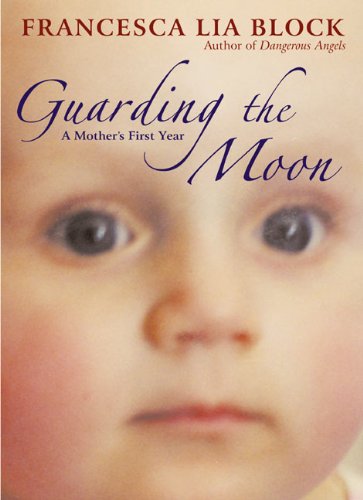
007) Guarding the Moon: A Mother's First Year by Francesca Lia Block, finished February 10

It's funny it took me so long to read such a slight and readable book. I felt like I was devouring it at great speed—but then something would interrupt and it would end up under a pile and weeks would pass....


But I loved the book. Block's beautifully fluffy way to warping time and relationship on the page to match the feelingof loving another person was never better suited than to the true story of loving her first baby. Everything is fluid and nothing is stable and we are tired and mad and deeply in love and yes this is exactly what it is like to have a child,

It's terrific. 

eight months 

008) The Sellout by Paul Beatty, finished February 13

This is gonna be a multiparter, not all of which are about the contents of the book. Buckle up.

Memory is a fallible thing: I have a very clear memory of my first AP Lit training in room in downtown San Francisco, the summer of 2008. On the last day, there were a bunch of books on the back table. Of course I took some. Among them were at least a dozen copies of The Sellout, its flourescent-pink accents attracting the eye. They were there because CollegeBoard wanted to pressure us to teach more books like this—humorous, as I understood it.

Years pass. I have most of my copies in a drawer at school, waiting for me to read the one I have at home. The one I have at home is on a shelf beside the front door. The visible pink on spine fades out to a barely-there orange you can only see if you put your eyes right next to the paper.

I am embarrassed it is taking me so long. This was a NYTBR 10 Best! This got an award from th National Book Critics Circle Award! NPR called it a masterpiece! It won the Man Booker! It's slathered in exorbitant praise, mostly about how funny it is!

Anyway, I finally pick it up because this is the year I'm only reading books I actually own and it's actually working and one of the first things I notice is the copyright date: 2015.

Huh.

So....

I think my memory is correct. Except I think it's two memories combined.

I also suspect that contrary to what were told, it was less CollegeBoard suggesting we teach The Sellout and more Picador a subsidiary of Macmillan itself a subsidiary of the Georg von Holtzbrinck Publishing Group. Regardless, I would never.

Culturally responsive pedagogy—possible? I've been teaching long enough that I can note when things suddenly change. My two best examples are as follows:

I frequently teach Frankenstein to AP Lit and, when I do, we often watch a movie after the test. Most commonly voted for is the Boris Karloff–starring masterpiece, but occasionally something else gets chosen (especially when I'm teaching multiple classes and don't want to watch the same movie more than once in a day), for instance Young Frankenstein. Which is a great movie although there's a played-for-laffs rape scene that I've always hated. But other people find it funny so hey, maybe I'm a prude for not playing rapes for laffs myself.

Anyway, kids did laugh at that scene, same as their elders. And then, one year, like flipping a switch, they did not. They were deathly quiet and uncomfortable. And so it's been ever since. Which is simpler because it's easier to talk about it when we start on the same page.

The other big example, also from AP Lit, is August Wilson's brilliant Fences. Love that play.

When I started teaching it, I heard scuttlebutt from the online student-services center, that my Black students were grateful that we were reading it and for the way I was handling the plays language.

Then, one year, the scuttlebutt changed. I was getting forwarded complaints. That reading Fences was leaving my black students deeply uncomfortable and angry, that they felt by bringing its language and characters into the classroom was feeding racism among their peers and telling lies about what it means to be Black.

For a few years, I tried changing how we discussed the play, but the complaints intensified. Finally, I dropped it. I now have not taught it for several years. I miss it.

In fact, as time goes on, to keep students happy, I try to avoid teaching anything "culturally responsive." I teach almost entirely dead white Americans and Brits. This quarter, for instance, our primary texts are Steinbeck, Vonnegut, and Shakespeare. And, if everyone is not happy, at least they are not complaining.

I'm not exactly sure what's gone wrong, but I suspect part of it is depth. Fences might be more acceptible if I were also teaching The Emperor of Ocean Park and The Hundred Thousand Kingdoms to balance out the historical-fiction-where-racism genre. The problem of course is I should really also be teaching at least three novels exploring Tibetan-American culture and at least three novels exploring Mexican-American Culture and  at least three novels exploring Japanese-American culture and at least three novels exploring Pakistani-American culture and at least three novels exploring Chinese-American culture and etc etc etc and you see quickly that the semester is not long enough. I hate this.

(I do have a few ways to mitigate the lilywhiteness of our major texts but the fact remains that the average actual single-author book we read and discuss as a class is more Jane Austen than August Wilson.)

Relevancy to the book: Oo boy.

So this is a book decidedly about racism. Racism here in 21st-century American. And it's not just "about" racism. It enacts racism in just about every imaginable way. It insists on placing racism literally front and literally center. Our main character, a Black Angeleno, finds himself owning a slave and instituting segregation.

See, his town has been taken off the map and segregation is part of the trick to bring it back. And not only does it, but the kids believing their school has been segregated leads them to instantly begin to excel. They're on their way to being the third-highest-achieving school in the state.

And of course I hate that but as I look back at what I've already written and am I inadvertently arguing the exact same argument?

The first half of the book I was mostly annoyed. I'm not pretending that post-racial America was achieved or anything, but it's so reactionary and angry I had a hard time finding my way in. And I wasn't sure I was welcomed in, regardless. I did laugh at a couple of the jokes, but most of them—I recognized that they were humor-shaped but I wasn't at all certain they would actually be funny to any slice of America.

The book starts at the end with the opening moments of our protagonist before the Supreme Court with normally taciturn Clarence Thomas losing his mind, cursing out our protag, calling him awful things, and finally collapsing into his seat with.... Well, this isn't the sort of blog that quotes what Clarence Thomas says.

And he's not the only real person to make a show here. Bill Cosby, Colin Powell, and Condoleeza Rice get raked over the coals but they also learn to Crip Walk. Barack Obama is weirdly a source of hope and pleasure but also no better than those other three. But time is weird here because we're both in his presidency and years before simultaneously. But Beatty isn't superconcerned with accuracy.

Or...sometimes he is. Some of what he says about geography or farming or surfing is so exquisitely detailed it's impossible to believe it's not true. But then our protag will plant an apple tree which'll die two days later but have apples on it. To which I express doubt.

I would argue back at myself that this isn't the kind of book to which accuracy matters except then why spend so much time getting us to believe it is accurate? And learning from this book that Stalin executed soldiers photographed with Americans when the two armies met on the Elbe for "fraternizing with the enemy" while I'm teaching Slaughterhouse-Five makes me want to share that tidbit but...given some (granted, casual) googling, I'm not so sure that's true.

This is a book which makes big claims on telling the truth and pumps itself full of realistic details. But this is also a book which proudly declares it couldn't care less about what's true as the fact is the facts matter so much less than the truth of things. As in "How to Tell a True War Story."

Which makes sense. One thing The Sellout makes clear is racism is war. Even if most people won't admit their in the fight.

So you hated it. No. No, I did not. It wasn't really to my taste and I wasn't sure the book wanted me reading it and for much of it I wasn't really enjoying myself and when the satire left the locals and went national I found it more silly than provocative, but—as it wrapped up, I found myself deeply moved.

The final pages with the restoration of his hometown and his memory of a standup comic took all the ugly and the chaos and the nonsense and wrapped it up with a humanist bow. The protagonist, whom I'd always found interesting, compelling, and genuinely human, ceased satirizing himself and his certainty, and opened up to show that, even he who weilds racism confidently as a both scalpel and chainsaw, doesn't know what's going on or what it all means.

I do sometimes wonder if we could all embrace our ignorances publicly and humbly we mightn't be a bit better off.

I don't know if that's true.

But as long as we all know what's going on, we never will. 

about three weeks 


Previous books of 2025
(and years more distant)


The first five books of 2026

001) Red Harvest by Dachielle Hammett, finished January 3
002) Never Let Me Go by Kazuo Ishiguro, finished January 14
003) Snoopy's Guide to the Writing Life , finished January 16
004) You Are Too Much, Charlie Brown by Charles M. Schulz, finished January 19
005) Ice by Anna Kavan, finished January 24


PRIOR YEARS OF BOOKS

2007 = 2008 = 2009 = 2010 = 2011 = 2012 = 2013 = 2014 = 2015
2016 = 2017 = 2018 = 2019 = 2020 = 2021 = 2022 = 2023 = 2024 = 2025


2026-01-24

The first five books of 2026

.

Baby, we're off to a strong start with this only-reading-books-we-own thing. Three excellent novels and some quality time with Snoopy.

Let me tell you all about it! 

001) Red Harvest by Dachielle Hammett, finished January 3

Incredible novel. It's been a while since I've read any Hammett (The Thin Man in 2019 and The Maltese Falcon in 2007)—well, I read the first story or two in The Continental Op two summers ago (and now I'm anxious to get back)—and man alive is rediscovering him each time that a blast of freezing-cold over-oxegenated air clearing out the lungs and brain of accumulated gunk. Bracing stuff.

Anyway, the Op has been sent to a presumably Montana town although the geography seems more Northern California/Oregon/Washington or Utah to me (the ops seem to travel north from San Francisco but Salt Lake and Ogden are the closest big towns so . . . I have more thoughts about where imaginary Personville might be, but I don't know that we can prove it from the text; ask someone whose read it three times), but it doesn't matter. It's a corrupt mining town and in a fit the richest man in town hires the Op to take down the corruption. Once he gets over his pique, he repents of that desire but the Op's already taken his money and dammit he's gonna earn it.

But the easiest way to earn it is to turn the combinations against each other and let them murder each other off. And so the bodies begin piling up.

This book moved up my to-read list thanks to Murderland which uses descriptions in the book to show how Personville must be Tacoma thanks to the grit and grime and, yes, murder. I'm so glad I did. It's having an immediate impact on my work in progress and, I suspect, in good ways.

One way it hasn't impacted me yet but I hope willis Hammett's acumen in ending something and getting out while the getting is good. Amazing.

If you've never read Hammett, perhaps the time has come. Read this one if you want to watch an alocholic take on an entire corrupt town, compromising his remaining morality every step and solving a batch of mini-mysteries every few chapters; read The Thin Man if you want to watch an alcoholic in an excellent marriage solve a satisfying puzzle; and read The Maltese Falcon if you want to visit classic San Francisco with another alcoholic with a knack for violence and clearsightedness. Or read another one and tell me what I'm missing out out.

three days 

002) Never Let Me Go by Kazuo Ishiguro, finished January 14

I really should have read this book years ago. It's on the list of dystopian options my students choose from and it gets chosen a lot—almost every semester. I'm finally reading it because a) a student who read it this semester gave me his copy because I hadn't read it and b) the book group I recently joined is discussing it tomorrow.

First, to refine a spoiler you surely already know (assuming you know anything about this book, which seems likely; it's debatable what the most famous English-language dystopias are, but my guess is Nineteen Eighty-four, then Brave New World, then Fahrenheit 451, then The Handmaid's Tale, then Never Let Me Go, the youngest of the five  (and the last one I needed to read).


Anyway, the big spoiler I assume you already know is that our protagonist and her friends (and most of the people in the book) are raised to be donors. The book is near-past (it takes place in the Nineties but was published in 2005) but the world of Never Let Me Go split with ours around World War II. By the Fifties, medical technology had sped forward more quickly than ethical deabates and a subclass of infertile children was being raised to provide the medical needs of society. Everything from cancer on down has been solved thanks to this farm systerm and people are happy not thinking about the implications.

This is the first thing about the book I most appreciated. First, how the will-be donors just accept the way society is, knowing they'll be dead—excuse me—completed by thirty and live their lives day by day, moving from vague awareness of the facts to absolute certainty of the facts' inescapable gravitational well.

That feels like a handy metaphor for / prosecution of our lives.

(By the way, only moving deeper into spoilers from this point on.)

These kids then adults never imagine escape. They never plot it, they never consider it, it's not a possibly possibility. At one point they wistfully imagine a deferral, but that's it. They will donate until they complete and they accept that. Just as we accept spending most of our lives working for wages, hoping retirement might last long enough to finally go/do/become. But escape? No.

As an aside, as in Klara and the Sun, Ishiguro is not great at writing teen dialogue. Once his characters age into adulthood, fine, but pre-adult characters speak . . . off.

Second aside, did you notice how Dr. Morningdale (a character mentioned in passing near the end) is totally Dr. Frankenstein? They even have the same address! And that address, all all Frankenstein's addresses, is the most ironic option because, you know, mates and all.

The way Ishiguro handles character relationship and his very British way of concealing emotions reminds me a lot of Ian McEwan. I like McEwan better but then I've also read more McEwan.

Anyway, the real engine of the book isn't it's loop-back storytelling or its individual scenes, but its story of repressed love which we the readers think we see long before the characters are allowed to bring it to the foreground. But the deeply subterranean aspects of the characters' relationships provide most of the intrigue, page by page. The complications of friendships and loves between the three leads are complex and awful but real and understandable. And so much more tragic and forgivable because they all know they'll be dead soon. Aren't you tired? Don't you just want to get started with your donations? So you can finally rest?

The book ends, with debatable necessity, with a long monologue explaining more (but still very little) of the world. (Note: I appreciate Ishiguro's restraint; the world is well built but its details are always at the edge of our vision.) This scene slows things down and it's primary purpose seems to be to make stuff explicit which we and our narrator know but which the characters, have not been forced to see clearly. I grant it's filled with key information my students always report on, but I'm not certain much of it is necessary. Why and how, exactly, this came to pass is less important than knowing that, having come to pass, it is accepted. Completely and utterly accepted by perpetrator and victim alike and no one questions the status quo. This is why the characters don't know until that near-ultimate scene. Fish don't know they're wet until they've been pulled from the sea. And then they, at least, don't have to comprehend the fact.

I was hot and cool (never cold) on this book as I moved through it, but in the end I'm certain it will stick with me. Which is a way of saying it deserves its spot on that top five I listed above. I have more to think about, to ponder, to discuss. And I'm glad.

UPDATE: At the book group, I mentioned that, in my opinion, the five best known and most influential English-language dystopian novels are 1) Nineteen Eighty-four, 2) Brave New World, 3) Fahrenheit 451, 4) The Handmaid's Tale, and 5) Never Let Me Go. But no one (beside son and I) in attendance that night had even heard of the book before it had been proposed and most of them read it without learning anything and...their experiences were quite different from ours. The same day, I read an Atlantic article that said Ishiguro's Remains of the Day is better known—and I'd been skeptical. But now.... Well. Have you heard of this novel before?

a couple weeks 

003) Snoopy's Guide to the Writing Life , finished January 16

After twenty years on my Amazon wish list, I decided to use a gift card I'd been given to finally buy Snoopy's Guide to the Writing Life, used. Christmas happened between my purchase and the books arrival and, for Christmas, my mother gave me a copy of Snoopy's Guide to the Writing Life.

That's comedy, folks.

Anyway, it's great. Lots of Snoopy-typing comics and some other literature-adjacent strips, intersperced with short essays by writers responding to one of the strips by giving Snoopy helpful pointers. They collected a mix of writers to respond to Snoopy's various interests (a selfhelp writer, Julia Child) and I suspect they were all pretty famous when the book was released in 2002, but most of writers just . . . aren't as famous as they were then. For every Elmore Leonard and Ray Bradbury there's three guys who names I don't recognize. (And for every Sue Grafton, there's just a bunch of guys. Including a couple I thought were men but it ends up they're just so old that by the time I gained consciousness their names had become girls' names.)

The book is good and I'm very glad to have a home copy and a classroom copy, but we could really stand for a 2026 version. You can keep Ray Bradbury, sure, but bring in some people who are less Schulz's contemporaries (or nearly so) and bring in, I don't know, George Saunders and Anne Patchett (just have folks at the museum factcheck them first).

Who are the biggest Peanuts fans among America's literari, after all? There's certainly no shortage of options.

somehow three weeks apparently

004) You Are Too Much, Charlie Brown by Charles M. Schulz, finished January 19

A solid little paperback collection from the late '50s.

Snoopy is pretending to be vultures but hasn't started wearing clothes yet, if you measure time by such things.

saturday/monday 

005) Ice by Anna Kavan, finished January 24

Because I may say things like this book is really weird and I'm surprised I made it through the first half, let me start by saying I really liked it. I thought it was powerful and moving in part because it was so strange and confusing.

But let me start by talking about the copy on the back of my Penguin edition.

Before we start, let me recognize that this text was intended to sell the book. And this probably sells the book pretty well. (It got me to read it!) But I don't think it's, you know, precisely correct. 

In a frozen, apocalyptic landscape,

As I'm doing this, I might as well get petty. There are a lot of different landscapes in this novel. Many of them are frozen and apocalytpic. But this phrasing makes it sound to me like the book takes place in one location. But it takes place all over the globe.

destruction abounds: great walls of ice overrun the world 

No complaint here, but this barely hints at what's happening. These great walls of ice aren't mere glaciers working their way southward and northward—they move faster than you can drive, instantly destroying everything in their path. 

and secretive governments vie for control.

This was a big part of why I read the book. I'm always on the hunt for good dystopian novels for my class, but while these oppressive-regime elements are a big part of the novel, they are more a consequence of a world in process of being destroying. They're not failed utopias; they're human response to apocalypse.

Against this surreal 

Completely agree that the novel is surreal. When nuclear weapons got mentioned over a hundred pages in, I was stunned. I had forgotten the book was published in 1967 and I had landed on an assumption that this was written in the Twenties or something. Because it is surreal—classically surreal—and it would fit in just fine with that era.

(More or less.)

But it's so hard to know what's happening in this novel. Midparagraph, our narrator may confuse another character for himself and something that just happened has not happened will never happen may yet happen what is time what is space nothing matters. Et cetera.

yet eerily familiar broken world,

What does that even mean? 

an unnamed narrator embarks on a hallucinatory quest

I assume this is just a way of repeating surreal without repeating surreal?

for a strange and elusive "glass girl" with silver hair.

She is the most interesting character in the novel. She is a child; she is a woman; she is a victim; she is a goddess of destruction surfing the sheets of ice as they devour Earth.

He crosses icy seas an frozen plains, searching ruined towns and ransacked rooms, 

Kavan (incidentally, she renamed herself after a character from two of her early novels) is a pro at describing frozen, ruined, and ransacked things. Everything is professionally awful.

depearate to free her from the grips of a tyrant known only as the warden

This is the third major character of the novel, the one the narrator occasionally confuses himself with. When we first meet him, he is the leader of a small oppressed nation. But then he runs away, girl in tow, just in front of the ice, leaving his people to be destroyed. He is cruel to the girl, but he does save her.

and save her before the ice closes all around.

He saves her from the ice over and over and over. But so, recall, does the villain. 

A novel unlike any other,

I mean, yes, but sheesh. Puffery much?

Ice is at once a dystopian adventure shattering the conventions of science fiction,

I don't know about you, but "dystopian adventure" suggests something more...dystopian and adventurous? I'm not saying this is an inaccurate description. I've already covered the dystopic elements, but it is an adventure in that he's rushing around the world killing people to save the girl, but this is no cheery Sean Connery Bond. And there can be no happy ending because the world's about to end.

Similarly, all "the conventions of science fiction" means is "we want people who are too good for space opera to feel sneakily highbrow holding this."

a prescient warning of climage change and totalitariansim, 

Is it? Yes, the ice is caused by scientists and politician, but there's nothing terribly precise about this "warning" that can serve as a warning. Same thing with its totalitarianism. It's bad. But you knew that. 

a feminist exploration of violence and trauma,

This is the one I'm most skeptical of. Let me ask whether, if this "feminist exploration" had been written by a man, would it still be feminist? I propose not. I propose, were this book written by a man, it likely would be read as deeply misogynistic. And if that's the case, what do we mean by feminist?

The "glass girl" is raped and kidnapped and beaten and abused. She is murdered more than once. She's thrown to a sea monster once! Her body is weak and fragile and gets more transparent and bruised as our male characters are unkind to her. The moments she show spunk or independence, they act quickly to destroy her.

It takes a while to realize that our narrator is also terrible. The novel starts with him looking for her hoping to rescue her and then she's destroyed by a wall of ice and then she's married to another man who is so kind to her and then the narrator realizes how easy she'd be to murder then her husband is no longer a cool dude and so we, as readers, attempting to hold together a sense of the romantic ideal, hope for our narrator to rescue her. But he doesn't. And then she's locked up by the warden as his little sex toy while our narrator has evolved into some infinitely wealthy (his billfold will never run dry) and brilliant adventurer constantly trying to navigate a Kafka'sTheTrialesque world to save her from the warden but then warden shoots her in the head but don't worry—immediately afterwards he runs away with her, saving them both from the ice.

But don't worry. Our narrator has all the traits of a hero (can escape anything, defeat anyone, never stops in his pursuit of his female counterpart) but he's no better than the warden. When the girl is snarky he beats her.

So I see a simplistic feminist argument to be made (men suck!) but it's no harder to make the misogyny argument (she gots it coming!). So calling it feminist at all strikes me as reductive and insulting. Whatever's going on in this book, it's not simply "feminist exploration." I don't think she would have liked that being on the back of her book.

a speculative literary dreamscape,

More tried-and-true cliches to let you know what kind of book this is, but I'm onboard with this one. 

and a brilliant allegory for its author's struggles with addition—

Booo. I mean, this is not an allegory. Your own copy says it's much much more than one thing. And while addiction may be a useful lens to read the novel through, it's hardly only that. It doesn't make my top three. Keep your dirty allegorizing off my fiction!

all crystallized in prose glittering as the piling snow.

That's fun. I'll allow it. 

I have a couple other things I'd like to say, mostly about the end, so maybe I shouldn't. But all the ideas of this book come to a head as everything is as awful as it's been and then she calls him a bully and his self-image is shook. He discovers the possiblity of kindness and becomes a new man. And they drive off into the snow, ahead of their final doom. It tastes like a happy ending. It's just frosting over all the bitterness we already have in our mouth and we're skeptical he can change and we know they will die soon along with the remaining remnants of Planet Earth, but...it looks like a happy ending.

But there there is this, as the novel's final sentence, tacked onto that phantom of happiness:

"The weight of the gun in my pocket was reassuring."

You tell me how happy we can be. 

three weeks 


PREVIOUS BOOK YEARS 

2007 = 2008 = 2009 = 2010 = 2011 = 2012 = 2013 = 2014 = 2015
2016 = 2017 = 2018 = 2019 = 2020 = 2021 = 2022 = 2023 = 2024 = 2025


2025-12-31

So this is it (doo wop)

.

It's 12:08 pm on New Year's Eve and I don't see any books lying around that I'm likely to finish by midnight so I'm calling it at 117 books in 2025. So a pretty average year, I think:

2007—90
2008—124
2009—108
2010—62
2011—94
2012—82
2013—129
2014—103
2015—126
2016—66
2017—144
2018—116
2019—100
2020—115
2021—131
2022—145
2023—136
2024—129
2025—117

Anyway, who cares. That probably better predicts how many comics I read than how intellectually stalwartly I lived.

Next year will be the twentieth (!) year I've engaged in this process. Which is not an easy number to understand. I guess the next big one after that will be when I've been doing it half my life.

But I try not to think about this too much because what I wouldn't do to have lists of the books I read before I began all this. What did I read that I don't remember when I was eight or ten or fourteen or twenty-seven?

Well, it's fine. Someday we'll all shuffle off to that great night bookmobile in the sky and that will be that.

One my favorite writer died in the past week, one who's only appeared once in one of these lists but who I've written and spoken about plenty over the years (example). We just watched his funeral and parasocial relationships may be strange but they can be healthy.

Next up: another year. It should look a little different. I'm curious what number it will end at.

112) Giant Days: Volume Two by John Allison with Lissa Treiman and Max Sarin, finished December 3

If this had been volume one instead of volume one, I would not have read volume two. It's fun enough but it's really just sitcom logic at this point. Characters gain skills as needed so an issue's plot can be executed and then those traits are lost, ne'er to be recovered.

I already checked out volume three so I may well read it, but . . . I have a lot of other stuff checked out too. So we'll see. 

two or three days 

113) Taproot by Keezy Young, finished December 19

This book seemed like it was going to be one of the queer-friendly nonstories that's flooding the market at the moment, but I'm happy to say it did have a story and, above that, it wasn't normal boring pre-formed plot, either. The love story was on a different set of rails from the horror element which, as it ends up, wasn't actually horror anyway. The story set me up to expect some of the same tired crap I feel like is everywhere (the comics I have not finished, yall) but it's playing a much higher level of game and I respect it.

(Incidentally, checked this book out of the library because it didn't have Keezy's latest book which was promoted on a best-of-2025 list.)


Anyway, the story's about a fellow who can see ghosts (one of whom is in love with him) and the unexpected problems that infect reality when you can, in fact, see ghosts. 

one sit 

114) The Last Flower by James Thurber, finished December 20

I own so much Thurber. But this may be the simplest way to understand his beauty and melancholy.

Of course, most people are just looking for the jokes.... 

one go 

115) Bowling with Corpses & Other Strange Tales from Lands Unknown by Mike Mignola


This might be my favorite Mike Mignola book. I'd have to look through old reviews to check, but I love this new world he's created and the anthology of stories that fit into it. I love his loose and ragged art—a sort of studied sloppiness that only someone who has mastered his craft can pull off. At the back of this volume is an alternate version of one of the stories that is just in his black and white without Dave Stewart's colors and it's a marvel to behold. The man uses so much ink.

One useful way to consider Mignola is how he deals with the beautiful and the monstrous. For instance, his nudes—there are naked women in this books; some are likely beautiful some maybe not, but it is their interiority and their abstract existence of shadows an life that define them—not the curve of a breast. And on the opposite scale, sight horrifying and unpleasant too are defined by their context and their abstracted qualities.

I hope many more of these volumes appear. 

If for no other reason than for more commentary from ducks and cows.

 about fifty hours 

116) Initial D Ominbus 1 by Shuichi Shigeno, finished December 25

I first heard of this on the Comic-Con floor where I picked up a promotional image because the kid looked like me in the Nineties and his car looked a lot like my first car, an '87 Accord.


Anyway, I didn't see it out, but I've been curious about it ever since and so when I saw this 500pp opening at the school library, I grabbed it to read over the holidays. Manga speeds by, after all, even something this thick.

It's about what I expected in that its mostly adolescent and post-adolescent boys racing cars. I like the blase hero who became a master at the drift in a way that keeps him from appreciating his awesomeness. It ends just before his second big race and it was all pretty exciting stuff.

My main complaint is the way the female characters are treated in the book. It feels rather like Shuichi Shigeno included them only because it's a rule and not because he wanted to. There's only one female character of note and this very boy-friendly book has one panel that for any redblooded heterosexual 14yrold will not only, necessarily, be a pornographic event, but will likely remain so for months, years afterward. It's very hot. I wanted to include that panel here so you to can be shocked at to its inclusion in what is other words a very kid-friendly book, but in the end decided it might do the same to my blog that it did to the blog.

But that's not the worst thing. This pretty high-school character is largely written "fine" EXCEPT (and it's a big EXCEPT) that in an underexplored subplot she's the victim of an Epstein-like character. She seems blissfully unaware that there's anything untoward about accepting large amounts of money from a rich old "dad" for getting naked in hotel rooms. I suppose in another thousand pages or so her honor will be defended by the series' hero (unless the series forgets her existence by then which, honestly, seems more likely), but for now the whole thing is a bizarre extra piece left in the box.

Looking for the right image to include (I didn't find it) I learned that this manga began back in the mid-90s and has become an anime and, twenty years ago, a live-action movie. So with luck we can chalk the disrespect given femanity to a former time, but man. It's wild that this was apparently the only way they could think to add a feminine aspect to a boy book. Woof. 

three or four days

117) Giant Days Volume Three by John Allison and Max Sarin (et al), finished December 27

Happy to say I liked this one much more than volume two. The writing has picked back up and the expressiveness of the art is delightful. I've come to like these three girls quite a lot and wish them well. Which is exactly why I've carved out a possible exception for them in my no-library-books-in-2026 rule

perhaps a week 


Previous books of 2025
(and years more distant)

2025-12-18

Turn it up to one hundred eleven

.

My eleventy-first book's a spot of manga, but on the journey there we do some popular litcrit, some drama, some Dave Barry, some Austen sequelry, and lots more comics, only from the English-speaking word.

The good news is, it's not too late to ask for one of these for Christmas. 

.

102) How to Read Novels Like a Professor by Thomas C. Foster, finished November 18

It's hard to tell from the review, but I was pretty ecstatic when I read Foster's How to Read Literature Like a Professor a decade and a half ago. And I've been repeating that ecstatic review (and perhaps getting more ecstatic?) ever since, to get high school kids to read it. And now I've finally read another in what is now a decent-sized series.

This one feels much more high-brow to me. I can't imagine making an entire class of students read it. Individuals? Sure. Some would take to it. But not everyone.

I enjoyed listening to Foster talk about books he likes, but I don't think I liked it nearly as much.

But I say all this having underlined almost the entirety of chapter 12 and thrusting notes into the margins about what to make students do with his rant on sentences.

And if you move through my copy you'll find lots more marks than just that.

And then there's all the snippets I added to Wikiquote including three on this page.

So now that I think about it, I guess I liked it quite a bit!

about fifteen months 

103) Major Barbara by George Bernard Shaw, finished November 30

I haven't read Shaw since college, circa 1998, Pygmalion. I believe I liked it.

I had two copies of Major Barbara at school so when Lady Steed's book group chose it I brought them home. She read the play proper and I read Shaw's screen adaptation. (They were not the same book!)

I really loved it. I really don't know how to feel about it though.

For one thing, I'm not sure how serious Shaw is about the winning philosophy. I suspect he basically believes it, but his mouthpiece—a purveyor of human death and misery—is a curious person to preach the gospel of ending death and slavery. And Shaw's simultaneous tearing down of both religious and secular pieties and granfalloons while doing so through England's most brutally successful capitalist caused me all sorts of conflict. I don't know, in the end, where the play stands.

Me, I disagree with it far more than I agree with it, but Shaw is much too good a writer to allow anyone to leave with a clear sense of what is the most right and what is the most wrong. In a way, it's a tragedy of moral collapse. But the characters don't see it that way at all. Have they maintained some sort of morality? Will they be able to change the world (whatever they imagine they mean by that) with the resources of capitalism? Or is the elephant charging along as they whistle some moralish excuses?

Sad I'm not in the book group. I look forward to experiencing the conversation secondhand.

OH I FORGOT: One thing I meant to talk about (until the themes pushed everything out of my head) is how funny it was. honestly, it's much like Oscar Wilde albeit the jokes are more frosting here than cake. Regardless, it was funny in both dialogue and character.

about a week

104) Sweet Tooth Compendium by Jeff Lemire, finished November 24

I'm a big fan of this story. It's dystopian and dark, bloody, violent, but in the end it is also life-affirming and about heroisms both big and small. It's a story about family and civilization and hope. And it's utterly wonderful.

This is the entire original run in a single volume (a whopping 915 pages!) which means we follow Gus from childhood to old age without needing to switch books.

I'm a big Lemire fan but I've read Sweet Tooth more than his other books (at least twicish before); I reread it this time because I learned there's a new addendum that came out and I wanted the old fresh before I attacked the new. It'll show up here soon.

Anyway, he's a terrific writer and his art is so evocative even when it's tamed down as it is (mostly) here to be DC-friendly. Re-recommended without reservation.


perhaps a month

105) Space Bear by Ethan Young, finished November 25

About what I expected. Sort of a Missile Mouse–light. No words but heavily mythopoeic metaphors for feeeelings.

Good fun for kids. 

a night 

106) Are Comic Books Real? by Alex Nall, finished on November 26

I have a strict rule that I won't read comics out loud more than once (at most) per kid. Lil'cee recently found this one and has been reading it and, knowing I hadn't read it to her before, asked me to read it to her. So I did. Doesn't take long, it's pleasant, and, bonus, I could censor a bit as I read. (Mostly one memory of a bad day of teaching that involves fs and ss and ns.)

Anyway. It's still pretty good. 

an evening 

107) Sweet Tooth: The Return by Jeff Lemire, finished November 26

This is only a fraction the length of the original Sweet Tooth (see above) and, without neglecting good character development etc, leans much more heavily into the mythopoeic elements of the story. This is about all time being one great round and all stories being one story, etc. It takes place 300 years after the events of the original story and has, indeed, many echos. But it is not the same—even though the point is that yes, actually, it is the same story.

two or three days 

108) Giant Days: Volume One by John Allison with Lissa Treiman and Max Sarin, finished December 3

Fire across the hall from my classroom the day before the strike so I'm in the library. And, in the library, I decided to take seriously the big display advertising the Giant Days series of comics. And it is excellent.

Lissa's art has a rougher and looser line than Max's but once accustomed to Matt's cleaner, tighter lines, I got to like it about as much.

It's the story of three freshmen girls at an English university in the 2010s and their various adventures. It's overthetop and comedic while grounded and true to life. I honestly loved it. I'll have to check out volume two over the strike.

 
This collection includes two stories writer and drawn by John Allison as appendices and they were right to put them in the back. He's competent, sure, but the style is still uncertain and the writing is less grounded. He worked out the kinks in story, character, and setting, then dumped the fun info into a subonepage flashback. Artistically, that was the right choice. And we get to enjoy his fun original version afterwards.

Anyway. Terrific. 

109) The Secret Life of Miss Mary Bennet by Katherine Cowley, finished December 13

Let me start by saying I'm excited to read volume two of this series. The way it ended was satisfying plotwise, sure, but it was particularly satisfying in a way I did not expect. (Look at this page's source code [eg ctrl+u] for spoilers as to why.)

Writing a sequel to a beloved classic is fraught territory, however. For instance, perhaps I loved bits about the Bennets while other things perhaps did not match my reading of the characters or the world or whatever. Some changes I don't mind (eg, setting aside Austen's apparent disinterest in global events), some changes I understand (eg, taking pleasure in exploring details of the Regency era that would not have been worth stating aloud in a novel written contemporaneously), some I disagree with (eg, modern editing's requirements for regular dialogue tags).

But should a modern sequel to a beloved classic be beholden to it's themes and style? The the former I say barely. To the latter, I suppose not, but when it's a book I know as well as Pride and Prejudice (I may well have taught it to over a thousand students by now) there's no getting over my persnickitiness. This is the danger, of course, in writing sequels to beloved classics and there's no way around it. In my mind, getting me to love the ending regardless is the real win here. But that's spoiler territory and there's an extra step to see all that.

two or three week 


110) Class Clown by Dave Barry, finished December 13

Dave Barry is one of the great American humorists and this valedictory lap / writerly memoir is as fine an introduction to the man and his work as it is a final chapter (Allegedly). A lot of stuff here I remember (perhaps from a different angle) and many things that feel new (even if they are not), but regardless—for a lot of people of my generation, if we ever write anything funny, we cannot escape his influence.

(Incidentally, it was nice to hear him cite his own influences—and for one of them to be halfread on my nightstand!)

If you like him or humor or memoirs or just need a nice time, this is an easy book to recommend. Even though it is valedictory, I think this is my recommendation for anyone reading him for the first time.

(Well, anyone who's an adult and reading him for the first time.)

It was great to hang out and listen to our jokedad reminisce about times we'll never see again. 

a couple weeks 

111) One-Punch Man 01 by One and Yusuke Murata, finished December 18

It's astonishing that a jokey webcomic leaning into how dumb overpowered superheros are has become an enormously popular franchise in its own right. Seeing the first volume lying out at the school library made me want to try it on and it is, indeed, pretty delightful. I do wonder if it's still silly come volume, say, 32, but here in volume 1 it's all about knocking out monsters with one punch, sexy mosquito ladies, and being more upset about forgetting take the trash can down to the street than seeing a mountain-large snowman out for blood.

I mean. What's not to like? 

before and after school 


Previous books of 2025
(and years more distant)