Showing posts with label poetry. Show all posts

2026-06-29

"The Uncanny Valley of Procedural Language: on Thubrina by Theric Jepson"
(reproducing a review by D.W. Baker)

.

I have a review of this reviewer’s book published on the same page. It’s a review-swap thing which is a cool idea. Although I misread the instructions and thought you had to give every book five stars. I was, like, what is this, Uber? But I went along with it. Who knows what stars mean anyway.

Really, the engine(idling is just a cool place to read and publish (see my “Were my band to play the Roadhouse” and “Glitter sifts from sky, sifts hell from beauty or beauty“) and I recommend checking them out.

This is the review:

Reading Thubrina, a bag of procedural tricks subtitled “Theric Jepson rewrites Sabrina Carpenter’s Man’s Best Friend,” is choosing to gaze into the uncanny valley: is this language poetry, or something else? Jepson’s tongue-in-cheek romp through the lexicon of Carpenter’s 2025 hit record comprises one 2,600 word story, 12 poems, 15 “oldtimey black-and-white-life-of-Jesus illustrations” (Jepson defines and explains this choice in the foreword: “Like Sabrina, Jesus was a carpenter”), and what might be considered the main draw of this book: a 16 page appendix with a detailed account of the methods used to generate each text.

Jepson’s command of procedural techniques is impressive. There are Dada games such as n+7 and v+7, in which every noun or verb of a text is replaced with the entry seven places ahead on a dictionary page. By applying the n+7 technique to the lyrics for “Sugar Talking,” Jepson offers readers phrases such as “Boy Scout, do you win a probabilism?” and “Yeah, your paralinguistics mean shiver to me.” There is a google translate algorithm (detailed in the appendix using 4 pages of arrow diagrams) which transforms the lyrics for “Manchild,” resulting in a sequence of uncanny lines: “The boy / Why do you always come to me? / The nest of my life. / Don’t you feel sorry for the innocent woman? / I never heard that be careful / Half of the brain was destroyed.” The book’s most imposing read is a short story designed to include every word from an alphabetized list of words from the original lyrics to “My Man on Willpower.” The text is a leviathan abecedarian of strange contortions, as in a fit of confused dialogue that accommodates four instances of “don’t” as they appear in sequence from the list.

Alongside such impersonal procedures, Jepson rounds out the collection with a number of poems that retain a subjective impulse. The crafting procedures of traditional forms result in one sonnet (using the lyrics of “Such a Funny Way”) and one villanelle (using the lyrics of “We Almost Broke Up Again Last Night”). Jepson also transforms lyrics using subjective semantics, such as “first deleting three words from every line, then [letting] it marinate in forgetfulness before returning to add three new words per line” (using the lyrics of “Don’t Worry I’ll Make You Worry”), as well as sonics, such as the poem which “attempt[s] to replace every word while keeping the meter intact” (using the lyrics of “Nobody’s Son”). The subjective encounter with language is also prioritized by Jepson’s choice to avoid listening to the album; according to the appendix, “he definitely will as soon as this book’s for sale.”

How does such an oddball, experimental work fare in the world of starred reviews? The readers most likely to award Jepson’s book a 4- or 5-star rating are those eager fellow travelers into language’s uncanny valley, in the tradition of John Cage and Jackson Mac Low, hoping to discern not only what animates the poem, but also what delineates it from inert text. Any unprepared readers—wayward Sabrina Carpenter fans, perhaps, or simply those expecting a more traditional poetics—are likely to award a 1-star rating. This review splits the difference to award 3 stars.

You can buy Thubrina many places, including Bookshop and Barnes & Noble. You can use your library card to access it through Hoopla.


2026-04-22

Alas, teacher training (a poem)

.

I found this poem folded up in a book published in 2018 written on a piece of paper from a teacher training that’s dated 2018–2019. So I suspect we date this work of art to some meeting at which I was bored right around that time. It also had notes for some unrealized variation on my dystopian-literature assignments, which I will include as a bonus after the poem To illustrate this post, I went to Pexels and typed in three key words from the poem and chose from the first page of results.


“Reflection’s the Heart of Induction” At least, I hear, that’s what they say But applying the art of deduction I think it could also be hay If hay were the heart of induction Then horses could teach—yes! it’s true! We’ll feed them; they’ll begin instruction And our state scores will go through the roof.

*  *  *

dytopian angles
language
sex
love
reproduction
thought
association
communication
technology
choice
distraction
violence

2026-04-09

Such poetry! Such hardboiling!

.

Since writing this, I've decided this Terry Pratchett is a lesser satire compared to, say, his Moist Von Lipwig books because it ends by erasing everything. There's no room in Discworld for movies when things close. And the presumed future of Holy Wood is left unstated. Which might be artistically justifiable but this is a novel in which his wizards play a large role so this is irrelevant.

Anyway, that's my hot take this time!

025) New & Selected Things Taking Place by May Swenson, finished April 2

This was an exciting find one time walking through Pegasus Books. And now, lo these many years later, I have finished reading these 297 pages of May Swenson poems.

Starting, I knew snippets of her work well enough to predict some sexy stuff and some playing with type on the page, but thinking that was embarrassingly reductive. It's appropriate here, the day after we sent someone to the moon for the first time in my lifetime, to celebrate May Swenson, the great poet of NASA space missions. She is also the great describer of everyday New York, the sly master of sexual metaphor, the acute observer of plants, the undercover agent of distant Mormonism. She has no shyness to be silly, no aversion to splashing words and notwords across the page. She's happy to carry on longer than seems necessary—but is.

I straight-up loved this book. I'm glad I spent so long on it. Reading it in bursts and trickles then setting it aside only to return for fresh pleasures months later.

I've marked the book with favorites and with things for class and potential epigraphs. The two main questions left for me now are 1) as I put it on a shelf, how easily accessible should this shelf be? and 2) how many years should pass before I return it to my nightstand?

gosh probably fifteen years at least

026) Moving Pictures by Terry Pratchett, finished April 4

This was one of the hardest times I've had getting through a Terry Pratchett novel. First it was my in-the-car book then it was stolen and read by a son then it moved from car to car, from book-stashing location to book-stashing location—no matter who was reading it, it tended to get lost.

So when I say it seemed liked lesser Discworld to me, who knows is that is at all true or fair. But it's take on the movie industry seemed less intellectually rich than takes on journalism or the post office (for instance) and while funny it seemed to rely more on taking established characters and sticking them into new situations for laughs. In other words, for a series that really welcomes anyone no matter where they show up, I'm not sure this would be anyone's best first-Discworld book.

But there are smart observations and funny bits and cleareyed satire and interesting characters and provocative observations on the nature of the world and all those sorts of things that we love about a good Pratchett novel. So maybe the issue is really losing the book over and over and taking so long to get it read. Maybe that's the problem.

But who can say with absolute certainty what is cause and what is effect? 

likely well over a year 

027) Loved Ones by Kevin Klein, finished April 4

Kevin and Scott Hales both had books come out from Greg Kofford at the same time. I'd known about Scott's and preordered it, but Kevin's came as a surprise. I figured I'd pick it up but before I got around to it, he sent me a pdf. I don't usually finish booklength pdfs, but a collection of poems means whenever I stop, when I start, I'm starting with something new. So that worked. Plus, the collection's a manageable size and Kevin's poetic manner is easy to slide back into.

I was talking to someone recently about how to make poetry more appealing to a broader audience and I mentioned Loved Ones and how Kevin is reading and commenting on the poems in his newsletter—in fact, each poem in the book has an accompanying qr code which you can scan to see as much. Accessible! Anyway, the person I was speaking with noted that might be the elementary-school teacher in him.

Could be.

 
Anyway, his poems are lovely: easy to enter and welcoming. How about if I, right now, share a short one? Click the title if you want to see a discussion of the poem that goes from simple to studied.

Your Hair

Your hair, my love, is soft and black
with gleaming brown streaks and gray gobs 
that drip down my arm from the clot 
I pulled out of the bathroom sink trap
with my bare hand because it’s your hair.

month and a half

028) Grace Is Not God's Backup Plan: an urgent paraphrase of paul's letter to the romans by Adam S. Miller, finished April 5

I've owned this for a while but picked it up after reading Miller's Original Grace.


This much shorter book is, of course, largely Paul's words rather than Adam's, but in a very real way this book is well read as a necessary preliminary work, preparation for Original Grace.

Funny: I bought my copy used. The first nine chapters are filled with underlining from the original owner. The final chapters, however, are filled with my own marks.

Because this is a great way to read Romans. You will find things to mark.

Perhaps the making of urgent paraphrases should be an exercise we all undertake. 

seven months 

029) The Long Goodbye by Raymond Chandler, finished April 9

Of what I've read so far, I think I like John M. Cain best although Dashielle Hammet's Red Harvest might be my favorite but then maybe that's recency bias talking. Anyway, now I've met Raymond Chandler and he's great too. I thought the book lost its way for a while but it all came together. The ending makes me wonder if he's a little softer than Cain or Hammet, but I don't have enough data to be sure.

I picked up my copy, a beat-up paperback from the early '80s, not that long ago and didn't take long to dive in. I think I have me an epigraph that I found on page 268 but it's too soon to say if I'll use it. Anyway, I had to tape the cover more than once over the last month to keep it from falling off.

I was carrying it the other day when a friend and former colleague of mine asked what I was reading as said a friend of his at Berkeley was teaching it this very moment. I wonder what the class is.

Anyway, Philip Marlowe starts the novel by making a friend, but things don't go well for the friend. He ends up dead in a Mexican hotel room. He works his way through every element of society—hoods, cops, money—seeing what he sees and keeping his thoughts to himself without it feeling like he's hiding anything from us the readers. He's just not a chatty guy. But he has his moral code. He'll never make money or slide into bigger slots but he'll be able to live with himself. That has to count for something.

a shade over twenty days 


previous books

2025-09-19

My last Thubrina post
(in which I talk about just about everything but Sabrina)

.

First, apologies, Thubrina was blocked from Overdrive for reasons I’m told I received an email about but . . . did not. So you’ll have to wait for Hoopla if you want it from your library. Anyway. It’s still on Apple Books if that’s your thing. The print version’s still in utero.

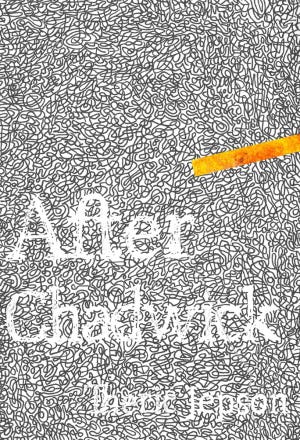
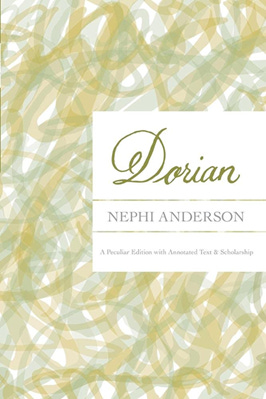
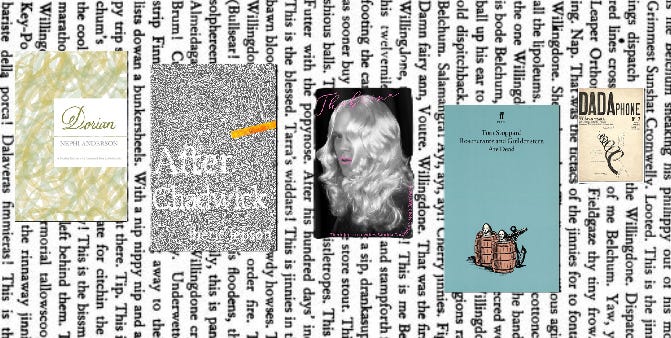
Anyway, thanks for letting me blab about Thubrina this week. I realized a day or two ago that the experience of working on it was a lot like After Chadwick (obvious) but also like Dorian: A Peculiar Edition with Annotated Text & Scholarship, especially its endnotes.

(Incidentally, the link to Amazon is still sketchy after all these years!)

After Chadwick was inspired by Tyler Chadwick’s Field Notes on Language and Kinship, an excellent little book I can recommend without hesitation. I couldn’t read it without a notebook near me to write a few notes and many poems in response to Tyler’s language. I couldn’t help myself. His book inspired so many pieces from me I decided to make a little book of my own. Then I published it and didn’t write a single post about it. So in the last ten years at least I’ve gotten better at self-promotion?

But that was loose riff. While I suppose Thubrina too is “loose riff” it’s much more structured. Whatever Sabrina did, Theric had to follow. I have as many pieces in my book as she has in her album and they have the same titles.

Maybe that’s why Thubrina reminds me of Dorian’s endnotes? Those were determined by Nephi’s novel. Anything I felt justified an endnote became an obsessive little research project for me. And I learned fascinating things about the names of horses and pats of butter as I grew more and more obsessed with explicating aged facts to a new audience. I danced Nephi’s dance and thus the dance became my one.

Little obsessive projects (here’s an old one I just bumped into) are great delights. But do they have value for the reader?

I often say no. A lot of surrealist and dadaist and absurdist stuff offers waaay more pleasure to the creator than to the consumer. And while, in Thubrina, you’ll find an original short story about middle-aged people dealing with things like “business” and “death,” and a science-fiction sestina, you’ll also find things like this, the first stanza of “Sugar Talking“:

Put your lowboy where your mouthwash is
Your sugar tallboy isn’t working tonoplast, oh
Put your lowboy where your mouthwash is
Yeah, your paralinguistics mean shiver to me
Get your sorry assay to mine

I wrote this using the classic dada game n+7 in which all you need is an original text and a willing dictionary. The nonsense that results is certainly a pleasure and a joy, but is it art? Is it something someone should pay for? And, having paid for, should they read it? I can’t answer those questions.

But there is value in the process regardless.

I think of Tom Stoppard who has thubrinaed plays like Hamlet, Earnest, and Macbeth. And while some are masterpieces and some are good (one of these features a dadaist!), some are just . . . dada.

There are excellent reason Dada and Surrealist poems are remembered more for the ideas behind them than for the work themselves. And that’s because they get old real fast. The concept is better than the piece. And while that may work for grad school (screw you, James Joyce), the works themselves do not deserve immortality.

Thubrina has value right now in 2025 but it’s never ending up in my obituary and I’m not sure any its pieces will get collected in later collections of Thericonia. The value it has in the future is permission to play.

You all have permission to play.

Don’t wait.

Just play.

Especially play with what is big and popular because that stuff’s not special and it deserves to be kidded. And in a moment where certain powerful people are experimenting with curtailing your freedom to speak, now is an excellent time to write thubrinas all your own.

Back in the first Trump presidency, I wrote some “orange shovels”—golden shovels based on Trump tweets. I never did see any of them published (my hope was to publish three or four then publish a book’s worth, but finding a home for none meant I never wrote enough to make a book, more’s the pity), but lemme go find a short one to share now….

Orange Shovel #2: May 4, 2018

My sister stood by the door, holding her bag. “Going
somewhere?” She nodded. “Today, finally, to
stay with Dave.” I set down my phone and looked at her. “Dallas
again? Already?” She laughed and shook her head (the
only way, really, to respond to my, as she calls them, GREAT
LAFFS). The truth is, I don’t even know who she’s with. “State
his name!” is not the sort of thing a brother should ask after months of
on again off again (even he were too from Texas)
—a brother should know. Yesterday, tomorrow, today.
And now all I can do is look at her half smile. Leaving
me and afraid to confess she’ll see me—soon!

Another reason I never made a full book is because that much time with Trump’s nonsense ain’t good for the soul, but my point is:

The words of the powerful belong to us.

Do what you will with them.


2025-09-15

Introducing 𝘛𝘩𝘶𝘣𝘳𝘪𝘯𝘢 via 𝘛𝘩𝘶𝘣𝘳𝘪𝘯𝘢’s introduction


.

In honor of The Sound of Music being in theater’s this weekend, let’s start at the beginning (a very good place to start). While I’ll be promoting Thubrina with posts all this week, why not start with it’s own introduction?

Of course, this should have been released days rather than weeks after August 29, the day Sabrina Carpenter released her album Man’s Best Friend but I stupidly held off on getting the photograph done until I had access to her lyrics. That was silly. And then of course it takes a while for it to roll out to the various places you can buy or borrow books. (Still waiting on paper, but look: Barnes & Noble!)

Anyway, here we are, seventeen days late.

Alas.

But finally, here are the cover and the introduction:

Naturally, when I want to visit Thubstack, I start typing thubs into my browser, but if I foolishly assume that by now surely my browser knows where I’m going and just hit enter rather than deliberately choosing thmazing.substack.com, Firefox will helpfully suggest I watch the video for Sabrina Carpenter’s “Thumbs,” a song I know only from this context. (I did finally listen to “Thumbs” once, just to see what Firefox thought I should be giving my attention to, but I can’t remember anything about it now.) I have heard her “Espresso” enough times that I could probably recognize it (probably?), but that’s the extent of my knowledge regarding Miss Carpenter’s catalogue. This isn’t me being a snob or anything. I just figure she gets enough love from enough people that she doesn’t need me listening to her on Spotify in order to make her car payment. Perhaps I am wrong and her Range Rover is getting repossessed as we speak because I insist on being a hipster. If so, I apologize.

Anyway, in early June I was with some twenty-somethings and they were expressing amazement that Sabrina Carpenter was already releasing a new album and how could she possibly a) have anything new to say or b) the time to develop new aspects to her musical vocabulary. They were looking forward to discovering answers to these questions.

Me, since I knew nothing about her previous work, had no way to hypothesize regarding her new work. But then it occurred to me: Just as countless millions searching for Thubstack have been redirected to “Thumbs” and thus become Sabrina Carpenter fans, perhaps she owes me and I should redirect some of her traffic to me. And so this small volume in which I rewrite her new album Man’s Best Friend, song by song.

I’ve taken a number of different tacks while rewriting, which you can read about in the appendix.

Like Sabrina, Jesus was a carpenter, and he was born before me, even. So to make her and I seem more like contemporaries, I’ve illustrated this collection with details from oldtimey black-and-white life-of-Jesus illustrations.

Anyway, come for the Sabrina, stay for the Theric (or the Jesus, if you prefer).

It’s very nice to meet you, young people.

----------th---

2025-09-02

Thubrina!

.

I still have (at least) one edit to do, the formatting to do, the cover shoot to pull off, the illustrations to finalize—in other words, it’s not ready yet—but expect a new short book from me soon.

While you wait, I put together a little soundtrack to accompany it.

 YouTube:

Spotify:


(Can you guess which song, 24 hours after scheduling this post, while listening to the list, I discovered isn't as good as I remembered? I'll give you a hint: it's the one song of the fourteen that isn't freaking awesome.)

2025-07-18

The Visitor
a time-travel non-narrative


.

These images are intended to be placed in any order. I used a simple system involving a six-sided die, paper, pencil, and ten rolls to discover this one.

.


2025-06-27

Perhaps California

.

[I wrote this poem in 2023 in response to this news story. I suppose it's too late to sell it anywhere as the moment has passed. But I like parts of it enough I don't want it to go to waste.]

Perhaps California has already fallen into the sea
sliced off by our recent hurricane
then sucked clear around to the other side by Florida’s.

Columbus didn’t sail from San Francisco to prove the world is round
as we all heard in second grade
but because he thought New York was closer than the eggheads said.

I don’t know how else to explain Bay Area schools
joining the Atlantic Coast athletic conference.
Well, I do have one more theory, speaking of eggheads.

The price of jet fuel has dropped to record lows
and science shows that air travel is the best way to prevent hurricanes
so let’s move our boys crosscountry

as often as we can we can as we
think we can think we can think we can,
and when they touch down to touchdown we’ll all know:

This is the world the Jetsons promised us.
This is our utopia where Snoop and Fat Joe are neighbors
and distance has no meaning.

A world where Atlantic is Pacific
and we all believe each other
rather than our own eyes. 


2025-05-16

Brighter and brighter until we all get our heads lopped off

.

All the world’s a stage,
And all the men and women merely players;
They have their exits and their entrances;
And each of us play many parts,
Our acts being seven stories. At first in heaven,
Mewling and puking in heavenly arms;
And then the whining Lancreans, with their dances
And shining would-be witches, staring like dopes
Into the sun. And then comes Caesar,
Whining like a warrior, with bad luck promised
By his mistress’ dreamscapes. Then horse,
With bleeding eyes, and roaring like a god,
Jealous of human lovers, quick in quarrel,
Seeking nothing for god already
Even if only to the young. And then the clever men,
In youthful nonsense with cucumber sandwiches,
He plays his part. The sixth age shifts
In to the intimacies of love and violence,
With absence as powerful a tool as touch,
The words on page turning toward trembling,
And whistles in our minds. Last scene of all,
That ends this strange eventful history,
Is greatness doomed to undeserved oblivion;
Sans teeth, sans eyes, sans taste, sans everything
But his holy soul intact upon the perfect day.

.

034) Brighter and Brighter until the Perfect Day by Sharlee Mullins Glenn, finished April 27

It's a funny thing to read a book so quickly to remember all its typos (a misturned apostrophe and, hilariously, a 0 instead of a -, a simple misplaced finger suddenly creating, in the acknowledgements a chapter 107 of Moses.

But those are obviously minor things. Especially when we are speaking of a new epic poem covering much the same ground as Paradises both Lost and Regained in a fraction of the space. And it's a deeply Latter-day Saint rendering. For the endowed reader, it will be impossible to read without constant internal crossreferencing.

Largely, I think it is successful as a story, as a work of verse, and as a work of speculative theology. Some commonly proposed solutions to uncertain identity (eg, what if the heavenly Mother is the Holy Ghost?) are part of this story; the most talked-about aspect of the book (or, for me at least, the most heard-about aspect) is its feminism. Specifically that Elohim is plural (as, you know, it is), interpreted as the Gods male and female both (which, in my [unaskedfor] opinion, is proper interpretation), and that more premortal characters beside Michael (viz., including women) are given names and responsibilities.

All that is great, but it also leads into my sole problem with this book. I've no issue with any of the speculation—I don't agree with it all equally but it's all valid and reasonable and exciting and decidedly noncrazy—but I do take issue with one character: Ora.

Ora is one of the more advanced premortal spirits. It's not stated so, but I get the sense she was probably #3 behind Jehovah and Lucifer. And she independently comes up with the concept of the Holy Ghost and offers to do it herself before the Parents reveal that Mother will lay down her body for a time to play this role herself. I found this aspect interesting but unsettling. But then Ora is foreordained to be the prophet to restore knowledge of Heavenly Mother in the latter days. This of itself is fine but it was impossible not to read this without considering the possibility that the author of the text, the inventor of Ora, was setting herself up as Ora. Now, given what I know of Sharlee Mullins Glenn (incidentally, I read another fine book of hers about a week ago), I think a better reading would be an impassioned plea for this prophet's arrival, but there's something about Ora's presentation that really feels like a lot of arrows pointing straight back at themselves. I found it kinda weird and offputting. But, as I said, otherwise, in my opinion, this poem is excellent, perhaps even vital. Poe said a poem can only be a good poem if read in one sitting. I read this in two with a break of perhaps two hours inbetween and I was still able to experience the "totality, or unity, of effect" that Brighter and Brighter has to offer. Her wielding of blank verse is wonderfully adept and, in short, this poem must by any reasonable standard be considered a great success.

Props also to the BCC Press team for a lovely book. The cover art by J. Kirk Richards and interior illos by Sara Forbush support the text wonderfully.

This is a slender volume and, I think, approachable. Not that I'm expecting it to be a blank-verse bestseller or anything, but I suspect anyone who might give it a shot will find their way in and be able to have an experience.

Let them who have ears to hear, etc etc.

Anyway, I liked it.

one day for the pre-stuff and one for the epic itself


035) Lords and Ladies by Terry Pratchett, finished May 3

This was kind of a strange experience. About a 130 pages in or something I started to think maybe I'd read it before. In terms of theme and character and plot, it shares much with other Discworld novels, particularly the Tiffany Aching books. One might see this as a rough draft of what he'd pull off later. And while much of the book was new to me, I couldn't be sure I hadn't read it. I've been reading Pratchett since 2002 and only logging what I read since 2007, so I suppose it's possible I did read it in that window (though I don't think so). I kind of hope so because it's evidence that I can reread books and enjoy them afresh which is something I often cannot do.

Anyway, Margrat is getting married, the elves are seeking entrance, the other witches won't allow for it, and some wizards are coming to town.

Does this sound like something you have read before?

Yes or no, it's delightful.

months


036) The Tragedy of Julius Caesar by William Shakespeare, finished May 5

Technically I missed most of act iv scene ii which is a long and important one when I was called out on union business, but I'm claiming it anyway. Even if I never got to be with a student as they read Caesar's ghost.

over a week


037) Equus by Peter Shaffer

This is one of the most famous plays of the 20th century. Besides Shakespeare and Shaw, I find free copies of Equus more than any other play by any other writer. But all I really know about it is is involves violence to horses and an opportunity for a young actor trying to prove his seriousness an opportunity to get naked onstage. Given those two facts I'd always nervously assumed this was a play about bestiality. Not so. I mean, what does happen ain't great, but it also ain't bestiality. If you call that a win, call that a win.

The play is deliberately unrealistic, with the cast sitting in a circle around the stage, standing and joining the action when called for and sitting back down to observe when not.  The horses are actors on stilts and wearing wire horse heads which they put on ritualistically when the time comes to play horses.

The film is deeply religious in the sense that it is about a deeply religious character and how that form of religion may or can or may not or cannot fit into the modern world. It's about the many failed ways we have to interact with one another in this life we're building. From psychiatry to pornography. We need a bit more self-reflection.

So it's an impressive bit of writing. Makes me want to watch and see more Shaffer. Perhaps I should start with Amadeus. It's easily accessible.

maybe three weeks


038) Travesties by Tom Stoppard, finished May 8

Having just read The Importance of Being Earnest and then learning Stoppard had written a play that played on that play, I knew I had to read it. I love or at least admire all the Stoppard I read and this one, recreating Earnest in WWI-era Zurich and starring folks who were actually there (Lenin! Joyce! Tzara!), well it sounded delightful. (And the intro in which Stoppard tells us that the other real person in the play, an obscure figure he could learn nearly nothing about, had a wife who sent him a letter after the play's premiere, is wonderful.)

I guess it was.

I imagine it's better on stage, but it's hard to see on the page how this would even work. Or even how many of the jokes a person can get if they haven't just watched an Earnest or were reasonably up on the Lenin/Joyce/Tzara. This is a play for overeducated people and the best way to enjoy it would be in a room filled with them.

So it's okay.

perhaps a week


039) The Art of Intimacy: The Space Between by Stacey D'Erasmo, finished May 10

Back to reading something from this The Art of series. I wasn't instantly enamored of it, but her method of discussing books I haven't (with two exceptions) read ended up working for me by the end. She has a keen observational sense and he plucks apart the magic of what books do, how they create intimacy between writer and reader, how they discern all kinds of possible intimacies between characters.

Ultimately, I think it is not as accessible as others in the series—and more a work of criticism than a piece of instruction—but ultimately a fascinating work that pushed the edges of my thinking.

under a week


040) A Man for All Seasons by Robert Bolt, finished May 16

Two tangents.

I said above that Equus is the most-found non-Shakes/Shaw play. Probably. It might be this one. (Or Death of a Salesman. Or are we counting multiple Ibsens in a single volume?)

I only took one class from him, but Royal Skousen is a brilliant and decent person I'm glad I got to know, however slightly. But one thing he said which makes me roll my eyes to this day is that he does not like movies; they are an inferior artform; they are not worth his time. But the film A Man for All Seasons, the last movie he had seen (almost 40 years old at that point and, iIrc, the only film he had a firm memory of), was a masterpiece, a work of genius, one of the most important achievements in human artistry. I've never understood how, even given the small sample size, a 100% genius rate leads to an it's-all-crap conclusion.

It occurs to me now that perhaps he was curious if any of us would call him on it.

Royal Skousen is not the kind of person you call things on.

Anyway, the play is a terrific read. Easily the most entertaining of the three in this set. The characters are written such that instantly you know them. More is a wily man but a good man, trapped in an impossible situation given he has actual intergrity. Rich is a tragic fool. Cromwell is Iago-like in his villainy. And Henry is a coward as proven by his disappearance from events.

In a world with no integrity, putting this story before people must count as holy rebellion.

Anyway. Long live the king.

a week 


earlier this year..........

Bro! Tell me we still know how to speak of kings!

001) Beowulf translated by Maria Dahvana Headley, finished January 1
002) Cthulhu Is Hard to Spell: Volume Three, finished January 1
003) Fever Dream by Samanta Schweblin (translated by Megan McDowell), finished January 8
004) My Favorite Thing Is Monsters by Emil Ferris, finished January 11
005) You're a Good Sport, Charlie Brown, finished January 12
005) Into the Headwinds: Why Belief Has Always Been Hard—and Still Is by Terryl Givens and Nathaniel Givens, finished January 24
006) My Favorite Thing Is Monsters: Book Two by Emil Ferris, finished January 25

Maybe we should just pretend this set begins and ends with Wednesday Addams

007) Chas. Addams Half-Baked Cookbook, finished January 29
008) Monica by Daniel Clowes, finished February 3
009) The Unexpurgated French Edition of Fanny Hill: Memoirs of a Woman of Pleasure by John Cleland, finished February 19
010) Peach and the Isle of Monsters by Franco Aureliani and Agnes Garbowska, finished February 20
011) Klara and the Sun by Kazuo Ishiguro, finished February 28
012) Comic Poems edited by Peter Washington, finished March 7

Love, Beauty, and a complete lack of sasquatch 

013) Love that Dog by Sharon Creech, finished March 11
014) Beauty by Sheri S. Tepper, finished March 21
015) Antelope Spring by John Bennion, finished March 24
016) Shelley Frankenstein by Colleen Madden, finished March 28
017) Nancy Drew and the Clue Crew #21: Double Take, finished April 5
018) The Wood at Midwinter by Susanna Clark, finshed April 8
019) Rave by Jessica Campbell, finished April 13
020) The Creeps: A Deep Dark Fears Collection by Fran Krause, finished April 14

Do not ask what she does with the babies.

027) Victorian Psycho by Virginia Feito, finished April 21
028) Somna: A Bedtime Story by Becky Cloonan and Tula Lotay, finished April 23
029) Shadow Life by Hiromi Goto and Ann Xu, finished April 24
030&031) The Importance of Being Earnest by Oscar Wilde, finished April 25
032) Raised by Ghosts by Briana Loewinsohn, finished April 26
033) Ephemera by Briana Loewinsohn, finished April 26

PREVIOUS OTHER YEARS IN BOOKS

2007 = 2008 = 2009 = 2010 = 2011 = 2012 = 2013 = 2014 = 2015
2016 = 2017 = 2018 = 2019 = 2020 = 2021 = 2022 = 2023 = 2024


2025-01-25

Bro! Tell me we still know how to speak of kings!

.

It's 2025, friends. A time in which, as Maria Dahvana Headley said of 2020 in the introduction to her Beowulf translation, "everyone, including small children, has the capacity to be as deadly as the spectacular warriors of this poem . . . to slay thirty men in a minute [is] no longer the genius of a select few but a purchasable perk of weapon ownership."

In other words, the modern world is nothing like the ancient and we have solved all our problems and it's happily ever after for humanity.

Ha ha ha.

Anyway, looks like I'm starting the year off, literarily, with the appropriate measure of optimism.

.

001) Beowulf translated by Maria Dahvana Headley, finished January 1

I heard of this in a car ride back from a union meeting when two of my colleagues suddenly started quoting it and praising it and recommending it and wishing they could teach it (having read it, I don't see why not) and talking about all the people they'd given copies to.

So I went to the library and got it.

And I had a great time too, though I'm not sure I'll be quoting it or forcing it on people. My time wasn't that great.

Afterwards, I read the acknowledgments and then the intro and those were useful and provocative as well.

My first interaction with Beowulf came through a Childcraft Annual (which I just learned continued publishing through 2022! I wish I'd known!) and, like Headley in her introduction, those early illustrations still define how I see—in my case—Grendel. It's what I always picture, no matter the translation. Even after Headley made me see Grendel and Beowulf as the same size.

This book is awesome, by the way. I also read a translation of Chaucer (don't worry—not the Wife of Bath) and Shakespeare and Dickens in their own words. I learned about etymology and how English both conquered and was conquered. I loved this book and reread it often. I'd argue it might be the seed of me today but I loved Prehistoric Animals and Mathemagic just as much and, well, you don't see me digging in Montana or chalkboarding at Oxford, so who knows.

From reading that excerpt over and over (and forgetting it's just an excerpt?) and reading bits and pieces in various classes over the years, I failed to remember it was not my first time with the entire text when Seamus Heaney narrated his translation to me one long, solo car trip circa 2005—which was an amazing experience. It's a terrific storytelling, he's a terrific storyteller, and I had no idea there was anything after Grendel's mom! Beowulf gets old? And fights a dragon!

Great stuff.

And I haven't really touched Beowulf since then. Until now, with this fresh translation. Which I also loved and enjoyed. And which I now commend to you. Bro—tell me we still know how to speak of kings!

under a week


002) Cthulhu Is Hard to Spell: Volume Three, finished January 1

We picked this up at Comic-Con in July but didn't get around to giving the kids all the books we picked up until yesterday (Christmas Observed 2024) and this is the one someone left within my reach.

We got this one because Son Three liked the first volume we got on our last San Diego trip (precovid). We was excited to get this one. I hope he likes it.

Me? It was . . . fine. It has the same problems most comics anthos have (and the same promise). This one started strong but it got to the point where two in a row ended with THE END? and that's about it, you know?

two days


003) Fever Dream by Samanta Schweblin (translated by Megan McDowell), finished January 8

This is a fascinating little book. A lot of the comparisons are made to Henry James, by which I think people mean Turn of the Screw. Because it's a literary ghost story. Sometimes I wonder if Turn of the Screw is the only "genre" work some people have read.

Anyway, the title and cover may be why I bought this book

so I guess I should be annoyed now, after the fact, that the title in Spanish is something more like Rescue Distance which is probably a better title. It's a more precise title, anyway.

Fever Dream sets us up to wonder if that's what we're reading. And we kinda are. But, as David would say, that's not the important part. The ending's a bit confused, so I'm not sure what the important part is, but I'm not sure the book even agrees with itself on that point.

Anyway, it seems like a ghost story, but as we come to understand more of what's happening, we realize that nothing here need be supernatural. Some of the stuff is difficult to explain away with natural events, but the most terrifying aspects of the story not only can be but just are. Real things are the horror here.

But the playing-around-with of language and ideas makes it all the more effective. May trick you into caring in a way that a straight treatment might not have.

It's good. It's short. Support novellas.

(Although, friend publisher, something I can read in the same amount of time I could watch the movie, maybe shouldn't cost as much as a hardback of 500 pages.)

Other things connected to Turn of the Screw: The Other Typist | The Innocentsthub | The Grownupthub

three days


004) My Favorite Thing Is Monsters by Emil Ferris, finished January 11

I reread this in preparation for reading volume two, now out.

It's still incredible.

maybe two weeks 


005) You're a Good Sport, Charlie Brown, finished January 12

This is a Scholastic comic version of one of the sillier Peanuts specials, the one on Motocross.

It's a fun read but make no mistake: it's very silly.


This is not the reason I say things like "Peanuts is one of the masterpieces of 20th-century American art and lit."

under ten minutes


005) Into the Headwinds: Why Belief Has Always Been Hard—and Still Is by Terryl Givens and Nathaniel Givens, finished January 24

I really liked this book, even if it did not entirely make sense. What I mean is, it's chockfull of excellent points, moments, pages, paragraphs, ideas. But I'm not sure the book as a whole has a coherent thesis. All the good ideas do add up to something akin to what the title promises, but you can assemble a punch of pieces you found on the battlefield without getting your boyfriend back.

Anyway, as I said, I really liked the book. I could quote stuff off of almost every page with delight. Plus, it's short. So it's overall coherence isn't a deal breaker. If I'd read five hundred pages and ended with a "Wut" or an "And so—?" I might be angry. But not with something as skinny as this.

The book is split into three parts. The first two talk about modern ideas (rationalism, scientism) allegedly in conflict with faith and reveals how they too are rather faith-like; the third is about faith.

Incidentally, although the book is not written in a way to be explicitly LDS, it does cite more LDS folks that you might normally expect from any other book published by a non LDS press for a non-LDS audience. Plus, it references the Book of Mormon a couple times (sans citation).

Let's a have a couple of those quotations, shall we?

Cleaving to the impactful reality of an original experience is not a natural response; it requires an act of will and fortitude. Hence the definition of C.S. Lewis has sound neurological bases: "Faith is the art of holding on to things your reason has once accepted, in spite of your changing moods."

(and then the Ginvenses immediate disagree with Lewis; which is something they do a lot: use science to show that science is limited, etc etc)

"I had brought him lunch, and as we sat at the table sunlight fell upon a crystal in [his wife] Phyllis's collection, scattering patches of rainbow color over the walls and ceiling. 'There!' said Wayne [Booth], 'don't you feel grateful?' 'It's beautiful,' I said, 'and it makes me happy, but I don't feel grateful. I wish I did. I'm glad that you do.'"

The difference between these two men, between appreciation of beauty and feeling gratitude for that beauty, is the recognition of an agent behind that beauty....

[second brackets mine]

No matter how firm a conviction of genuine faith is, it participates in an essential humility. That is because faith is an expression of our weakness. Faith makes us vulnerable. If you have faith in something you don't fully understand—like God, or his canonized Word—then you cannot say ahead of time where that faith will take you. That can be scary. Presumptuous certainty sheilds us from that risk. The risk is that our faith might be wrong, certainly, but more importantly the risk is that our faith might grow into something difference and take us to unforseen destinations....

Presumptuous certainty is not exaggerated faith in God. It is idolotry. We turn our conception of God—our expectations of who he is, what he is like, and what he would do—into an idol. Idols are inanimate objects, and so they are safe. God is a living being, and so a relationship with him carries risk. When we live by faith, we live precariously.

Ironically, the expert they cite here uses Christopher Hitchens as an example of the dangers of presumptuous certainty. Lol.

Perhaps the most useful takeaway from the book for me personally is not easily quoted. The elephant-and-the-rider metaphor comes from another book, but they put it to great use here. In short, the animal, subconscious mind is the elephant. Our conscious self is the rider. And that's why we can't always control what we do. There's so much going on below the surface.

I think most of us know this, but the Givenses explain this excellently and briefly and honestly the book is worth grabbing just to ingest this summary.

If you need more convincing, you might consider the much finer review that talked me into reading it.

a couple weeks


006) My Favorite Thing Is Monsters: Book Two by Emil Ferris, finished January 25

Another monster volume, but there are striking differences between the two. Karen seems more grown up—less child, more adolescent. More grown into her wolf body. The book is filled with moments where she says she'll tell us later. It would be an interesting critical experiment to follow up on all those.

Unfortunately for Karen, as secrets get revealed, the explanations are not happy. We never hear the end of Anka's story. But, in a real way, we hear the beginning of Karen's. Even as she leaves all the beginnings she's been making with her friends behind.

It's a truly awful story, but it filled me with empathy for people who find themselves in a series of horrors such that they have no options short of letting the monsters win or becoming a monster themselves.

I hope they find peace.

Anka tells us more—both too much and not enough

two weeks


2024-12-15

I'm just grateful no students have discovered these....


.

As part of the class I teach high-school seniors, they each, at some point in the semester, share two poems from the book by different authors. They talk to their classmates about each poem separately, then make some comparisons. It’s a low-stakes/high-reward assignment.

It’s wild to me, given that the Norton has 1,828 poems in it, that I tend to largely see the same poems, year after year. By this point it’s pretty rare that someone covers a poem I haven’t seen before—and some poems (I’m lookin at you, “Window”) can’t seem to escape multiple attentions over the course of the year.

(Props to the young scholar who brought Witter Bynner to light for the first time ever today!)

One poem that shows up probably every other year by someone who wants to be daring but still safe (incidentally, this poem is also included in probably a third of the poetry journals, another Norton-based assignment), is “I Have Gentle Cock.” It’s about a rooster. But it sounds like it’s about a penis. Or: It’s about a penis. But it sounds like it’s about a rooster. Those are the two main interpretations shared of “Cock.”

(In the journals, I also get a bunch of “To moderns ears it sounds dirty but people didn’t about sex back then.” To which I say: “Wrong.”)

Anyway, after the presentations today, I left my book open to the last shared poem. When I sat back down, I read a poem on the adjacent page and OH MY but am I glad no student has ever presented on this one! Perhaps it’s never happened because this poem (and the other I’ll be sharing) is a bit longer. Perhaps because it (and the other I’ll be sharing) does not have an exciting title. Perhaps it is dumb luck? Or perhaps whatever mysterious force that keeps me hearing about “Grass” and “The Shout” but never “Adonais” or “The Mower Against Gardens” (not so mysterious, perhaps, in the case of these four) is just at it again.

And this is where I feel I ought to mention that while, in public spaces such as where you read these words today, I have often written about sex (see the LDS Eros series on Thutopia), and while my creative work also has interest in sex (see my most recent publication), I’m now about to take us to a very horny seventeenth century and, well, I did say I’m very glad my high schoolers have not found these. Even in the Bay Area, I can imagine this leading a parent to the Board of Education.

You sticking around?

Okay.

Let’s go.

The two poems were originally published in a collection of John Wilmot’s poems. It wasn’t until later that the second was correctly attributed to Aphra Behn.

But they both—and I cannot make this too clear—are very horny writers. Words will appear herein that have never appeared on my blog/newsletter before and may never appear herein again.

You’re sure about this?

Because the poems first appeared together they’ve been often paired ever sense. But they also share a topic: premature ejaculation and the shamefulness thereof.

(It’s not too late to leave.)

We’ll start with Wilmot’s:

The Imperfect Enjoyment

Naked she lay, clasped in my longing arms,
I filled with love, and she all over charms;
Both equally inspired with eager fire,
Melting through kindness, flaming in desire.
With arms, legs, lips close clinging to embrace,
She clips me to her breast, and sucks me to her face.
Her nimble tongue, love’s lesser lightning, played
Within my mouth, and to my thoughts conveyed
Swift orders that I should prepare to throw
The all-dissolving thunderbolt below.
My fluttering soul, sprung with the pointed kiss,
Hangs hovering o’er her balmy brinks of bliss.
But whilst her busy hand would guide that part
Which should convey my soul up to her heart,
In liquid raptures I dissolve all o’er,
Melt into sperm, and spend at every pore.
A touch from any part of her had done ’t:
Her hand, her foot, her very look's a cunt.
Smiling, she chides in a kind murmuring noise,
And from her body wipes the clammy joys,
When, with a thousand kisses wandering o’er
My panting bosom, “Is there then no more?”
She cries. “All this to love and rapture’s due;
Must we not pay a debt to pleasure too?”
But I, the most forlorn, lost man alive,
To show my wished obedience vainly strive:
I sigh, alas! and kiss, but cannot swive.
Eager desires confound my first intent,
Succeeding shame does more success prevent,
And rage at last confirms me impotent.
Ev’n her fair hand, which might bid heat return
To frozen age, and make cold hermits burn,
Applied to my dear cinder, warms no more
Than fire to ashes could past flames restore.
Trembling, confused, despairing, limber, dry,
A wishing, weak, unmoving lump I lie.
This dart of love, whose piercing point, oft tried,
With virgin blood ten thousand maids has dyed,
Which nature still directed with such art
That it through every cunt reached every heart—
Stiffly resolved, ’twould carelessly invade
Woman or man, nor ought its fury stayed:
Where’er it pierced, a cunt it found or made—
Now languid lies in this unhappy hour,
Shrunk up and sapless like a withered flower.
Thou treacherous, base deserter of my flame,
False to my passion, fatal to my fame,
Through what mistaken magic dost thou prove
So true to lewdness, so untrue to love?
What oyster-cinder-beggar-common whore
Didst thou e’er fail in all thy life before?
When vice, disease, and scandal lead the way,
With what officious haste doest thou obey!
Like a rude, roaring hector in the streets
Who scuffles, cuffs, and justles all he meets,
But if his king or country claim his aid,
The rakehell villain shrinks and hides his head;
Ev’n so thy brutal valor is displayed,
Breaks every stew, does each small whore invade,
But when great Love the onset does command,
Base recreant to thy prince, thou dar’st not stand.
Worst part of me, and henceforth hated most,
Through all the town a common fucking post,
On whom each whore relieves her tingling cunt
As hogs on gates do rub themselves and grunt,
Mayst thou to ravenous chancres be a prey,
Or in consuming weepings waste away;
May strangury and stone thy days attend;
May’st thou never piss, who didst refuse to spend
When all my joys did on false thee depend.
And may ten thousand abler pricks agree
To do the wronged Corinna right for thee.

I decided to give you the entire thing because…because I didn’t want to excerpt anything and make you think I was being deliberately crass in my excisions.

The first observation I’ll make is that for someone who’s been labeled a pornographer for centuries, the earl writes a great poem. This is excellent work. His choice of detail (“Her nimble tongue…Within my mouth” [etc] is exceeding alive) and his…I want to say mounting action but I also really really do not want to say that…brings the scene to life. The speaker ends up being a pretty gross womanizer but there is a sort of beauty that comes from his keen regret that this failing happens while he is with someone he really truly loves.

Or so he says. I rather suspect he often says much the same to many the lady.

I also love how the poem devolves from storytelling to angry apostrophe directed at his penis. If we are to have sexy poems in the world, let them be beautifully written.

The poem’s sexiness is at one with its theme as well. The rising heat of the poem slams into the speaker’s sexual failure. And since that heat was getting passed on to the reader, his frustration becomes our own.

Anyway, solid work.

(Sorry about the adjective. Hope that doesn’t hurt your already tender feelings.)

On to Ms Behn!

The Disappointment

1
ONE Day the Amarous Lisander,
By an impatient Passion sway'd,
Surpris'd fair Cloris, that lov'd Maid,
Who cou'd defend her self no longer ;
All things did with his Love conspire,
The gilded Planet of the Day,
In his gay Chariot, drawn by Fire,
Was now descending to the Sea,
And left no Light to guide the World,
But what from Cloris brighter Eyes was hurl'd.

2
In alone Thicket, made for Love,
Silent as yielding Maids Consent,
She with a charming Languishment
Permits his force, yet gently strove ?
Her Hands his Bosom softly meet,
But not to put him back design'd,
Rather to draw him on inclin'd,
Whilst he lay trembling at her feet;
Resistance 'tis to late to shew,
She wants the pow'r to say — Ah! what do you do?

3
Her bright Eyes sweat, and yet Severe,
Where Love and Shame confus'dly strive,
Fresh Vigor to Lisander give :
And whispring softly in his Ear,
She Cry'd — Cease — cease — your vain desire,
Or I'll call out — What wou'd you do ?
My dearer Honour, ev'n to you,
I cannot — must not give — retire,
Or take that Life whose chiefest part
I gave you with the Conquest of my Heart.

4
But he as much unus'd to fear,
As he was capable of Love,
The blessed Minutes to improve,
Kisses her Lips, her Neck, her Hair !
Each touch her new Desires alarms !
His burning trembling Hand he prest
Upon her melting Snowy Breast,
While she lay panting in his Arms !
All her unguarded Beauties lie
The Spoils and Trophies of the Enemy.

5
And now, without Respect or Fear,
He seeks the Objects of his Vows ;
His Love no Modesty allows :
By swift degrees advancing where
His daring Hand that Alter seiz'd,
Where Gods of Love do Sacrifice ;
That awful Throne, that Paradise,
Where Rage is tam'd, and Anger pleas'd ;
That Living Fountain, from whose Trills
The melted Soul in liquid Drops distils.

6
Her balmy Lips encountring his,
Their Bodies as their Souls are joyn'd,
Where both in Transports were confin'd,
Extend themselves upon the Moss.
Cloris half dead and breathless lay,
Her Eyes appear'd like humid Light,
Such as divides the Day and Night;
Or falling Stars, whose Fires decay ;
And now no signs of Life she shows,
But what in short-breath-sighs returns and goes.

7
He saw how at her length she lay,
He saw her rising Bosom bare,
Her loose thin Robes, through which appear
A Shape design'd for Love and Play;
Abandon'd by her Pride and Shame,
She do's her softest Sweets dispence,
Offring her Virgin-Innocence
A Victim to Loves Sacred Flame ;
Whilst th' or'e ravish'd Shepherd lies,
Unable to perform the Sacrifice.

8
Ready to taste a Thousand Joys,
Thee too transported hapless Swain,
Found the vast Pleasure turn'd to Pain :
Pleasure, which too much Love destroys !
The willing Garments by he laid,
And Heav'n all open to his view ;
Mad to possess, himself he threw
On the defenceless lovely Maid.
But oh ! what envious Gods conspire
To snatch his Pow'r, yet leave him the Desire !

9
Natures support, without whose Aid
She can no humane Being give,
It self now wants the Art to live,
Faintness it slacken'd Nerves invade :
In vain th' enraged Youth assaid
To call his fleeting Vigour back,
No Motion 'twill from Motion take,
Excess of Love his Love betray'd ;
In vain he Toils, in vain Commands,
Th' Insensible fell weeping in his Hands.

10
In this so Am'rous cruel strife,
Where Love and Fate were too severe,
The poor Lisander in Despair,
Renounc'd his Reason with his Life.
Now all the Brisk and Active Fire
That should the Nobler Part inflame,
Unactive Frigid, Dull became,
And left no Spark for new Desire ;
Not all her Naked Charms cou'd move,
Or calm that Rage that had debauch'd his Love.

11
Cloris returning from the Trance
Which
Love and soft Desire had bred,
Her tim'rous Hand she gently laid,
Or guided by Design or Chance,
Upon that Fabulous Priapus,
That Potent God (as Poets feign.)
But never did young Shepherdess
(Gath'ring of Fern upon the Plain)
More nimbly draw her Fingers back,
Finding beneath the Verdant Leaves a Snake.

12
Then Cloris her fair Hand withdrew,
Finding that God of her Desires
Disarm'd of all his pow'rful Fires,
And cold as Flow'rs bath'd in the Morning-dew.
Who can the Nymphs Confusion guess ?
The Blood forsook the kinder place,
And strew'd with Blushes all her Face,
Which both Disdain and Shame express ;
And from Lisanders Arms she fled,
Leaving him fainting on the gloomy Bed.

13
Like Lightning through the Grove she hies,
Or Daphne from the Delphick God ;
No Print upon the Grassie Road
She leaves, t' instruct pursuing Eyes.
The Wind that wanton'd in her Hair,
And with her ruffled Garments plaid,
Discover'd in the flying Maid
All that the Gods e're made of Fair.
So Venus, when her Love was Slain,
With fear and haste flew o're the fatal Plain.

14
The Nymphs resentments, none but I
Can well imagin, and Condole ;
But none can guess Lisander's Soul,
But those who sway'd his Destiny :
His silent Griefs, swell up to Storms,
And not one God, his Fury spares,
He Curst his Birth, his Fate, his Stars,
But more the Shepherdesses Charms ;
Whose soft bewitching influence,
Had Damn'd him to the Hell of Impotence.

We’ve moved from the first person to a third-person narrator in this poem. Again we have a womanizer as our male lead but instead of consensual sex with his beloved, he’s overcome with passion for a resistant virgin. It seems he has some skill of seduction however because, for all the scene’s rapiness, she eventually moves from trying to get away to passive presence to open readiness for consummation.

Only, once again, the penis fails to come through for our lovers.

The first poem’s rage against priapic failure is a bit safer as the rage’s source is largely the man himself (his lover, by contrast, remains kind and hopeful as she cleans “the clammy joys” from her body). This second poem, however, is apt to give male reader fewer chuckles because the virgin’s disappointment and shame is multiplied against the narrator’s rage and disgust against the terrible Lysander.

You had one job, manbody. One job.

The stories share other similarities as well. For instance, although our modern sensibilities revolt at Lysander’s approach, the narrator seems rather ambivalent about his forcefulness. He himself is not that important. He’s annpying this poor girl, sure, but he doesn’t really matter until she has decided that she wants more, please, and all of it. And then he fails her. And upon failing Cloris? Then the narrator has very strong opinions indeed. You’re gonna take this girl? rip off her clothes? waste all her time? and then not finish her off? Are you freaking kidding me, Lysander? What is wrong with you?

(Incidentally, I know Cloris is a traditional name for a woman in pastoral poetry, but its punny echo of a particular sex organ deserves a nod.)

Anyway, both these poems are successful at building up one set of emotions and then abruptly jerking us into another set of emotions. And so even though I don’t subscribe to either’s moral judgments, and even though they don’t end where their first halves promised, I think both are enormously successful at being poems about sex and about what what sex is means to humans who engage in it.

A friend of my students, Professor Foster, complains, “ How many options do you [the writer of a sex scene] have? You can describe the business clinically as if it were a do-it-yourself manual – insert tab A into slot B – but there are not that many tabs or slots, whether you use the Anglo-Saxon names or their Latinate alternatives. Frankly there just isn’t that much variety, with or without the Reddi-Wip, and besides, it’s been written in the mass of pornography ad nausea.“

Yes, that’s true, but pornography never stops coming because we never get tired of the tabs and slots, no matter how few their might be. And so artists who can work within the medium of the crass will always have a place in the firmament of filthy stars. Because humans need art to cover all aspects of life.

Just—maybe not until you’re old enough. Get some experience, kids, before hitting up our friends Wilmot and Behn.

And the rest of you—don’t expect anything nearly so dirty in these pages again for a long, long time.

(A natural reaction to the disappointing events just experienced.)

subscribe now

Incidentally, it occurs to me that the poems may have struck me so hard today because I just finished a work of fiction which ends with a character hinting he may be worried about this very problem. Truly, the universe rhymes.

ᴡʀɪᴛᴛᴇɴ ʟᴀsᴛ ᴘᴏᴇᴛʀʏ ғʀɪᴅᴀʏ