2026-02-28

BATTLE OF THE PUCKERDOODLES
The L.A. Times stole my recipe, but we'll let you decide.

.

Fifteen years ago, I invented the puckerdoodle, a variation on the snickerdoodle that has a fun sour coating rather than a cinnamon one. Bit hit. Very popular. Much beloved.

I just discovered that five years ago, the L.A. Times presented puckerdoodles to the world themselves. Is it possibly they were invented on their own rather than ripping me off? Sure. It’s possible. It’s also possible they did not. Let’s compare.

First, I make no special claims for the cookie itself. I just picked what seemed to be the internet’s favorite snickerdoodle dough back in 2010 and used it. That’s all. The Times’s recipe is intriguing. I don’t love the sound of “white chocolate morsels” but masa harina seems worth trying!

In other words, I don’t care what dough you use. The thing that makes a puckerdoodle a puckerdoodle is what you roll the balls in. So that’s the real thing at issue here.

I genuinely hope that some of you will take up this challenge then return and report. Me and Rose Wilde, of course, have our biases.

Make your prefered cookie dough, roll in to balls, refridgerate, then, when ready to bake, roll in one of these:

THERIC’s WOOWOO PUCKERDOODLE HERBS AND SPICES

Combine two or three tablespoons of sugar with two or three teaspoons of amchoor powder and one teaspoon of sour salt (aka crystallized citric acid). Fiddle with proportions to match your palate.

Fiddle with the proportions to taste. For every 2 or 3 teaspoons of amchoor, add in one more t. And every 3 or 3Ts of sugar, throw in a t of sour salt (crystallized citric acid).

ROSE’s SCIENTIFIC PUCKERDOODLE HERBS AND SPICES

Mix one cup sugar with three tablespoons sumac.

Now roll those doughs and bake them up and let us know.

Perhaps the Times will be brave enough to publish your results.

A plate of pucker-doodle cookies.
stealing the times’s photo because they owe me and because silvia razgova takes better pictures than me

2026-02-24

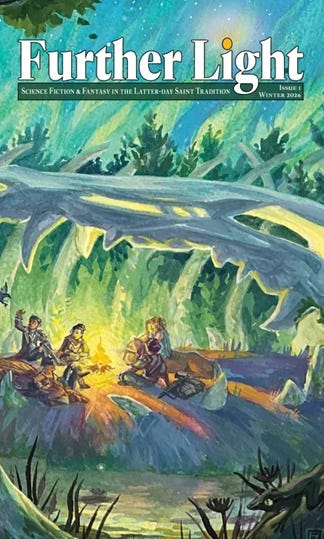
"Science Fiction & Fantasy in the Latter-day Saint Tradition"

.

Back when I reviewed the fiction in new issues of Irreantum (here are several examples of my reviews) occasionally editor Angela Hallstrom would send me a note thanking me. Because, and this is true (I now speak from experience), y’generally don’t get much feedback. Maybe if people are angry? No one’s gotten angry enough to write me yet, so maybe not.

Anyway, there’s a new rag on the scene and, like Irreantum in olden times, IT’S AVAILABLE ON PAPER. Incredible.

I got my copies yesterday (one for subscribing, one for contributing) and because I had a cold and my mask was making me sneeze, I sat out on the front steps and read the whole (ish) thing. It was great to just sit and read a fabulous new collection of work, to just enjoy it, and by turning pages no less. Fabulous.

So back to my old ways and let’s review the first issue of Further Light.

Although, before we do, I’d like to point out one smart decision Further Light has made, viz, an utter willingness to reprint stories. So much of the literary scene publishes a story then abandons it, never to be seen again. Good stories can and should be published more than once. That’s been my policy at Irreantum and I’m glad to see Further Light agrees with me. I’ve marked work appearing again rather than anew with a * so you can see what I mean.

“A Center of Gravity for the Realistic” by Liz Busby

Liz’s opening editorial is a rousing call to arms, a bold statement of purpose, and enough to hope this project lasts a decade or more. Who knows, maybe it will outlive us all. It’s dangerous waters, this magazine business, but certainly this one deserves to thrive. (Have you subscribed yet?)

It’s worth mentioning that Liz is the right person at the right moment to take this one—and that she’s collecting a stellar team to make it happen. I wish them luck (because they’ll need it) but I don’t worry (because they’re prepared for the task).

“Opera of the Abyss, Part 1: Murder and the Rue Morgue” by Lee Allred

I’ll admit I skipped this although it might be the piece I was (and remain) most excited to read. I think I might wait for another issue to arrive before I dive into something serialized. But Lee’s great and I have high expectations for this. And the illustrations by Kevin Wasden are excellent.)

“Harmony and the Problem of Evil” by DC Wynters

I also skipped this bit of criticism. I don’t know Brandon Sanderson’s work well and have read very little of it. Given that, I’ve probably already read more criticism on him than I really need to.

“Ivy” by Sadie Marie Hutchings

Love this poem about atonement resolving a fairy-tale problem. It’s very much of the sort of fantasy I’ve come to associate with the Mormon Lit Blitz. (A compliment.)

“Commitment” by Brian K. Lowe*

This story reminded me of a series of stories by Luisa Perkins. Man meets angel on park bench. But here, instead of trying to save the world, this angel has come to end it. Although there is ambiguity in just what “ending” the world might entail. Or haw bad it actually would be. I would have liked to it push past the final ambiguity.

“The Double-Snatcher” by WO Hemsath*

This story’s been making the rounds since first appearing in the Liz-and-Will-edited issue of Irreantum a couple years ago. I didn’t reread it just now, but this is what I said then:

“W. O. Hemsath's story couples the talking woodland creatures I loved in Thornton Burgess stories with the sense of danger we know from Watership Down and a heavy sense of divine threat humming in the background.“

In other words: it’s good.

And because it’s been published three or four times, now maybe you’ll read it?

“The Man Who Came Back from the Lunar Colony” by Orson Scott Card*

The two OSC poems are rather similar to each other, using the language of science fiction to describe particularly Mormon cosmological problems. If you like one, you’ll like the other.

“A Latter-day Saint Reading of CS Lewis’s Perelandra” by Cameron Price

I chose to skip this one too as it’s been so long since I read (started) Perelandra and I own the trilogy and intend to read it one of these days, so…. Why read more about Lewis before it’s necessary?

“The Fallen” by DA Cooper

Two missionaries visit hell and make contact with one of the original fallen. A companion piece to Cooper’s masterful “Talking to Dante in the Spirit World.“

This one’s in irregular rhymed couplets and makes the demon the lead character. Getting inside demons is an act of charity Cooper has pushed on us before and I’ve never forgotten it. It’s possible, if this is your first, it’ll be the one you don’t forget.

“Charity Never Faileth” by Jaleta Clegg*

Very proud to have been the first publisher of this story and its third. I didn’t reread it tonight, but I still dig it, guaranteed.

Jell-O comes in for the kill. What else do you need to know?

“Journey Before Destination, Faith Before Certainty: Experiencing Belief in Wind and Truth” by Liz Busby

So…I can see why they’re actively requesting more submissions of non–Brandon Sanderson criticism.

“Young Hagoth Plays It Safe” by Theric Jepson

I often enjoy reading my own stuff, but by this time I had momentum and wanted to see how far I could get. But this is good, promise.

You’ll note that its title plays off Douglas Adams and that should give you a sense of my aims. If I get around to it, part two is titled (spolier alert) “Young Hagoth Builds a Better Breastplate.”

Illustrated by Maddie Baker:

“Rented Room” by JS Absher*

A great example of what Stan’s good at and how poetry is naturally fantastic.

“Music of the Spirit” by Annaliese Lemmon*

Annaliese always impresses me. She has so many modes. This reminded me of a great story I recently read of another peculiar gift of the Spirit in…The Path and the Gate, maybe? I can’t remember. Anyway, this gift of the Spirit is peculiar and Annaliese puts it to good use asking questions.

Also, watch for Annaliese (rhymes with pizza) in the next issue of Irreantum.

“Why Andor’s Grown-Up Heroes Matter to Faithful Adults” by Alan Hurst*

This essay is brilliant. I hadn’t considered most of what the article is arguing, but Hurst makes a strong argument not only that Andor is good (me, I consider it top tier Star Wars alongside the original trilogy and The Last Jedi), but that it’s engaging with adult themes in ways very little entertainment does these days. Or even imagines it can while remaining “celestial.”

“A Letter from Captain Robert Walton to Joseph Smith” by R. de la Lanza

I was startled by how this reimagining of Frankenstein was interested in completing some of the novel’s loose ends, much as Guillermo del Toro’s recent film did. Fascinating to watch two Mexican artists using Frankenstein to such similar ends simultaneously. Does this mean something??

“From a Spirit to the One Possessed” by Orson Scott Card

Personally, I like the first OSC poem better just because I find possession a dull topic.

Voices from the Dust” by Jeanna Mason Stay

Shoot. Okay. That strange-gifts-of-the-Spirit story I was mentioning above? This one’s even more like it. Maybe I read it in Dialogue…? Germph. I dunno. Anyone, this is light and charming and hopeful, but never silly.

“Grandmother’s Rocking Chair” by Nephi Anderson, with introduction by Kent Larson*

Kent’s been teasing the existence of this story for years. I’m glad to finally read it. Based on his intro, I think I liked it more than Kent did, but I agree that it’s not Nephi’s finest work. (More opinions on Nephi Anderson here. A work of fiction I wrote starring Nephi here.) But it is a time-travel story of the type we know from the late 1800s and Nephi’s is honestly as good as most of them I’ve read. With the added benefit of being shorter. I’m superglad to have my own copy.

“Aslan or Qslan? Insights into Latter-day Saint Cosmology from the Sci-fi/Fantasy Divide” by Jeffrey Thayne and Jacob Ross

I did not expect my favorite piece in Further Light to be nonfiction—and certainly not nonfiction that’s about Star Trek! (Or Narnia, for that matter; I’m a little tired of talking about C.S. Lewis as you may have picked up on above.)

But this isn’t just good literary analysis, it’s powerful theology and explained some of my opinions to myself that I’ve had a hard time understanding. I wish I’d had access to this language when I was teaching seminary. We need to talk about this on Face in Hat…..

It’s worth the subscription just to access this essay when it appears online later in the year.

Subscribe already!

“Death” by Carol Lynn Pearson*

The is the second-oldest reprint, originally appeared in Dialogue back in 1966. I really think early CLP is the most vital CLP, and this interaction with Death is a good example of what she can do.

“The Mothers” by Chanel Earl

This is the sort of poetic prose that Chanel excels at. Whenever I see her name I know I’m about to get something on a different highway than other writers travel on. This one uses the first-person plural (great when used well) and explores motherhood while exploding dimensions. Worth a look. And at three pages, easy to fit into your day.

“The Enemy Has a Body: A Confidential Memo” by Jordan Lake

Look. Liz loves CS Lewis. I get it. And I don’t mind a new take on Screwtape. I really don’t. But the amount of Sanderson and Lewis in this volume proves that they need allyall to submit your brilliant criticism. The next deadline’s the end of this month! Get on it! Send them stuff!

New magazines need not only subbscribers to thrive. They need submitters. So dust off some old poems and fiction or craft some new, and then get it to them. Let’s keep them alive so they can enrich our lives. Takes teamwork. So go fight win.

2026-02-16

Overdue Top Ten of 2025

.

The main reason this article (which, incidentally, I feel no obligation to complete and do not do every year) is late is because The Testament of Ann Lee shook our world (Lady Steed and I are still consumed by it—I was just relistening to the soundtrack [again] yesterday) but, even though Letterboxd calls it a 2025 movie, we had no opportunity to watch it last year. So does it even belong on a 2025 list? I mean—Sketch is going on my 2025 list even though Letterboxd calls it a 2024 film. And I just saw OBEX in theaters even though it’s a “2025” movie. Eephus I saw in January although it’s a 2024 film I first could have seen in 2025. So what year should I count it as?

In the end, I decided feature films (acording to my indiosyncratic definition of over-thirty-minutes-long) that a) I have seen as of this writing that b) I could have first seen in 2025 given a nominal amount of effort will qualify. I’ll pull my top ten from the resulting list of twenty-eight. Which means I’m leaving off some films I liked quite a lot or that I want to give attention to.

For instance, the practical effects of The Legend of Ochi, the goofy existentialism of Mickey 17, the glorious visuals of Tron: Eros, the fine theatrical ride of Zootopia 2, the excellently executed biopic of a personal hero of mine that was Truth & Treason (Oscar-shortlisted score!)—these are movies I didn’t like enough to seriously consider putting on my top ten, but they had something worth experiencing on offer.

And then there are movies that were hard to leave off the list, like the emotional conclusiveness of Eephus, the mad horror of Weapons, the fine superheroics of Superman, the absolutely wonderful Presence which only didn’t make the list because I fear it might be gimmicky on a second watch, and Materialists which didn’t make the list simply because I had to cut one more to get to ten.

So without further ado, alphabetically, my Top Ten of 2025:

Black Bag: A movie that, were our movie-watching habits as they were circa 2024 and our stage of life exactly where it is now in 2026, would be a regular rewatch for Lady Steed and me. I hope, someday, when there are fewer kids cramping outstyle, it turns into an old favorite. It’s like Ocean’s Eleven for the happily married.

Eternity: I really liked this movie and I’m happy if a little surprised it made the top ten. I think it beat out its closer competitors because Lady Steed liked it so much. It’s probably the movie (outside Ann Lee) she’s invited into conversations with me and friends and aquiantences more than any that we’ve seen in the last couple years.

Frankenstein: This movie’s lucky I decided not to count Ann Lee because that makes it my favorite film of 2025. I could come up with a lot of ways to rank Frankenstein adaptations and in some reasonable rankings, this film doesn’t have a prayer. But it might be my favorite and it is excellent by every metric that matters except strict fidelity. A film that is both a good Frankenstein and true to the book may not be possible (is it for any book?) but this one is not only an excellent film on its own merits but it is also an excellent entry in the conversation between previous creators, most notably Mary Shelley and James Whale—and that matters when you’re engaging with one of the most adapted texts of all time. Plus, and I know I’ve said this, but it’s such a dang good movie. The production design, the camerawork, the acting, the editing—it’s all great. It may not win a single Oscar this year but it my heart it is the true winner.

Hamnet: Another thing about delaying my writing of this list is not only did I see Hamnet, but I also had enought time to mull it over such that it rose in my estimation. I liked it, sure, I thought it was beautiful and well acted, but I wasn’t sure what I felt about it as a whole. As it has settled into memory and become an experience past, I have come to believe more fully in the Hamlet portion of the film and that’s what was necessary to accept the film as a whole into my heart.

A Minecraft Movie: This is the best IP-based film of the year, imo. I did have a disagreement with one of my favorite film writers earlier this year after he dismissed this film as “one of [his] least favorite” and he was willing to admit that perhaps he hadn’t “given this a fair shake as an auteurist work” which is, I think an important way to think about it. Certainly, my experience at the theater was one of constantly laughing like I was seeing Napoleon Dynamite for the first time. First and foremost, someone, the suits allowed Jared Hess to make a Jared Hess movie. I’ve never played Minecraft and am unlikely to start but I do read Hess films and this one’s a keeper. Long live the Hess.

One Battle After Another: I am anxious to see this again and am sad I missed the rerelease. I’m certain it will improve on second viewing and I’m just as certain a second viewing will help me figure out exactly what kind(s) of movie it is. But it’s not often a movie, after only one viewing, becomes one I feel like quoting so let me just say, “Thank you, Sensei! Thank you!” and “Viva la Revolución!”

The Phoenician Scheme: I don’t get why this got so little love. Maybe critics, after the formal creativity of Wes Anderson’s last two films were a little disappointed that this one was more straightforward? Or maybe audiences still found it too weird? Some people thought it overly stylized and emotionally hollow, but that always happens to Wes. And that’s never how I feel. I thought this was a beautiful meditation on family and priorities and a brutal (though kindly delivered) attack on capitalism etc etc. Anyway. It was great. Write it down.

Sinners: After it broke the record for most nominations, Lady Steed overcame the terror the trailer inspired in her and decided to see the movie. Which was great because not only was did it come back to theaters, but it was gonna play in Grand Lake indefinitely because Grand Lake supports its Oakland filmmakers. It was a great rewatch as well. The speakers were a little buzzy so some of the dialogue was hard to hear, but even so I picked up lots of auditory and visual details, connections in the beginning to the end, lotsa stuff that was worth a revisit. A true crowdpleaser and filmically inventive. If it ends up taking all the awards, okay.

Sketch: This is arguably the best family movie to come out in years. Yes, including animated films. Your mileage may very but no question you will be glad you watched it. Which reminds me—you can hear me talking about it here.

Wake Up Dead Man: Given the chance to rewatch, this might have been my top film of 2025. Glass Onion was in 2022, after all. One of the smartest (intellectually and emotionally) explorations of things cynical and hopeful, secular and religious, confused and confusing, near and far, light and dark. It’s so good. And once again I end the year pissed off at Netflix. Release your freaking movies on dvd you jerks.

Twenty-eight 2025 movies really isn’t all that many. Obviously I missed many excellent ones. My she’s-in-the-Academy neighbor liked The Secret Agent best (and didn’t like Ann Lee!) which I still hope to see, but I do hope you’ll tell me what you’re most sad (for me) I missed. What were your winners?


2026-02-13

Emotion-of-your-choice Valentine's Day!

.

Just realized this is a perfect Valentine's Day collection: Youth, Having Babies, Disenchantment.

Enjoy! 

006) Midville High: Comic Caper Collection by Matt Blair, finished February 5

Apparently Mr Blair started making these comics about high school when he was in high school and continues to make them now as a teacher himself. (The characters stay in the 1990s.)


This near-300pp collection has plenty of hijinks with bits of satire and parody. He's publishing them himself so some things like line-darkness aren't what you'd expect if, say, Fantagraphics had done the release, but the reading is fun and what more do you want? At times, it's excellent. There are moments where I was surprised he didn't get picked up by a syndicate or something. And he has the skill to produce a more high-schooly version of, like, Big Nate or something. I imagine he prefers control and is satisfied with the indie life but he has the chops to go big were that the goal.

But I don't know that a contract with Random House or something would be an improvement. Sure, the blacks would be blacker and a good editor could push him to higher states of excellence but there's a lot of pleasure in this handmade labor of love, and the purity might be lost in a shinier version. 

saturday and thursday 

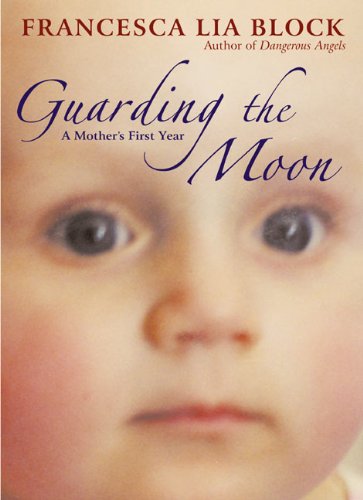
007) Guarding the Moon: A Mother's First Year by Francesca Lia Block, finished February 10

It's funny it took me so long to read such a slight and readable book. I felt like I was devouring it at great speed—but then something would interrupt and it would end up under a pile and weeks would pass....


But I loved the book. Block's beautifully fluffy way to warping time and relationship on the page to match the feelingof loving another person was never better suited than to the true story of loving her first baby. Everything is fluid and nothing is stable and we are tired and mad and deeply in love and yes this is exactly what it is like to have a child,

It's terrific. 

eight months 

008) The Sellout by Paul Beatty, finished February 13

This is gonna be a multiparter, not all of which are about the contents of the book. Buckle up.

Memory is a fallible thing: I have a very clear memory of my first AP Lit training in room in downtown San Francisco, the summer of 2008. On the last day, there were a bunch of books on the back table. Of course I took some. Among them were at least a dozen copies of The Sellout, its flourescent-pink accents attracting the eye. They were there because CollegeBoard wanted to pressure us to teach more books like this—humorous, as I understood it.

Years pass. I have most of my copies in a drawer at school, waiting for me to read the one I have at home. The one I have at home is on a shelf beside the front door. The visible pink on spine fades out to a barely-there orange you can only see if you put your eyes right next to the paper.

I am embarrassed it is taking me so long. This was a NYTBR 10 Best! This got an award from th National Book Critics Circle Award! NPR called it a masterpiece! It won the Man Booker! It's slathered in exorbitant praise, mostly about how funny it is!

Anyway, I finally pick it up because this is the year I'm only reading books I actually own and it's actually working and one of the first things I notice is the copyright date: 2015.

Huh.

So....

I think my memory is correct. Except I think it's two memories combined.

I also suspect that contrary to what were told, it was less CollegeBoard suggesting we teach The Sellout and more Picador a subsidiary of Macmillan itself a subsidiary of the Georg von Holtzbrinck Publishing Group. Regardless, I would never.

Culturally responsive pedagogy—possible? I've been teaching long enough that I can note when things suddenly change. My two best examples are as follows:

I frequently teach Frankenstein to AP Lit and, when I do, we often watch a movie after the test. Most commonly voted for is the Boris Karloff–starring masterpiece, but occasionally something else gets chosen (especially when I'm teaching multiple classes and don't want to watch the same movie more than once in a day), for instance Young Frankenstein. Which is a great movie although there's a played-for-laffs rape scene that I've always hated. But other people find it funny so hey, maybe I'm a prude for not playing rapes for laffs myself.

Anyway, kids did laugh at that scene, same as their elders. And then, one year, like flipping a switch, they did not. They were deathly quiet and uncomfortable. And so it's been ever since. Which is simpler because it's easier to talk about it when we start on the same page.

The other big example, also from AP Lit, is August Wilson's brilliant Fences. Love that play.

When I started teaching it, I heard scuttlebutt from the online student-services center, that my Black students were grateful that we were reading it and for the way I was handling the plays language.

Then, one year, the scuttlebutt changed. I was getting forwarded complaints. That reading Fences was leaving my black students deeply uncomfortable and angry, that they felt by bringing its language and characters into the classroom was feeding racism among their peers and telling lies about what it means to be Black.

For a few years, I tried changing how we discussed the play, but the complaints intensified. Finally, I dropped it. I now have not taught it for several years. I miss it.

In fact, as time goes on, to keep students happy, I try to avoid teaching anything "culturally responsive." I teach almost entirely dead white Americans and Brits. This quarter, for instance, our primary texts are Steinbeck, Vonnegut, and Shakespeare. And, if everyone is not happy, at least they are not complaining.

I'm not exactly sure what's gone wrong, but I suspect part of it is depth. Fences might be more acceptible if I were also teaching The Emperor of Ocean Park and The Hundred Thousand Kingdoms to balance out the historical-fiction-where-racism genre. The problem of course is I should really also be teaching at least three novels exploring Tibetan-American culture and at least three novels exploring Mexican-American Culture and  at least three novels exploring Japanese-American culture and at least three novels exploring Pakistani-American culture and at least three novels exploring Chinese-American culture and etc etc etc and you see quickly that the semester is not long enough. I hate this.

(I do have a few ways to mitigate the lilywhiteness of our major texts but the fact remains that the average actual single-author book we read and discuss as a class is more Jane Austen than August Wilson.)

Relevancy to the book: Oo boy.

So this is a book decidedly about racism. Racism here in 21st-century American. And it's not just "about" racism. It enacts racism in just about every imaginable way. It insists on placing racism literally front and literally center. Our main character, a Black Angeleno, finds himself owning a slave and instituting segregation.

See, his town has been taken off the map and segregation is part of the trick to bring it back. And not only does it, but the kids believing their school has been segregated leads them to instantly begin to excel. They're on their way to being the third-highest-achieving school in the state.

And of course I hate that but as I look back at what I've already written and am I inadvertently arguing the exact same argument?

The first half of the book I was mostly annoyed. I'm not pretending that post-racial America was achieved or anything, but it's so reactionary and angry I had a hard time finding my way in. And I wasn't sure I was welcomed in, regardless. I did laugh at a couple of the jokes, but most of them—I recognized that they were humor-shaped but I wasn't at all certain they would actually be funny to any slice of America.

The book starts at the end with the opening moments of our protagonist before the Supreme Court with normally taciturn Clarence Thomas losing his mind, cursing out our protag, calling him awful things, and finally collapsing into his seat with.... Well, this isn't the sort of blog that quotes what Clarence Thomas says.

And he's not the only real person to make a show here. Bill Cosby, Colin Powell, and Condoleeza Rice get raked over the coals but they also learn to Crip Walk. Barack Obama is weirdly a source of hope and pleasure but also no better than those other three. But time is weird here because we're both in his presidency and years before simultaneously. But Beatty isn't superconcerned with accuracy.

Or...sometimes he is. Some of what he says about geography or farming or surfing is so exquisitely detailed it's impossible to believe it's not true. But then our protag will plant an apple tree which'll die two days later but have apples on it. To which I express doubt.

I would argue back at myself that this isn't the kind of book to which accuracy matters except then why spend so much time getting us to believe it is accurate? And learning from this book that Stalin executed soldiers photographed with Americans when the two armies met on the Elbe for "fraternizing with the enemy" while I'm teaching Slaughterhouse-Five makes me want to share that tidbit but...given some (granted, casual) googling, I'm not so sure that's true.

This is a book which makes big claims on telling the truth and pumps itself full of realistic details. But this is also a book which proudly declares it couldn't care less about what's true as the fact is the facts matter so much less than the truth of things. As in "How to Tell a True War Story."

Which makes sense. One thing The Sellout makes clear is racism is war. Even if most people won't admit their in the fight.

So you hated it. No. No, I did not. It wasn't really to my taste and I wasn't sure the book wanted me reading it and for much of it I wasn't really enjoying myself and when the satire left the locals and went national I found it more silly than provocative, but—as it wrapped up, I found myself deeply moved.

The final pages with the restoration of his hometown and his memory of a standup comic took all the ugly and the chaos and the nonsense and wrapped it up with a humanist bow. The protagonist, whom I'd always found interesting, compelling, and genuinely human, ceased satirizing himself and his certainty, and opened up to show that, even he who weilds racism confidently as a both scalpel and chainsaw, doesn't know what's going on or what it all means.

I do sometimes wonder if we could all embrace our ignorances publicly and humbly we mightn't be a bit better off.

I don't know if that's true.

But as long as we all know what's going on, we never will. 

about three weeks 


Previous books of 2025
(and years more distant)


The first five books of 2026

001) Red Harvest by Dachielle Hammett, finished January 3
002) Never Let Me Go by Kazuo Ishiguro, finished January 14
003) Snoopy's Guide to the Writing Life , finished January 16
004) You Are Too Much, Charlie Brown by Charles M. Schulz, finished January 19
005) Ice by Anna Kavan, finished January 24


PRIOR YEARS OF BOOKS

2007 = 2008 = 2009 = 2010 = 2011 = 2012 = 2013 = 2014 = 2015
2016 = 2017 = 2018 = 2019 = 2020 = 2021 = 2022 = 2023 = 2024 = 2025