2016-09-30

2016's third-quarter movies

.

In theaters:


The Lobster (2015): This was a good movie, but I can't say I "liked" it. I don't know who I would recommend it to. I suppose if you liked the trailer, that's a good sign. Maybe know that you will recoil in horror about as much as you laugh out loud. And you will do both. I love the absurdity of it. I love the understatedness of it. I love that the world is internally consistent without making sense. I liked the use of long shots with an unmoving camera, the use of stillness and quiet. But I don't know that I liked it. The film will certainly give you something to talk about. Have any of you seen it?

Batman: The Killing Joke (2016): Gluh. The novel is not one of my favorite Batman stories to start with (never give the Joker an origin; I'm tired of evil freaks), but the film's prologue turns the fridging of Barbara Gordon from something problematic to something grotesque. Mark Hammill's performance was great, but Kevin Conroy---it was hard to believe it was him. Largely the film left me mystified, and when the audience laughed, I couldn't always tell if they were laughing with the film or at the film. At least I got in free.....

Ghostbusters (2016): Look: I'm no great lover of the original. Does it have perhaps the greatest bass line in film history? Yes. Other than that, whatever. It's okay. This movie is better than okay. It's not great (in part because of some of the ways it's beholden to the original such as the appearance of the ghosts), but it has some amazing jokes and the four leads are killer. Mostly, the callbacks to the original films work, and it feels enough freedom to be its own film rather than utterly beholden to cinema past. It's fitting in of digs on the internet-hate (slash misogyny) leveled at the film during its making vary in subtleties, but work. Overall, a film worth watching. My biggest complaint was the villain's lack of charisma. That bit of casting underwhelmed.

Ghostbusters (2016): The Big O wanted to see this and Lady Steed cleared it so he and I went together. Which was tough as by the time we had a Tuesday available, the film had almost disappeared from theaters. Already! I've read some opinion on why the film was a flop and it seems to me that there are three main considerations: 1) the trolls may have succeeded in making the atmosphere around the film too toxic for people to be able wash off; 2) the film cost too much as it just isn't the sort of film to make a billion dollars; 3) darn zeitgeist is looking a different direction this summer. That said, on second viewing, I enjoyed the movie even more. Maybe I didn't laugh as much as the jokes, but the humor throughout was more present for me. I love the five main characters and enjoy spending time with them. On the other had, I still don't like the villain (largely because I don't think he's well nor consistently developed) and both the villain and the Ghostbusters can/can't do things depending on the needs of the plot. But that failing is one this film shares with its predecessors. And the filmmaking holistic is better in this film. The camera and the editing and the sounds are part of the fun in a way they aren't in the originals. So I think: Good movie. Deserves a sequel. Just be more frugal in making it this time.

Kubo and the Two Strings (2016): This film may have some flaws, but they are minor and overwhelmed by the beauty and emotion inherent in every scene. Laika makes AMAZING movies. They are astonishing to look at---overwhelming---and chock full of honest emotions. And they tend to get better upon rewatching. I would not be surprised if the small complaints I have (which are much like those I had with Paranorman) diminished each time I watch. Go see this movie. Keep them making more.


At home:


A Town Called Panic (2009): You know the game where you sit in a circle and everyone takes turns telling part of a story and half the kids are just trying to make it more insane than the last? This is like that only it totally totally works.

The Girl from Nowhere (2012): This is essentially a Hitchcock film with a too-old male lead and a too-young female lead and the supernatural philosophy of Vertigo or Marnie cranked up to where it's no fun anymore---even a little boring. Plus, it looks like it was shot on video or too many fps or something. Given the obvious budget restraints, it doesn't look too bad, but it doesn't look that great either. Another way to think about it is as a horror film that forgot to be scary. Or a May-December that forgot it isn't a daddy-daughter date. So, you know.... I decided to watch this because I'm experimenting with watching films double-speed (or nearly) and that seems easier to do with subtitles; this was the first of Amazon's foreign-language recommendations I didn't recognize. Voila.

The 400 Blows (1959): I knew nothing about this going in---not even that the title is an example of the problems of translation. Watching some commentaries explains to me why people love it---and I agree with these analyses---but I can't see it becoming a personal favorite or anything. I'll watch more Truffaut, but this is more interesting to me as a historical document than anything else. I am glad, however, to learn that the point, critics say, is that life isn't fair, and not that that was an accidental side effect of some other desired effect.

Airplane! (1980): As I'm not a fan of this film's descendants, I've never felt a great need to see the sire. But, you know, it is a classic etc etc so I finally got around to it. And I liked it! It was funny! The jokes mostly worked! I love how rarely it broke character and how many jokes were accomplished with the camera and editing. In other words, it's a film comedy. And that's not done enough.

Hot Fuzz (2007): AMAZING. One of the greatest comedies I've ever seen. Everything about this film plays into its heightened satire of action films---over-the-top, mad, genius. The conspiracy was nothing like I expected. And perhaps I should mention that the violence was . . . um, grotesque. I'd been warned. Best cop comedy ever? What's the competition? Because I'm going with yes.

Mood Indigo (2013): This was an amazing film to watch. It's like---being dropped inside a PES world. It's a surreal love story---and it does surreal right. So much surreal art is cheap and woowoo instead of mattering. But making a film like this required an enormous amount of work---and it shows. Is it a great movie? I don't know. But it was beautiful to watch and moving. And I bet if I knew French, the wordplay would have been delightful as well. As it was, definitely not a film to watch on doubletime---reading the subtitles barely leaves room to enjoy the beauty of the world. Submerse thyself.

Wild Tales (2014): I loved this movie! Each story is bonkers in its own special way. For a while I thought this was a sequence of warnings against anger. But in a couple of stories, the anger is redemptive. But the don't proceed from least redemptive to most redemptive. It's not that simple. There's also the question in a film like this of how do you end? I'm happy to say that this wild, wild film ended in the best way possible. It's fun and awesome and horrifying and beautiful and upsetting and charming and, unquestionably, must-see. Such great acting. Such smart direction. So many crazy different directions.

Scott Pilgrim vs. the World (2010): This movie is still amazing. It's amazing that something so "gimmicky" can age so well. I think it's because the so-called gimmicks are in service of the story and not just a sequence of clever non sequiters. Of all the bigger-budget movies audiences failed to support, this one may hurt the worst.

Valerie and Her Week of Wonders (1970): This film has the grammatical structure of a nightmare and makes about as much sense---which is to say not much, rationally, and almost a great deal, emotionally. It's the story of a girl becoming a woman and confused with images plain, beautiful, and horrific getting to all the sex and death. The story is only of tangential interest, and the film swings into the absurd, the bizarre, the surreal. It's a vampire story and a hypocrisy story and and incest story and so forth. Perhaps the film is suggesting that part of growing up is discovering all the evil in the world, and then making decisions as to which evils we will accept and which we will rebel against. I dunno. I did enjoy watching it. Of all the '70s European films that have this general look, this is the one I've enjoyed the most.

Best in Show (2000): Even watching this bit by bit over a week, it's funny. The part I always remember first, however, is an outtake. Sadly I can't find it online to share with you. It's the scene with the balloons.

Four Lions (2010): Watch this film. It's a strange experience. It's a farce about suicide bombers. In a quasi-mockumentary style (using much of the cinematic vocabulary without actually being a mockumentary), we get to know our hapless jihadists and come to like them. Yet, simultaneously, we are repelled by them. It's safer to laugh at Michael Scott because for all his failings, he's not trying to kill people. This makes the experience of watching the film one of pingpong between laughter and horror. One thing this film does well is make the jihadists reasonable in the sense of imaginable. It's not that hard to see how they, having started down this road, just keep going. We've all done this. Just thank God that road didn't take us to murder.

Field of Dreams (1989): We watched it this year because O really wanted to. I think it was even better this time. I can't believe this movie was ever made. Such an easy thing to screw up that I have to call it risky even if it wasn't expensive. O told me he was about to cry during James Earl Jones's monologue. I cried the rest of the way.

Maverick (1994): My kids and I enjoy a bit of poker and this is my favorite poker movie that I thought could be kid-friendly (a bit more kissing than I remembered, but the scene I was most concerned about was tamer than I remembered). The film is tight and fun and smart. It's aged well. I can even forgive it its full-act flashback which usually drives me batty. William Goldman is a great writer. And the cast was terrific and executed his words so well--- Plus, I think the kids finally understand what I've been trying to tell them about tells.

The Sting (1973): It's been ~26 years since I first/last saw The Sting and so it had its surprises (oe of which is that the moment I remembered best, I remembered wrong). But sadly, the misunderstanding that let me to not get the full measure of surprise happened to me again. I realized instantly that I had misunderstood again and thus this was the misunderstanding that caused me to understand more than I should. This is hard to talk about without giving away spoilers. Suffice it to say it's good. And I'm bummed the Big O misunderstood in the same way. At least Lady Steed got the full measure of being blown away. I think the other two have no idea hardly what happened, even with out occasional pauses for clarification. Hoo. Parental warning though: that early burlesque scene is pretty burlesquey. You can FF it without consequences to the plot.

Ocean's Eleven (2001): This movie is perfect. It hits its beats with confidence and moves forward with boldness. Consider how it lets music play over unheard dialogue. The movie is just cool. Everything about it is great. Fewer stripper minutes than The Sting, but as much language. But we've now taught our children about the caper film. Let's call it a wash.

The Avengers (2012): I loved this movie first time. It's still fun but, like a lot of the Marvel movies, upon rewatching the seams show. My recommendation to myself is watch them one time each. I'm a little nervous because I told the boys the next one we can watch will be Guardians---and I liked that one too!

Amélie (2001): I bought this film on dvd well over a decade ago and count it as one of my favorites, but this is the first time I've watched it since the first time I watched it and I watched it streaming. Maybe DVD is dead? I really need to watch the film more so I can ignore the subtitles and just settle in and watch Audrey Tautou's face which is one of the great miracles of cinema. One thing I admire about this film but which I think I was less aware of in the past, is that it doesn't flinch away from the dark side. It might not let some of those darknesses fully develop, but it never pretends they aren't there. And it doesn't pretend the world cannot be beautiful notwithstanding. Thank you, Amélie.

Freaky Friday (1976): It's still fun to watch, especially with kids, and it's still the best movie from my birth year I've seen (which is no kind statement as to my film education), but my main takeaway is that Barbara Harris was grossly underemployed by Hollywood. She's so great. And she's a year older than me in this movie and looking great. If you're reading this, Ms Harris, it's not too late to give us one more.

Candleshoe (1977): Well, it's not as tightly constructed as it felt when I was a kid, but it's still fun---to watch with my own kids at least---and it has some moments of true pleasure (eg Niven's characters, the waltz scene, the final train-station scene) that outweigh the least sensible bits (worst conman ever?).


Elsewhere:


Mission: Impossible - Rogue Nation (2015): Look: A good M:I movie is a great action movie. The set pieces in this film are incredible. The cast is great. My only complaint is that Luther's a little two amazing for the world's rules, but overall this is a topnotch M:I film. And at the current rate, Tom Cruise will be 60 when they film the next. Amazing.

Shaun the Sheep Movie (2015): Think about how amazing it is that a wordless seven-minutes-per-episode cartoon show was able to ratchet it up to feature length keeping intact both its wordlessness and basic worldview. Amazing. Aardman is amazing. The movie is funny and sweet and true to its heritage.

Anomalisa (2015): I should have known Kaufman wouldn't write a movie for puppets that could have been done as effectively with live people. However, for some reason I thought that it would be puppets just to be puppets. I'm happy to say that's not so. Stop-motion was the right choice. And it's a good movie. I was surprised I didn't feel betrayed by the reveal at the end, as it was structured much like a cheap trick, but the film had prepared me for it and so it felt fitting and true.

Stand by Me (1986): I'd never seen it before. Didn't know the cast. Didn't really know anything besides it was based on a Stephen King story I hadn't read and had something to do with growing up. Now I have seen it. And I see why it's so beloved. I was moved, certainly. It's beautiful yet difficult. It features two of the best cryings I've ever seen on screen and they were both acted by kids! I sense this one will stick with me.....

Forbidden Planet (1956): I enjoyed this movie much more than I expected. I haven't watched a lot of old science-fiction movies and so whenever I do watch one that's supposed to be good, I can always be surprised. Of course, one charming thing about old sf is how desperately wrong it gets things, but who cares so long as it tells a good story with true characters and has something to say? This one repurposes The Tempest in interesting ways with some worth-thinking-about philosophy casually tossed in.

The Invisible Boy (1957): First I was surprised that Forbidden Planet was in color---then I got to be surprised its, rm, sequel was black and white. Parts of this movie were genuinely hilarious. The structure was disjointed. It tries to capitalize on Robbie the Robot's popularity, then wants him to be both a hero and a villain. The whole thing is bonkers. But except for some drawn out nonsense at the end, I still had a lot of fun.

Mad Max (1979): I had a lot of fun with this movie, terrible parenting notwithstanding. George Miller's definitely gotten better, but this is a ride, no doubt.

The Passion of Martin (1991): I can see why people saw this and wanted to help Alexander Payne get into features. It's very funny yet dark and surprising. It deals with near-taboo subjects (stalking, rape) and even though there's not a character to really care about, I still cared about the film. In other words, it's pretty much an Alexander Payne film. I haven't seen all of those, but I would choose Election if I were making a comparison.

Goodfellas (1990): Except The Aviator (and maybe Cape Fear---I can't remember which one I saw), I haven't seen anything he's directed. In fact, I haven't seen many gangster movies at all. I can see why this one's a classic. It's bold and chancy---the play with the camera in that final restaurant scene! It's also at times distressingly violent. It certainly doesn't make me want to sign up for any secret combinations, I'll tell you that. Also: did Ray Liotta get eyeliner tattoos? Why does he always look like that? (One last thing: Goodfeathers nailed the narration.)


Previous films watched


2016

2015

2014

2013

Some more of those paper things

.

053) Girl & Flame by Melissa Reddish, finished DATE

This was sent to me to review. But I've been slow about such things at late. It's taken me a while to get through this slim volume, but this is hardly my most egregious act of slowness....

Here's the gist: A flame destroys a house, killing the Girl's father and brother and lover. All she is left with is a bit of the flame that becomes her companion.

So yes: this is a work of surrealism. With, you know, some postmodern touches and stuff. Which means I am obliged to say what I always say in these situations: this stuff is way more fun to write than to read. This is still true. But it refers more to the novella as a whole than to each individual page.

Most of the--let's call them chapters of this novella are about a page long. The publisher made some strange design decisions (notably inconsistent font sizes to make things fit nicer---coincidentally my only real regret re The Fob Bible), but generally, these bitesize portions of this strange world are really just right. Rather like prose poems along a common theme.

There are many things I could say about this book, but what most interests me is its classic take on same-sex friendship. the novel seems to suggest that the Girl and the equally female Flame end up with a closer relationship than the Girl ever had---or could possibly have had---with her father or her brother or her lover. Ultimately, it's her friendship with another woman that is most fulfilling.

Classically of course, this idea is ancient. Most of my top-of-the-head examples are male (David and Jonathan, Gilgamesh and Enkidu, 19th-century Mormons), but hey---what about Poison Ivy and Harley Quinn? I mean---before they started kissing?

Anyway, the book has some interesting things to say about female friendship. And it has some rather beautiful moments at the end. Is it worth reading? Well, depends. I love this kind of thing in film, but when it comes to reading, I'ld still rather write.
at least two months


===========================================================


052) The Garden of Enid: Adventures of a Weird Mormon Girl, Part Two by Scott Hales, finished September 29
051) The Garden of Enid: Adventures of a Weird Mormon Girl, Part One by Scott Hales, finished September 29

I don't want to say to much about these before they're released, but they are great (scroll to the bottom and read for yourself)---funny and resonant---and I'm glad they'll be in paper form.

One sales pitch might be: This is like Letters to a Young Mormon only in funny pictures.
one day


===========================================================


050) The Making of Pride and Prejudice by Susie Conklin and Sue Birtwistle, finished September 28

Lent to me by a mother via her student (also this: which I doubt I will do more than skim, but which is filled with fascinating info).

The Making of covers the creation of the seminal 1995 BBC P&P from initiation to postproduction. I'll admit I did just skim much of it as I can't hold onto the book for long and have limited interest in certain portions of preproduction, but I did enjoy very much reading about, for instance, the script and the actors and the food.

As with any book of the type, the reader's enjoyment is largely determined by the quality of the pictures. Good pictures, ergo good book. This was a good book.
one day


===========================================================


049) Only What's Necessary: Charles M. Schulz and the Art of Peanuts by Chip Kidd, finished September 24

This is a beautiful book, made with love and a close eye. I only wish it could be larger and have more pages. But then it probably would have been too expensive to receive for Christmas.

The book is filled with perfectly executed photographs by Geoff Spear stretching from before Peanuts to the very end. Largely focused on the strips, but including all sorts of paraphernalia well beyond the expected Met Life ads and paperback collections.

Reading this book is much like taking a visit to the museum except you can take nine months to walk through it.

I wish we had a coffee table or somesuch to leave this on so I could easily pick it up and look at just one page and not feel on a quest to read one page after another until reaching the end. Which was fine, but not the best way to experience a book like this.
nine months less one day


===========================================================


048) J is for Judgment by Sue Grafton, finished September 16

At time this felt like a bit of a drag. Time for a break from Ms Millhone, I'm afraid. I never quite cared about this mystery. But, that said, I am very interested in our PI's newly developing family situation. And I love how this series is paced more like a giant novel than a series of sequels.

I'm fond of this world called Santa Teresa. I'll be back. I just think I want to carry around some nonfiction for a while. You understand.
twenty-two days


Previously in 2016

2016-09-06

Books I read that you could read and
then we'd have something in common

.

046) Jumpers by Tom Stoppard, finished September 6

More than the other Stoppard plays I've read so far, Jumpers seems very much of its time, from its explanation in the stage directions of "a television set remotely-controlled by an electronic portable switch" and excitement about the existential questions raised by men on the moon, It's also wordy in similar but nonidentical ways to, say, Rosencrantz and Guildenstern---this time the philosophy is less about people working out real life and more about a philosopher working out philosophy. And yet---

I still liked it. I will still be reading more Stoppard in the future. I will still teach him. Times are good and Zeno proves that God is doing okay.
while subbing and otherwise waiting


===========================================================


046) Dark Watch and other Mormon-American stories by Williams Morris, finished September 5

I had read most (all?) of the stories before so I hadn't been in a big rush to pick it up, but I did and I enjoyed it and found a couple I hadn't read (didn't remember?) which were also striking.

A recurring theme as the stories move into the future is imagining an underground Mormonism in unfriendly cultures.

I have a lot more to say about this book, but I need more time to plot it out---and I haven't decided where to publish it yet either, so, you know, time.
about a month and a half


===========================================================


044) Pariah Missouri: The Promised Land by Andres Salazar and Jose Pescador, finished August 29

See what I have to say here.
morning


===========================================================


043) Pariah Missouri: Answering the Call by Andres Salazar and Jose Pescador, finished August 28

See what I have to say here.
afternoon


===========================================================


042) "I" is for Innocent by Sue Grafton, finished August 25

One of the best ones yet!
weekish


Previously in 2016

2016-08-20

At this rate, even with cheats,
I won't finish have the usual
number of books.

Thanks a lot, plan.

.

041) The Devil Is Due in Dreary by David Parkin and Allan Jefferson, finished August 19

This was given to me by Parkin at Comic-Con and we went to dinner together later and talked more about sundry related topics.

I intend to write a longer look at the book for Motley Vision, so when that link works, you'll know I've succeeded.

In the meantime, this.

two days


===========================================================


040) No Country for Old Men by Cormac McCarthy, finished August 1

Finally finished my final audiobook from the Comic-Con trip. And it was as good as I expected. The reader was excellent (it's almost like the Coen's cast actors to match some of his characters). It goes on longer than the movie (which is coming to Prime soon and therefore I'm looking forward to rewatching), but that's okay. It does what only novels can do. It gets into thoughts and symbols etc. The nature of audiobooks is such that when you zone out for ten seconds, that part of the book is just gone, never to return. And so it goes. (At least I didn't have to deal with McCarthy's punctuation.) But instead of rereading it, I think I'll go to Blood Meridian next....
eleven days


===========================================================


039) Lady Killer by Jamie S. Rich & Joelle Jones & Laura Allred, finished July 30

Eisner Exception

Wow! What a bloodbath! Even with its '50s gloss, this is pretty horrific stuff. This first volume doesn't let us get inside the protag, but it promises that we'll get inside her soon. I hope so. Although fun in its way, it's a bit soulless.

under a week


===========================================================


038) Tribute to Sparky, finished July 25

Every time we've been to the Charles M. Schulz Museum I've spent some time in the gift shop with this volume. I read all the strips and one-panels comics artists made honoring Schulz back when he died in 2000 and they choked me up then. This is the first time I've read the book all the way through. It's also the first time I've cried in a museum gift shop. Tears on my cheeks and everything.

I think we need a couple centuries to figure out how important Charles Schulz was to human culture. But this book gives a hint.
long enough to embarrass fellow shoppers


Previously in 2016

2016-08-19

The Tick (2016)

.


So I've seen the full live-action run and several of the cartoons and read a handful of hundreds of pages of the comics. Thus, a new series excites me.

I just watched Amazon's pilot and I'm going to vote for it (I laughed sufficiently if not abundantly), but I do have a few reservations to share here:
Why go for the MA rating? The Tick should be something I can watch with my kids. A few extra swears to make it [whatever swears are supposed to make it] is value subtracted.

The costumes---Arthur's in particular---are a bit too cool.

I worry about the people-think-Arthur's-crazy element.

The Tick's metaphors can be cranked up even more. You'll never get all of them to hit, but it should be, let's say 75%. But I trust you here!
That's all.

2016-08-17

Lost Songs: Old Hippy

.

This is always available in the ol' Internal Jukebox. It came up today and I decided to look it up on YouTube and play it for the kids and darn it if they didn't enjoy it. Good song.

Holy crap though but the Old Hippy is thirty-five.

Holy crap.


Free bonus! Letting YouTube play through, I heard "Pancho and Lefty" and, lost song, Waylon Jenning's "Luckenbach Texas." This is a melody I still hum, but I never knew he was saying luckenback texas. The song makes way more sense now.


Next up: "Good Hearted Woman." I like this autoplay list.

2016-07-25

Les books

.

037) Winesburg, Ohio by Sherwood Anderson, finished July 22

I only recently became aware of this book and, frankly, I'm surprised I picked it for my trip. The recording the library provided was . . . imperfect. Some stories I skipped over for a variety of reasons (scratched tracks, noise issues with my car, one terrible narrator), but I listened to almost all of it and it was terrific. Reminded me a lot of Spoon River Anthology---its basically the short-story-collection twin of SRA, really. But it's like other, similar books as well. Dubliners is the most famous example, but I liked this much better. (Joyce: the most overrated writer of the Twentieth Century? Yeah. Probably. Even if he's good, he'll still probably win that race.) All three of these books, incidentally, were published in three years. So something was in the air. I've been trying to think what the modern version would look like, and I'm just not sure.

It's a small Ohio town and the people that live there. They lean towards the sad and lonely, but that doesn't prevent the telling from finding beauty. It's not a rejection of this image of Americana, but it does examine it very very closely with a squint.
all the way to sdcc and much of the way back


===========================================================


036) UR by Stephen King, finished July 20

Audiobooks from the library for my 1000-mile journey alone! Book one: this one.

King really is the master of making small, everyday things otherworldly. I wouldn't call this a horror story though it has many of the trappings.

Here's the conceit: Guy gets a Kindle with the ability to download books from alternate realities. Imagine access to books your favorite writer only wrote in another world. Yeah. I know.

Anyway, that's the idea. If it sounds good to you, this might be the best king to start with. Not scary. Short. The perfect starter drug.
first leg of my drive to sdcc


===========================================================


035) Fante Bukowski by Noah Van Sciver, finished July 13

Fante is a truly pathetic fellow and, best I can tell, his good intentions notwithstanding, a genuinely bad writer of the sort unlikely to improve. When you can plagiarize an entire novel without realizing you're doing it, you might not be the sort of idea-generator who can make it as an artist.

But that's how he loses.

Noah's treatment of him, however, is much kinder. Sure we see him honestly, but that honesty prevents us from hating him. For all his pretension, ego, silliness, hacksterism, etc, Fante's a real person and we feel for him. We don't hate him for his social and artistic blunders---we're embarrassed for him. And that's a much kinder angle.

nominated for an Eisner

short


===========================================================


034) "H" Is for Homicide by Sue Grafton, finished July 12

Most of the time, Kinsey Millhone is in situations that might be dangerous and so maybe something bad could happen at any moment. In this novel, every moment is definitely dangerous and so the maybe-something-bad-could-happen-at-any-moment is exceedingly more stressful and worrisome. Beware accidentally going undercover with organized crime. Beware!
over a week, maybe over two


Previously in 2016


31 – 33
033) Isaiah: Prophet, Seer, and Poet by Victor L. Ludlow , finished July 5
032) Sistering by Jennifer Quist, finished July 1
031) Sayanora Slam by Naomi Hirahara, finished June 6

26 – 30
030) Sunny Side Up by Jennifer L. Holm and Matthew Holm, finished May 30
029) Best American Comics 2015 edited by Jonathan Lethem, finished May 30
028) G Is for Gumshoe by Sue Grafton, finished May 21
027) The Unbeatable Squirrel Girl Vol. 2: Squirrel You Know It's True by Ryan North & Erica Henderson, finished May 20
026) "F" Is for Fugitive by Sue Grafton, finished May 12

19 – 25
025) Soldier Dog by Sam Angus, finished May 6
024) Baba Yaga's Assistant by Marika McCoola and Emily Carroll, finished May 1
023) The Unbeatable Squirrel Girl Vol. 1: Squirrel Power by Ryan North and Erica Henderson, finished April 30
022) Little Robot by Ben Hatke, finished April 26
021) What We See When We Read by Peter Mendelsun, finished April 26
020) Roller Girl by Victoria Jamieson, finished April 23
019) The Only Child by Guojing, finished maybe April 21

15 – 18
018) 77 Love Sonnets by Garrison Keillor, finished April 21
017) Fidelity by Grace Paley, finished April 20
016) The Jam Jar Lifeboat & Other Novelties Exposed by Kay Ryan, finished April 15
015) Work & Days by Tess Taylor, finished April 1

11 – 14
014) The Little World of Liz Climo by Liz Climo, finished March 29
013) Forgive me, I Meant to Do It by Gail Carson Levine, finished March 26
012) Fences by August Wilson, finished c. March 14
011) The Life and Times of the Thunderbolt Kid by Bill Bryson, finished March 19

10
010) Folk of the Fringe by Orson Scott Card, finished March 9

5 – 9
009) The Naked Soul of Iceberg Slim by Robert Beck, finished February 29
008) Half Moon Investigations by Eoin Colfer, finished Feb 20
007) Bless this Mouse by Lois Lowry, finished February 16
006) Dendo by Brittany Long Olsen, finished February 14
005) Dream House on Golan Drive by David G. Pace, finished February 5


1 – 4
004) Mormon Shorts, Vol I by Scott Hales, finished January 23
003) Shirt in Heaven by Jean Valentine, finished January 18
002) Eleanor & Park by Rainbow Rowell, finished January 14
001) Spy School by Stuart Gibbs, finished January 9


_____________________

* most recent post in this series *

__


final booky posts of
2015 = 2014 = 2013 = 2012 = 2011 = 2010 = 2009 = 2008 = 2007


2016-07-05

As William Tell said,
Bookety book bookety book bookety book book book

.

033) Isaiah: Prophet, Seer, and Poet by Victor L. Ludlow , finished July 5

I'm done! I finished it! Alleluiah!

I have several issues with this book. I guess these are the main three:

1. The book unabashedly comes at Isaiah from an LDS perspective, which is legitimate, but it does so at the usual expense of other perspectives unless those perspectives offer a remarkable second witness to a specifically LDS standpoint. I would like to be challenged a bit more to consider others' thinking.

2. The book is maybe a bit too much of its time. The book was first published in 1982 and thus Spencer W. Kimball, it seems, is the likely target of many of Isaiah's prophecies. This also doesn't bother me too much (the nature of poetry and prophecy is often multiple applications) but it does make the book seem rather dated and provincial.

3. The book mentions the controversy over multiple Isaiahs but doesn't take it seriously. It recognizes the scholarly position but then just fights it with testimony. (I'm overstating this slightly.) I was hoping for some insight into the issue, not a feinting.

But there's a lot to like here as well.

Ludlow's narrative persona is avuncular---wise and welcoming and a bit longwinded.

The text incorporates ALL of the book of Isaiah (except for one chapter, weirdly, which quotes extensively from 3 Nephi instead), and for each chapter Ludlow selects the translation that seems to him to best capture the original. This is quite lovely, actually, to visit seriously so many different translations (including, for one chapter, a new translation of his own making).

Ludlow is a true scholar of deep reading, learning, and understanding. I don't blame him for sometimes adding more than is strictly necessary, but if you buy this for yourself rather than a course, feel free to skim portions.

And lest #1 up there get misinterpreted, I appreciated the LDScentric look at Isaiah (I just wish it hadn't been to the near exclusion of other perspectives).

It was a long, long read, but I made it. I don't know if I would recommend it over whatever the competition is, but if you want an LDS-based 1980s look at Isaiah to round out your Isaiah library, this is a good choice.
eight months


===========================================================


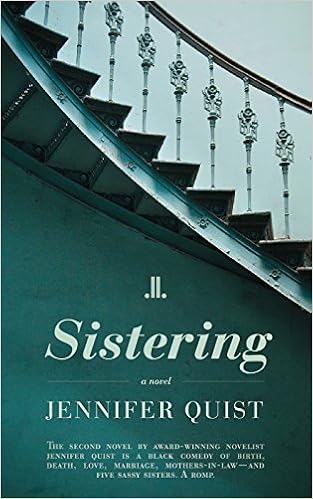
032) Sistering by Jennifer Quist, finished July 1

This is one of the books on my nightstand I was specifically thinking of when I made the exception to the no-new-books-rule for books I should review. I had planned on taking Karen Rosenbaum's new book with me to girls camp but I couldn't find either of my copies, so I took this instead.

And I loved it! Although thematically it tastes a lot like Quist's other novel, stylistically, it's much different. For instance, it swings through five different points of view and balances a large number of major characters. And does so beautifully, I might add. Everyone is very much recognizable as themselves. I spilled a lot of red ink on its pages and should really write a serious essay on it, but I have so many options when it comes to things to write about and so few people urging me for an essay (not to mention several utterly unrelated writing deadlines looming) that I'm not sure I'll get to it.

But if you're, say, one of Shelah Miner's students and want to write a killer essay on Sistering, here are some options that I would consider were I you (some will be better at supporting the weight of an essay than others):
The novel's about women's relationships with their sisters and with their mothers-in-law. But not until the very end does it really begin to address the two, obviously missing types of relationships: women and their mother, women and their husbands.

This novel uses language (words and phrases, for instance) to wrap through and around the text, touching disparate moments and connecting them.

"But when it comes to family, what does what we deserve have to do with anything?" (216)

How necessary is physical, geographical closeness to emotional, familial closeness?

This novel has a curious and subtle way of jumping forward in time without lurching. Discuss the mechanics of this.

The use of color!

Although perhaps not usually obvious, this novel shows the same aversion to naughty words that Dean Hughes's books show. Is that purely because it's appropriate to the book's aesthetic, or is this Quist's Mormon showing?

Although hardly a laugh-riot, the book is ridden with humorous lines, presentations, and situations.

Quist is the Queen of Death. This second novel establishes her as one of the great modern explorers thereof. Book One was explicitly Mormon if you know the codewords. This one isn't. [How] Does that change the results?

What, if anything, does family "owe" one another?

We all fill different roles---both for others and for ourselves.

Suzanne escapes "all that horrible justice"---should we be satisfied by that? If we are[n't], what does that say about us?

Which world[s are] made possible only by forgiveness" (296)?
It's a really good book, guys.
four days


===========================================================


031) Sayanora Slam by Naomi Hirahara, finished June 6

If this had been, say, a library book instead of a gratis-for-review copy, I probably would not have finished it. But by struggling all the way to the end, I have the answer to the question I've been asking: is Sue Grafton actually any better than her competition? The answer is yes. Hirahara is an Edgar Award winner and this book was hard hard hard to get through. First, I didn't care about the mystery. I really had no interest in whether it was ever solved. The interweaving of some history I'd never heard of (and isn't easy to find a good webpage thereon) couldn't save it. Nothing about this book intrigued. Most of the characters didn't live, the transitions made me think the author was just checking boxes on her outline, and the baseball was absurd. Would you, for instance, in the bottom of the ninth, send a pitcher to the plate? Of course you wouldn't. And a boneheaded error like that can make me question everything else (even if I hadn't been already). Nothing rang true in this book. It read like a film treatment rather than a novel.
couple weeks


Previously in 2016