2014-05-23

Mormons, Novelists, Poets, & Vikings

.

035) Of Many Hearts and Many Minds: The Mormon Novel and the Post-Utopian Challenge of Assimilation by Scott Hales, finished May 22

I suppose this is as much a comment on my interests as on the work itself, but this is perhaps the quickest I've ever read a doctoral dissertation. I find Scott's tools for analyzing the Mormon novel compelling. Ignoring the introduction and the conclusion, it consists of five chapters. The first gets into what he means by post-utopianism and Mormon fiction, etc. Chapter two is the best treatment of Nephi Anderson to date. Admitting his flaws and his strengths in appropriate measure, Hales of course is focused on this concept of post-utopianism (which, no, I'm not going to define---you'll have to wait for the published version) but even with that narrow focus, this chapter's a great introduction to Anderson and his work.

Chapter three gets into faithful realism, eg, The Backslider and its generation of "disaffected" fiction. Again, with his lens, Hales isn't focused on the novels' relative merits as fiction (this is not a list of reading-list recommendations, alas) but his analysis is insightful and useful when considering the evolution of the form.

Chapter four I started out by skimming (I've no great interest in Mountain Meadows fiction), but it eventually drew me in.

Chapter five attacks a topic I'm greatly concerned with, what Scott calls going transnational. I feel woefully unprepared for this issue of Mormon artistic output serving a global community, but it is something I'm trying to grapple with in my own work.,

The most highlighted section of my reading though was the conclusion that explicitly articulated many of my own nonfully expressed personal artistic goals. In fact, to me, it read much like a manifesto. (I suppose having Byuck cited didn't hurt, but really: although couched in the stolid impartiality of the observing academic, to me it tasted of revolution. As a manifesto, we could do worse.) New Mormon Fiction!

A delightful little work. I hope he finds a publisher. With the explosion in Mormon-studies publishers and the singularity of this work, I'm hopeful that he will.
almost a month


===========================================================


034) Field Notes on Language and Kinship by Tyler Chadwick, finished May 21

Even though I read this book with a notebook open to jot down poems (this book does more than inspire poetry, but that it does very well), I read it at a tear. I forced myself to set it aside when I had Whitney reading to do, and my picking it back up was a tad slow, but I enjoyed the final quarter no less than the first three. Both the poems and a full review will go up soon. These will turn into links when they do: review / poems

about seven months


===========================================================


033) The Long Ships by Frans G. Bengtsson, finished May 20

You may have noticed that I don't really pick up 500-page books. Life's too short. But Lady Steed's bookclub was reading this one and I picked it up from her side of the bed to read Michael Chabon's intro---and he totally sold me. I knew I had to read it, long or not.

I loved it.

If it helps, think of it as four short novels, or two normal-sized novels (how it was originally published in Swedish). Hard, of course, to parse the difference between Bengtsson's writing and the translation by Michael Meyer, but regardless of who gets what credit, this is is a beautifully written book. Calm and plain---it tastes like an ancient book, but you get occasional wisps of its modernity (it was published in Swedish in the 1940s and first in English in 1955). Part of the pleasure of this book is not just the adventure and violence as its hero goes a-viking, but its sense of the utter mundanity in the year 1000. Their lives accept levels of awful (by our estimation) that is unfathomable. But the narrator's bored attitude toward rape and murder do more toward building the reality of this world than anything else.

Another engaging part of the story (that seems remarkable to modern eyes but which the narrator makes seem as everyday as spit) is the encroachment of Christianity into these Northern lands and the manner in which old and new gods run into one another.

Really: if you're looking for a summer book, you cannot do better than The Long Ships. Get your copy today.
about twenty weeks


Previously in 2014 . . . . :

2014-05-16

Unifinished Book: Little Brother by Cory Doctorow

.

Doctorow's book had so many people calling it both IMPORTANT and thrilling that I felt obliged to pick it up. Which I did, from the school library. It's been next to my bed for a couple years now and I never got more than a hundred twenty-some pages in. When I was reading it, I found it compelling (the politics---the tech manages to be both still-futuristic and already-dated), but when I set it down, I would forget all about it. So I'm calling it quits.

That said, it's still a book I would recommend to young readers who maybe don't get the references in this title and the main character's nom de hack w1n5t0n. Because it's a thriller, we send w1n5t0n to Miniluv before a hundred pages have passed, then let him loose to start forming The Brotherhood with his teenage buddies.

Politics I like. Exciting pacing. Even takes place in a well captured Bay Area. Surprised I didn't just power through? Me too. But I think the first-person narrator was part of the problem for me. Even though it's obligatory for YA lit these days, I'm a bit sick of it. And for a Nineteen Eighty-four pastiche, it's a bizarre choice. It limits how broken the protaganist can become which limits the amount of risk he can possibly undergo. In other words, the choice of first-person necessitates jetissoning a large measure of suspense and danger. In other words, it makes the novel much much safer. And that, I think, undercuts the politics and the pacing leaving a moral-of-the-story, characters I hopefully like totally love, and some good pizza recommendations for next time I'm in the Mission.

Not enough.

2014-05-13

Nephite-centric svithe

.

Though a minority, the prophets of the Church in Book of Mormon times were always Nephites. This may have been a contributing reason to their society's eventual demise due to interracial warfare.

Good thing we have the Book of Mormon, that we may learn its lessons.


previous svithe

2014-05-08

Brrrrks

.

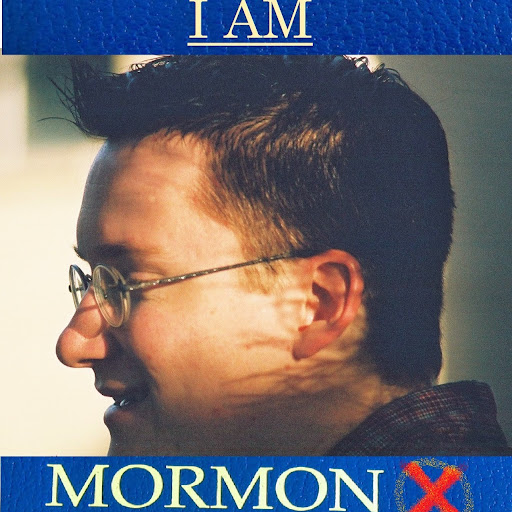
032) Mormon X: Confessions of a Latter-day Mutant by Ben Christensen, finished May 8

This roman à clef slash allegory about a young BYU student has been interesting to watch unfold. I think I knew where it would end up before the author did (or at least before the author admitted he knew where it would end up. And it's been interested to watch the MoHo community come out and support the book. Ben consulted with me regarding the ethics of letting people assume the book was in fact about a Now! BYU student and he followed my advice, but catching up now on the last couple weeks of posts, there are a number of commenters who seem so emotionally involved in the story that I wonder, retroactively, if some sort of disclaimer mightn't have been more appropriate. Ah well.

At any rate, I imagine this book will be more successful at proselytizing young Mormons to atheism than to the mutant lifestyle. It is certainly a trememdous piece of propaganda though, largely because of its honesty and "real"ness from the very beginning. Real characters undergoing real change will always inspire readers to feel as they feel.

I anticipate the posts being collected and reformatted and released as an ebook in the near future. So if you don't like reading backwards, you will soon be in luck.
just under six months


===========================================================


031) Consenting Adults; or, the Duchess Will Be Furious by Peter De Vries, finished May 6

I can't remember how I heard about De Vries even though it was only a month ago. Looking at him online now, I suspect I decided to read him as America's funniest-yet writer of religion. But the local library system is down to two volumes---neither of which, do I think, is specifically religious. But the two left are the one about sex (this one) and the one with the best title. So I checked them out.

It's a classic example of midcentury humor and thus can largely be skimmed. The character is erudite and much too aware of it and while amusing, it is also tiring.

The other worth-talking-about aspect of this book is its engagement with changing sexual mores. It's aged peculiarly and makes me wonder if writing about contemporary sexual mores will always be the surest way to age a book. That said, he did hit upon some [I refuse to commit to any particular adjective] ways to describe acts of hankypanky. E.g.:
What memories. Snooky laughing gently as I reached my peaks, with a woman's deep, deep joy at bringing a man to such ecstasy. Snooky drinkiing off a last lingering dewdrop, squeezing it forth like sap from a flower stem. She said she plagiarized the gesture from Lady Chatterly's Lover, though I have scoured my copy in vain for the precedent.
I don't know how our angry duchess compares to the prurient novels of Roth or Updike, but there you go.

As a novel, the structure seemed bad. The bulk of the novel is in the smalltown Midwest, then our hero goes to New York where the same laws of nature and expectation do not seem to apply as the plot speeds up without going anywhere (while going everywhere simultaneously)---the universe existing primarily, it seems, to fit in such un-fit-in set pieces as satire on the theater, two men and a woman, and a man with triplets. Almost as if he'd conceived the book purely as a vehicle for those sex scenes (the flapcopy backs this theory up) and so he had to cram them in at the end. That's what happens when you spend too many scores of pages engaging in humorous rhetoric.

Anyway. I imagine I would enjoy his nonfiction more.
about a month


===========================================================


030) The Sleep of Reason edited by C. Spike Trotman, finished April 30

I put some money towards this on Kickstarter and almost immediately started to regret it. At first, I figured it wouldn't make its goal and so this was just a vote for comics. Then it made it and the updates kept coming, but instead of getting excited, pretty much everything I saw made me dread the final product. (And not in a good way.) It finally arrived with its hideous cover and I stuck it on a shelf and it might have remained their forever except the shelf was getting full and this is a big book, so I took it off and gave it a read.

And holy crap but if it isn't the best horror anthology I've read in . . . . You know, as far as multi-creator collections go, I can't think of a better one. And I'm not talking exclusively comics here.

Twenty-six stories making up almost 360 pages of content and although there are a couple soft-hitters and a couple that require me to keep this book away from the kiddos, overall, this is a fine fine collection of scary stories and one I happily recommend to anyone interested in the intersection of comics and horror. Wildly original in several places and greatly divergent from each other. These stories are all over the place (in a good way).

Here's a quick flipthrough in spooky lowlighting:


just under two weeks


===========================================================


029) Ruby's Secret by Heather B. Moore, finished April 12

The movie would be better than the book. See more at the AML blog.
weekish, moreish


.


Previously in 2014 . . . . :

2014-04-17

SLC Comic Con Fan X

.

In between visiting relations, I will spend this weekend's Saturday afternoon speaking on three topics:
Representations of Mormons and Utah in Comics

Monsters & Mormons

Sherlock Holmes in the 21st Century
It will be a crowded madhouse. You won't want to miss being one of the 800ish people I tell jokes to this weekend.

2014-04-10

What he’s finished reading of late

.

028) Road to Bountiful by Donald S. Smurthwaite, finished April 7

See review at AMV.

A couple complaints that didn't fit there:

1. What's with the title? Jeez. Really? Road to Bountiful? Geesh.

2. Why did he shred the check? It should be a powerfully symbolic gesture, but as far as I can tell it doesn't mean anything. If it was supposed to mean something, the set-up failed. As it is, shredding the check actually goes against some of the lessons Levi supposedly learned.

3. Why the few paragraphs scattered through the end that bust apart the present tense and turn this into a story from Levi's past?

In the end, it's a good book if seriously flawed. Like the other Whitney finalist listed today, I'm worried if these really are the five best books we've got going. . . .
about three weeks


===========================================================


027) Atlas of Prejudice: Mapping Stereotypes, Vol. 1 by Yanko Tsvetkov, finished April 6

I had to skim half of two of the essays (and skip a couple of the European maps) in order to finish on time, but as best I can tell, Tsvetkov's nailed it. He even understands Americans. Get a glimpse.

a bit of afternoon


===========================================================


026) Thelwell Country by Norman Thelwell, finished April 6

Cartoons that mostly maintain their humor after half a century and whose eye for detail has grown only more compelling.

a bit of afternoon


===========================================================


025) The House at Rose Creek by Jenny Proctor, finished March 31

See review at AMV.
about three weeks


===========================================================


024) Barnaby, Volume One by Crockett Johnson, finished March 17

Today I was recounting how I had read "A Modest Proposal" in my "bad Irish accent" and the boys asked me to demonstrate. So I recited "Take Me Out to the Ballgame" and the recognized the voice and cried out, Mr O'Malley! The four-year-old ran to the shelf and pulled off our first volume of Fantagraphics's Barnaby reprints and after dinner we reread some favorite moments.

We actually finished the comics months ago, but I hadn't finished reading the afterstuff until tonight. I wish, rather, that similar endnotes were included in the Peanuts volumes.

Another difference between our Barnaby and our Peanuts is that the manufacture of Barnaby's a bit crappy. Maybe we blame this on its heaviness and wideness, but it should be able to sit on a shelf, don't you think, without falling apart?


Sigh. Let's hope it's just my copy. It was obviously weakly bound from the time it arrived in the mail.

Anyway, it's easy to see why everyone was gaga over Barnaby back in the day. It's also easy to understand why Johnson didn't have the stamina to stick with it for fifty bleeding years. (Schulz was something unique in the annals of comicsdom.)

Barnaby's unique aesthetic---clean lines, Futura-set text, lots and lots of words, contemporary sensibility, historical and literary references---keeps it both everlastingly fresh and wholly of its time.
months


===========================================================


023) A Poetry Handbook by Mary Oliver, finished March 17

This is to writing poetry what I found Stephen King's On Writing to be on writing prose: just as good a guide to reading it. i can't think of a better way to teach poetry than to hand one of these out to each student and say read this---read as she says, write as she says---repeat repeat repeat---now you know poetry.

I'm seriously considering ordering these for my classes.
a month or so


===========================================================


022) Irene #3 edited by dw, Andy Warner, Dakota McFadzean; finished March 15

I read this comic somewhere online and, on the strength of it, bought this comic. Although "Dance Yourself to Death" was the best of the bunch, it's pretty indicative of the overall quality.

It's a bit weird though, for one comic to clearly be by and old guy, and then to read the bios and learn he only has a year on me.

Anyway, check out the artists:

! * ! * ! * ! * ! * ! *

I haven't checked out all these yet, but most of what I have checked out has been great.
two or three days


Previously in 2014 . . . . :

2014-04-09

Feature-length films of 2014, quarter one

.

In theaters:


Inside Llewyn Davis (2013): Unquestionably a well made movie. I don't get the point of the bookending and I don't know how the Coens expected me to react to the ending, but I had a similar reaction to A Serious Man. Music was pretty great though. That seems like something we can all agree about. One thing though: I don't understand why everyone's going on and on about what a terrible person Llewyn is. He doesn't seem that awful to me. Does that make me a misanthropist?


The LEGO Movie (2014): Notwithstanding the great cast and hilarious trailers, the trailers also make it clear that this story is a clichefest---prophecies, regular-guy hero, dangerous romantic interest, evil businessman. You know where it's going. But it doesn't matter because the ride is so much fun. And with a story like this, it's all about the journey, less about the destination. Only, with this film, the destination isn't quite what you expect. At first it just seems a tad self-consciously postmodern, but then it uses that to break out of the movie you think it is into the movie it really is---without giving up on the promises originally made. Pretty brilliant, really. I don't know that I need to see it again, but it's the best 100-minute commercial I've ever seen. It's given our family a ton of catchphrases, and deserves positive comparisons to Idiocracy, The Matrix, and Toy Story.

The Wind Rises (2013): The best war movie I've ever seen. (Which says a lot about what I want from a war movie.) I found every aspect of this movie wonderful. We saw the dubbed version and it might be the best dub I've ever seen too. The visuals are elegant and alive and the characters are carefully drawn from small moments. The earthquake was the best I've seen on film. And so many choices to ponder, such as the use of human voice for sound effects such as fire and airplanes. Miyazaki has melded realism and magic here utterly perfectly. I love this movie.


At home:


The Conversation (1974): What a great movie for the modern surveillance age! Sure, Seventies tech seems both hopelessly outdated and terrifyingly invasive (they shot at a REAL convention). Add to that the unsettling lack of finality. Or, in other words, the smalless. This is a film that recognizes it is a short story, not a novel, and uses its smallness to full effect. One last note: The Seventies seem to have had an usually high number of movies stars with unexpected looks. Of course, we've always had them from Humphrey Bogart to Michael Cera, but the Seventies!

Moon (2009): So great. And Sam Rockwell? No wonder people were scandalized he didn't get an Oscar nom. He IS this movie in ways actors seldom get to me. The twists come midway which is a nice switch. Good stuff.

Cedar Rapids (2011): Although a comedy, this film is structured so much like a tragedy that I had a hard time seeing how it would pull out. (Ended up that was an overly simple solution.) But Ed Helms did a good job playing the naif who spirals and Anne Heche did a good job not being recognizable in a new hair color.

Crazy, Stupid, Love. (2011): If I had paid closer attention to the punctuation in the title, I might have been interested in this movie sooner. Since, you know, the exciting cast and good reviews failed to win me over. I suppose this is an American version of, say, Love Actually, but that coincidence-ridden overpopulated mess failed to win me over. This cast is a bit smaller which, if anything, requires more coincidences, but they all work. Sure, the Big Moment at the end is a bit derdeedum silly, but I'm willing to forgive it because pretty much ever other moment in the movie landed. This is a movie which, ten years ago, we would have bought and watched every few months.

Knuckleball! (2012): I was expecting a nice little documentary, but instead I got a pretty terrific movie that both me and my boys were glued too. (Note if you have younguns: out of nowhere comes a single f-bomb in the middle of the movie.) I think knowing that in the following season Dickey won the Cy Young makes it even sweeter. What a great flick. What a great use of all the tools a filmmaker has to make a documentary so much fun to watch.

Warm Bodies (2013): Lotta holes in the plot, worldbuilding and, especially, the geography, but this was fun and sweet and good for a date.

Pitch Perfect (2012): First, Rebel Wilson is a treasure. Beyond that, Pitch Perfect exceeded my usual expectations for the genre but failed to transcend the genre, as I had hoped it might. It had a lot of the same errors/flaws/tropes one would expect (examples: the pointless riff-off, groups forgotten by the plot, age-politics crap) but the film was good enough those things didn't matter too much. Like classic Hollywood---no one cares if Groucho or Bing are a tad unrealistic. This movie earns that same sort of forbearance of detail. Just roll with it.

Source Code (2011): First, terrific, terrific movie. Second? Even better than Moon. (I know!) Third, several earned endings, each better than the last. Impressive. Fourth, even though the ultimate happy ending was clear from a distance and arguably too pat, it was absolutely earned and I would have been upset had I been denied it. Fine work all around.

Chronicle (2012): Two lessons I got from this. First: do not give teenaged boys superpowers. Second: we seriously need to fix our healthcare system. (Good movie.)

Legend of the Guardians: The Owls of Ga'Hoole (2010): I wasn't watching this superclosely, but I saw bits of Star Wars and Lord of the Rings and some stuff with aerial battles that Ender's Game might have tried. Surprisingly dark. Stereotyped characters not as stereotyped as at first they seemed. But not enough to overcome the stereotype. But again: I wasn't watching superclosely. It might be much better or worse than I'm implying. The Big O has strong opinions though. (He loves the books.)

Mahlzeiten (1967): I hear of this film here, but it's not an easy thing to find. I'm not joking when I say I had to find an expert in German film and send him to Berlin to find a copy after months of occasional looking. And the film relies mightily on language (at times, the narration and dialogue are simultaneous) so it's an impossible film to judge if you don't have any German skills (nope, no subtitles). I'm pretty sure I heard a long list of colors once and I figured out the leads' names (Elisabeth and Rolf)---and I could tell the Mormon missionaries had American accents---but basically I could only view the film visually. And there was a lot to see. But difficult to contextualize. [Update: now available in English under a racier title.]

En Kongelig Affære (2012) A Royal Affair is a beautifully shot and well acted look at a bit of history I knew nothing about. It's the time of the American Revolution and Denmark is waffling between the old ways and the Enlightenment. Enter an English princess, marry her to your mad king, insert a dashing thinker---and you have the ingredients for a terrific period piece.

Le Ballon Rouge (1956) (It's over half an hour. It counts as a feature.) I probably haven't seen the movie in thirty years. (And, in the meantime, I've probably seen "Billy's Balloon" once for each of those years.) But based on the reaction of this class of seventeen-year-olds, it still holds it power.

The Muppets Take Manhattan (1984): This charming little film is better than I remembered. And while Paul Williams remains the greatest songwriter in Muppets history, "Saying Goodbye" is no slouch. Also, nice synergy, Henson. That baby Muppets scene in a movie released the same year Muppet Babies hit television? Although, incidentally, why hasn't Skeeter ever made it to live action? They could use another strong female character. Anyway, nice movie. Easy to rewatch.


Elsewhere:


SlamNation (1998): For my freshman, this movie is as old as One Flew Over the Cuckoo's Nest would have been to me. Which is to say, not as fresh as I'd hoped. Good personalities. Difficult watch with the crowd I was with.

The Book of Mormon Movie, Volume 1: The Journey (2003): I missed more than an hour out of the middle (meaning I missed the only twenty seconds I liked the first time I saw this), but I feel qualified to say this movie is still terrible. Those poor brighteyed fools. . . . With the right company though, you can laugh at this movie. I did not think it was possible, but it is. Thank you, Zelophehad's Daughters.

2014-03-31

At first I thought radio was misogynistic. Then I heard this.

.

When Lady Steed and I first moved to the Bay Area (moved back, in her case) and became [re]acquainted with her teenaged soundtrack, Live 105, we were both struck by the lack of female voices. At the time of our most irritated conversations on the topic, Metric was the only band getting regular play with maybe an occasional older number from Alanis. And that was pretty much it.

Lilith Fair, apparently, was a bust. Natalie and Tori and Sarah and Kim (to say nothing of Kimi) did not change the world. The voice of radio was maler than ever.

But something's been changing lately. I'm not sure where it started. Was it Lana Del Rey on a station that is married to Nirvana? Was it Lorde being the first female with #1 song on the alternate chart since a song I don't even remember because it came out when I was on my mission?

Anyway, to see if I'm not crazy, I'm looking at all the songs Live 105 played yesterday (as of this writing, not of this posting), March 28, and seeing who's singing.

This is a list of everyone who sang this day. Click to make it bigger.


Well! It's clear I was wrong wrong wrong. If this is an increase in ladypipes making it on the air, then holy crap was the past a miserable ladyless place.

But this might just be a matter of so freaking many Bastille and Red Hot Chili Peppers plays. Let's compare the total number of artists, regardless of how popular "Radioactive" and "Team" are right now. So let's strip out the redundancies and just compare number of bands.


Well, huh. We can't say this is simply a matter of them not playing CHVRCHES today. Live 105 simply does not play many women. I'm guessing it's just enough to keep the complaints off. (Which ain't much since even women think women talk too much---even when they talk less.)

But frankly, as a redblooded heterosexual male, when I get to program for myself (thank you Spotify), I listen to more women then men.

The thing is, I can think of no justifiable reason for this other than we are conditioned to expect male voices on the radio---especially perhaps on rock stations. It's certainly not a fact that fewer female-fronted bands make good music. Not music, not rock, not dubstep, not polka is a gendered trait.

Yet we're still stuck in our malecentric past at the ratios of 254:22, 80:5.

That is embarrassing and ridiculous. Get it together, music fans.

2014-03-18

I like baseball. I like young crushes. But I love you. And I respect death.

.

021) Love Letters of the Angels of Death by Jennifer Quist, finished March 14

a
I was scheduled to go under the knife today, but instead I postponed that in order to just go to work and, as it ends up, finish reading this novel as I walked here. (This is the first week I've ever taken the Nook out of the house and until I have some sort of wrist strap, I don't know that I will continue this process. Also, I think free epub or not, I may buy this book as a gift for my wife. Though many of our surface traits differ, this novel or marriage captures something ineffable about our own.)

Here's my AMV review (going up tomorrow). Here, though, I want to discuss the second-to-last chapter and whether or not it is a mistake or . . . not. Spoiler alert: I'm leaning mistake. I might approach the author later about the questions I raise here. If you don't want to know about the final pages of the novel though, click here.

La de dah.

La de dah de dah.

La lum.

Okay. All those people gone?

Onward!

The novel is, as the title suggests, love letters from one angel of death to another. You can get some more into why this earthy Mormon couple are angels of death, but, in a very literal sense, the husband---and narrator---is dead. So there's that. And he narrates the entire book. except for this penultimate chapter we're getting to. He seems to've been restored to a perfect knowledge of all things related to him and her and theirs---he knows details about her she does not know. Sometimes because she was too young to see herself so clearly, sometimes because things happened to fast, sometimes because emotions were too high, sometimes because they were simply too long ago. The details and loving eye with which he reads her life is moving.

Then, in the penultimate chapter, it is revealed to readers like me who should have seen it coming but did not, that he is dead. That's how he knows all this. It's not simply because of their years of marriage and emotional intimacy. It's because he no longer sees with the eyes of flesh.

And so the "reason" for the break in the final chapter is that he no longer can see her as clearly as he can see what's gone before. Okay. Ish. Maybe. But any argument you can make for that decision is undermined by the return to his speaking to her in second-person in the final chapter. There we learn that he sees her present less clearly as time goes by. But not so unclearly that he did not clearly see everything that happened in the chapter before. So why the heck the p-o-v switcheroo?

The previous chapter ends with some painfully beautiful explanations of how mothers and fathers sacrifice children into the world (I literally---and I know what literally means---was stunned at a couple points. I had to stop walking and take in what I had just---not merely read---experienced. And so the break in p-o-v allows the killer final line of the previous chapter hang in the air longer. Maybe. I mean, I can make that argument, but I'm not sure I believe it.

My best guess is that switching p-o-vs when revealing the narrator's death was to avoid waxing maudlin, but the whiplash ain't worth it. The switch back into his p-o-v is the bad kind of stunning and starts off embarrassingly epiloguey. Not to worry---Quist moves past the pat, just-so-ness of the opening paragraphs and finds the best possible ending sentence (even better than that ending the third-to-last chapter!), but I puzzle and I puzzle and I can come up with no decent reason to lapse into a traditional third-person narration for that third chapter. And even if there was a good reason, why not try on her point of view for a change? Isn't she an angel of death herself? Haven't we all but seen her wings?

Anyway. That's my big issue with the novel. I think it's still apt to get my vote for best novel in the general category in this year's Whitney's, but we'll see how that chapter sinks into my lasting impression. I don't think it can damage my otherwise powerfully positive feeling, but we shall see. We shall see.
a few pleasurable weeks


===========================================================


020) The Iowa Baseball Confederacy: A Novel by W. P. Kinsella, finished March 12

Just as I read at least one scary book every October, I think I'll have to start reading at least one baseball book every spring. (Baseball's the only sport with enough good literature to support such a habit. Which is no coincidence. See A. Bartlett Giamatti's Take Time for Paradise if you doubt it's the sport's artistic value.) This particular book I picked up free (huzzah!)---and based on my recent viewing of Field of Dreams (based on another Kinsella book) and the explicit recommendation of NYU's president, I decided to read it even though I have waaaay too many other books going just now.

I'm glad I did. There were a few moments that the magical realism went to far (the appearance of Leonardo) or at first seemed to go to far (the animation of the Black Angel), but overall the magic works. Absurdity is an inherent part of all sport (and art and religion and every other worthy human pursuit), and embracing that absurdity is valuable. I have three baseball novellas in the writing or the planning, and now I think I need to think about writing a magical one as well.

Consider this novel for your own future Spring Trainings.
at most a month but surely less


===========================================================


019) The Complete Peanuts: 1989 - 1990 by Charles M. Schulz, finished March 11

Another terrific pair of years. But I'm a little freaked out that the marble story isn't there. I have clear memories of reading the marble story and cutting out the strips and collecting them when my family lived in Clovis and I was in junior high. But that era is over and the marbles have not appeared.

Memory, suffice it to say, is hella unreliable.

= = = = = = = = = = = = = = = = = = = = = = = = = = = = =

In other news, Lemony Snicket's introduction is a work of genius. He really is one of my favorite thinkers on art. And he captures Peanuts as well or better than any other intro to date.
over a month


===========================================================


018) Captain Underpants and the Perilous Plot of Professor Poppypants by Dav Pilkey, finished ?

Yep. Another one.
a few days


Previously in 2014 . . . . :

2014-03-11

Top ten

.

On Facebook Sarah asked, "What are the top ten books that sort of defined your childhood? Books you read over and over and were incredibly fascinated with and changed your world?"

To answer this question, I'm sticking to books I read and reread before high school. Anything after that was a different sort of experience and informed my tastes in a different sort of way. Still tough to stick to ten, but I made an honest effort. I feel particularly bad leaving Jack London off this list, but what can I do? The rules say ten!

The Hotel Cat by Esther Averill
This is the first novel I have a memory of rereading. I read it and reread it my second-grade year and when my teacher retired at the end of the year and gave away all her books, she gave this one to someone else. But it's always stuck with me.

The Hardy Boys, Nancy Drew, the Three Investigators, Sherlock Holmes
Cheating, I suppose, but I read all the Hardy Boys books at least twice and all the Nancy Drew books at least once and then in junior high I switched to the Three Investigators which prepared me to read The Adventures of Sherlock Holmes which emboldened me to take on Literachoo. Thanks, Frank and Joe! (and Biff!)

The Mystery of the Dinosaur Graveyard by Mary Adrian
No one else at my elementary school checked this book out and so I filled the checkout card myself. i don't know if I've ever been as obsessed with any book as I was with this book.

Riddle of Raven Hollow by Mary F. Shura
This was one of my go-to books when I couldn't sleep and wanted to read. I had all the beats of its plot tattooed on my soul. I'm sure this book has had a lasting affect on how I structure story.

From the Mixed-Up Files of Mrs. Basil E. Frankweiler by E. L. Konigsburg
This novel helped me understand what literature meant. The layers of symbol, the ambiguities, the things left unsaid. Konigsburg played an important role in teaching me how to read.

Stone Fox by John Reynolds Gardiner
Long after childhood ended, I would periodically reread this book, and I would sob at the ending, and I would know I was yet human and that a healthy emotional life was still possible.

Summer of the Monkeys by Wilson Rawls
Although not strictly magical realism, this novel had that sort of affect upon me. Anything can happen. Anything can go wrong. The world is more wondrous and fragile than I imagine.

The Silver Chair and A Horse and His Boy I had other Narnia books and reread some of them many times, but these two are unquestionably my favorites. And they inform greatly my ideas on what a "series" of books should consist of.

The Castle of Llyr by Lloyd Alexander
In contrast to the last pair, I included this book as a negative example. I reread this book many times, but I never really liked it. Frankly, Alexander seems like a swell guy, but even as a kid I didn't think he was much of a writer. And having to articulate myself as I read and reread what made this book a failure sharpened my critical capacity.

Thornton W. Burgess's Animal books
If literature is meant to teach empathy, no books did this better than Burgess's. The breadth of experience presented boggles. That two books can present the same two characters---one a predator, one food---and make them both fully identifiable and heroic? That taught me a great deal about charity, about humanity, about writing.

Theric takes a selfie

.


CLOOOOOOSE-UUUUUUUUUP


Now THAT's thexy!

2014-03-10

Table for Love (allegedly)

.

This begins with the entry from my latest list of watched films, then includes the notes I took as I was watching.

I have to return the film to its owner tomorrow, so sorry for the low number of images and lack of clips.....

Mahlzeiten (1967): I hear of this film here, but it's not an easy thing to find. I'm not joking when I say I had to find an expert in German film and send him to Berlin to find a copy after months of occasional looking. And the film relies mightily on language (at times, the narration and dialogue are simultaneous) so it's an impossible film to judge if you don't have any German skills (nope, no subtitles). I'm pretty sure I heard a long list of colors once and I figured out the leads' names (Elisabeth and Rolf)---and I could tell the Mormon missionaries had American accents---but basically I could only view the film visually. And there was a lot to see. But difficult to contextualize.
listing colors?
b&w film

taking photos

ring

dueling narrators
over dialogue
humming narrator

cadavers
first date???

fetus skeletons

literal roll in hay

nesting dolls

baby?!

stapling up of image she made

med students also nonactors?

what happened to the baby?

barefeet

focus (and not)

race too!

60s zoom and cuts

laughing to fear/pain

docuformat?

porcelain baby?
doctor practice?

[illegible]

2nd baby?

roles of breasts

so-much-talking

sex

time with kids
(kite)

so many WoW violations
(social life)

photo [illegible]
opposite cherub

baby 3

vacation?
chess

fish in the tub?
fish on the floor

highly detailed closeups---
physicality

mundanity of marriage

baby 4

changes to maternity

sarcophagi
church

religious awakening?

Napoleon Dynamite with a haircut

as they age,
roller coaster

molecular models

stamp collecting?

affair?

long cuts

kids age---

all these doctors talking

so many volkswagons

flies!!!

hotel

preggers

still the photo
great shape
memory?

missionaries
such American accents!
wonder what happened to those two
coffee and tea? no thnx
pretags

beginning of third act?

DOMcKay?
Utah!

just their first discussions?

baby!

church!

low church

baptism river
both!
wig?

We Thank Thee Oh God for a Prophet in English (?)

[illegible]

prayer in English

he's less sure

no baptismal prayer
or immersion

straight from there to CO?
not dead yet....

pills??
wine!
was it just taking too long

door shut tight....

suicide is hard.....

stuffing the pipe

determined suicide

so confused to feel bad

why?

scope of life great
ending weird.

kids' faces

black tablecloth now

motivations rarely clear

back to statuary
(museum)
man

photo remains intact

back to barefeet

no more Mormons for her?

who is this guy?

remarried

happier?

pagan?

does he know her kids?

to America?

new photos
plural
together

sunlight

away we go
tugboats

2014-02-26

From Poopypants to Mormon Bloggers to a Really Great Southern Novel to Kermit

.

017) Captain Underpants and the Big, Bad Battle of the Bionic Booger Boy, Part 2: The Revenge of the Ridiculous Robo-Boogers by Dav Pilkey, finished February 22

Dav Pilkey, let's just say, is extremely good at what he does. God bless him.
three days


===========================================================


016) Who Was Jim Henson? by Joan Holub, finished February 18

I read this MBtFH method, but I can assure you it's an excellent overview of Henson's life and career---perfect for kids, with interesting little sides on Disney and whatnot (the one on the Women's Movement was a bit odd though). Even speedreading, the part where he dies brought back that sense of loss. He should still be with us today. He should still be with us today.
at the store


===========================================================


015) The Reluctant Blogger by Ryan Rapier, finished February 15

Posts up now! on AML! AMV! MMM!

Anyone want my copy of the book? It was given to me by the author and it's now heavily marked up but I'm happy to share.
coupla months i suppose


===========================================================


014) The Maid's Version by Daniel Woodrell, finished February 14

I've never read Woodrell before, but I did like the movie made of a previous work. This novel too is set in a South so real it feels almost foreign while thoroughly American. It has a couple throughlines, but many of the stories are just a couple pages long---just long enough to make you fond of its characters---before killing them in the dancehall explosion.

The novel is short, but it took me most of the pages to find my footing. But no question it's an excellent work of art, and I secretly lust to teach it.

And then there's the language. Here are a couple passages from pages 126-127 and 128:
"Dad, Bill and Speed aren't the ones who steal our milk---don't you ever even once in a while wonder about Grandpa Buster?"

"No."

"Never?"

"Your grandpa Buster was a bum."

"Just because you're a bum doesn't mean you're bad."

"You're right, son. It doesn't. I stand corrected. It absolutely does mean you're a bum, though." He tossed a few dollars on the bar and scooped his cigarettes, left the change. Rita said, Come back soon, John Paul, and he winked like he might and led me to the door and out. He squinted in the sunlight, yawned, stretched, yawned. "I've got two goddam tests coming this week---Modern Business Theory and Shakespeare, and Shakespeare's the one I'm worried about."

"We haven't got to him yet."

"That flowery fart has things to say, but he sure doesn't make it easy to get what he means." We walked along the old warped street toward our wheels and paused to stare at the river when we were between buildings and could see the water and all the way across to the next thicket. "But when you do it it, it was worth the trouble." Dad slid into the Mercury wagon on his side and me on mine. It started right up at the turn of the key, which was an only occasional result, and we pulled into traffic to drive six blocks up Derby Street to home. At the first stop sign Dad paused with his foot on the brakes and stared ahead in reverie down the uneven bricks of Main. "I think I like Speed."

* * * * *

Trains have haunted the nights in West Table since 1883 and disrupt sleep and taunt those awakened. The trains beating past toward the fabled beyond, the sound of each wheel-thump singing, You're going nowhere, you're going nowhere, and these wheels are, they are, they are going far from where you lie listening in your smallness and will still lie small at dawn after they are gone from hearing, tolling on singing along twin rails over the next hill and down and up over the next onward to those milk-and-honey environs where motion pictures happen fore real and history is made and large dashing lives you won't lead or even witness are lived.

Obviously, those two beautiful bits could not be more different.

Yet both prove the trains wrong: these little, lost, unheralded lives are the ones worth witnessing.
a coupla weeks


Previously in 2014 . . . . :

2014-02-21

Books by people who make books

.

013) The Fault in Our Stars by John Green, finished February 12

My students have been requesting a John Green parody from me for years.

This is not a John Green parody.

Props to John Green though, pulling a Stephen King and turning an ultraboring name into a major brand.

i dunno three weeks maybe more maybe less


===========================================================


012) Jedi Academy by Jeffrey Brown, finished February 5

I'm so happy for Jeffrey Brown. He deserves to get the attention these Star Wars books are bringing. I hope parents are checking out his other work.


Incidentally, this volume is charming, but the other ones are hilariouser.
about a week


===========================================================


011) The Other Typist by Suzanne Rindell, finished January 27

I wish I could have read this book for the second time first. Like, say, Turn of the Screw, I imagine the real pleasure of this book will be in analyzing the quality of the pov's narration from the vantage point of knowing how it all turns out. But it's way too long to just read over and over again, and I'm not sure it's good enough to justify the effort. (Though, srsly, props to the author for cranking this out while simultaneouly working on her dissertation.)

We're in the 1920s. It's a Prohibition tale starring two typists at a New York police precinct, one of whom runs a speakeasy. It seems to be about the casual sociopathy bred into the very rich, but that (and other seeming "points") are undermined by the "twist" at the end. Scarequotes because, cmon, it's hardly a surprise and indeed I doubt Rindell intended it to be. The problem isn't the confusion, but that the last chapter goes beyond asking how unreliable our narrator is to undermining the novel entire. Fortunately, the poorly designated "Epilogue" does a good job of redeeming the bulk of the text from the occasional but frequent missteps in the previous chapter. Then there's another attempt to twist in the final two paragraphs.

In other words, we have a pretty darn good debut novel that worries it hasn't been trying hard enough and slips all over the ice at the close.

So if you like the sound of women during Prohibition written in a vintage voice and just the right amount of description of clothes and dancing and a weekend at Gatsby-lite's place on the sound, you're going to love this book. If not, just remember the author's name for next time.
over a week


===========================================================


010) The Complete Peanuts 1987-1988 by Charles M. Schulz, finished January 25

I think 1987 must be the funniest year yet. And 1988 was none to shabby either. The assault-weapons gag was certainly fresh and topical.

I also liked Garry Trudeau's humble introduction. It's certainly one of the better ones.

Upsettingly, I'm pretty sure the next volume is the one I wanted to write the intro for. Alas, I did not become famous quickly enough.
just under a month


Previously in 2014 . . . . :

2014-02-19

Oscar-nominated Live-action Shorts
as seen in theaters

.

Helium


The actor playing the dying kid is a pretty good actor, but besides getting sweaty, he always looks ruddy and healthy. Makeup could have tried harder. The actor playing the janitor who befriends him is also good. The effects creating the afterlife they imagine together are pretty decent. But in the end, this movie doesn't really say anything we haven't heard before.


The Voorman Problem


Martin Freeman has become one of my favorite people to see on the screen, but that's not the primary reason I wish this had been longer. I wish it were longer, because the "twist" was not worthy to end a movie---it's the start of a movie! The earlier surprise was bigger, more startling, more impacting, more weird (in the classic sense). The second surprise is petty in comparison. More should have done with this concept. (Although: cool website.)


Avant que de tout perdre

Just Before Losing Everything

This one sped up my pulse as the abused family escapes father. But I can't tell French vans apart, so I'm not sure how to interpret that final shot. That opening shot though? A thing of beauty. Any frame from that shot could hang in a museum.


Aquel no era yo

That Wasn't Me

Watching this is a shortcut that I think can make anyone (at least, anyone who's been a boy) understand how someone becomes a child soldier. Not quite as horrifying as City of God, but close. I don't understand the controlling conceit though, of the story being told my a former soldier. Were the filmmakers concerned that if we didn't see other people's eyes tearing up, we wouldn't recognize the horror? I didn't feel manipulated by the conceit, but I'm not convinced it added anything. And the possible interpretation of White Woman Saves Black Man could send some viewers down a road the filmmakers probably didn't intend. Still. Affective. This is the one I'm most likely to remember.


Pitääkö mun kaikki hoitaa?

Do I Have to Take Care of Everything?

This is like a seven-minute sitcom---like one storyline in an episode of Modern Family---but I think I like this Finnish version better. Although some of the moments are sitcom-heightened, the family looks like normal people and the slapstick has more verisimilitude and if that ends up meaning less laughs, at least the laughs are also more honest and real.

animated nominees

2014-02-18

Oscar-nominated Animated Shorts
as seen in theaters

.

Nominated animated shorts:

Get a Horse!


I appreciate the technical whatsit and the use of vintage voices (when did Disney himself last star in a Mickey cartoon?) but I didn't like the 3D modeling and I just don't find the short as entertaining as everyone else does. Which makes me sad. But hey---all's not over for Mickey---those new tv/online shorts have been pretty great.

Mr. Hublot


The world-design is cool. The character's OCD is up there with The Aviator among the best ever committed to film. But it's all put to use in one more predictable dog story. Pity.

Feral


This was, visually, my favorite of the films. I would use this in my classes. I enjoyed the ambiguity of its unanswered questions, but I suspect the filmmakers asked more questions than necessary to hide the fact that they weren't sure which of the questions they were asking were the important questions.

Possessions


Did not care for the visual animation here. The story was okay, but it's hard to imagine this was one of the best shorts of the year.

Room on the Broom


But if THIS was one of the year's best shorts, oh boy. Let's just assume it's not, shall we? Boring. I fell asleep for a minute or two. Lady Steed tells me I missed the emotional climax of the story, but no way would I watch it again to catch that moment. I suspect this is the Academy nominating who's been nommed before and who included famous voices. Would YOU put it past them?


Not-nominated but still highly-commended animated shorts

A La Francaise


Crazily, I just watched this. It's lovely to look at and okay as a film. You can decide for yourself.

The Missing Scarf


Probably my favorite. Certainly the short I would most likely incorporate into my teaching. I love how it starts out so sweet and spirals into existential horror. Plus, visually? This one's just an all-around winner. Best of show.

The Blue Umbrella


I like the animation of everything except the umbrellas. I like the music. The umbrellas are cute, but they don't match the world and, frankly, I've seen them before in bubblewrap. And the love story? It's like the opening sequence of 101 Dalmatians without making much sense. Nice to watch once; nothing to return to.


Additional thoughts

Perhaps I am a snob, but certainly I am a connoisseur (we miss you, The Animation Show!) and I have to say this batch of films was disappointing. And those who know about What's Happening Now in Animation agree with me.

This is an exciting time for animation. The Oscar nominations should reflect this. These were fine films but, generally, they were not exciting.

Sigh.

live-action nominees

2014-02-17

From existential dread to buckets of blood: poetry

.

Well, it's happened again. Therious Literary Artist has gone and published some genre poetry. You might almost think he doesn't care about his therious reputati"on."

This time I got on the cover, though. Or Eric W Jepson did. Whoever he is.

---------------th-


Poems:
Rifflection on the Climax of “The Monkey’s Paw”
In Memoriam: B
The Young Amateur Imagines the Editor’s Pen, ca 1997

2014-02-14

Have a Very Byucky Valentine's Day

.

Look what I found on the Internet yesterday!

[NOTE: the applicability of these to valentine's day may vary]


2014-02-13

Recent publications

.

I am surprisingly terrible at announcing publications here at Thutopia.

But here are a few from recent months I've neglected (more are in the pipeline):

"Then, at 2:30. . . ." at 365 Tomorrows
The talk-show of the future will cover celebrity problems of the future.

"Yes, Snow White Ate the Apple. It Was a Suicide." at MicroHorror
Hardly an original idea to rework Snow White as a horror story, but I hope where I'm standing results in a different view.

"Overall free" at 無μ Magazine
This poem is . . . probably about . . . something . . . or other.

"Accidentally Deleted" at Quantum Fairy Tales
Considering all the science-fiction poetry I was writing back when I was an Asimov's subscriber, it's nice to see some end up in print.


UPDATE


Just hours after I posted this, look what went up:
"Inappropriate Book Illustrations Redeemed Through the Glory of Dance" at Red Fez
(self explanatory)